Photo Finish
Tinted Finishes on C. F. Martin Guitars
Tinted or "Stained" finishes were first an option on some Martin guitars in the 19th century, but eventually became standard on some Martin models toward the end of the century, before being offered on some models made for dealers such as Ditson and the Southern California Music Company in the early 20th Century.
Various tinted guitars...
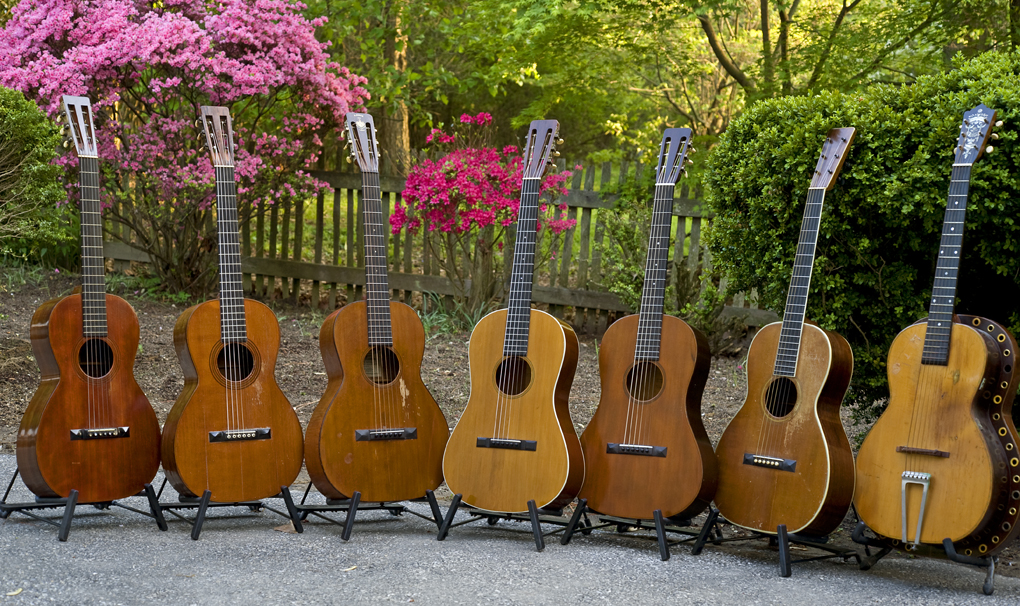
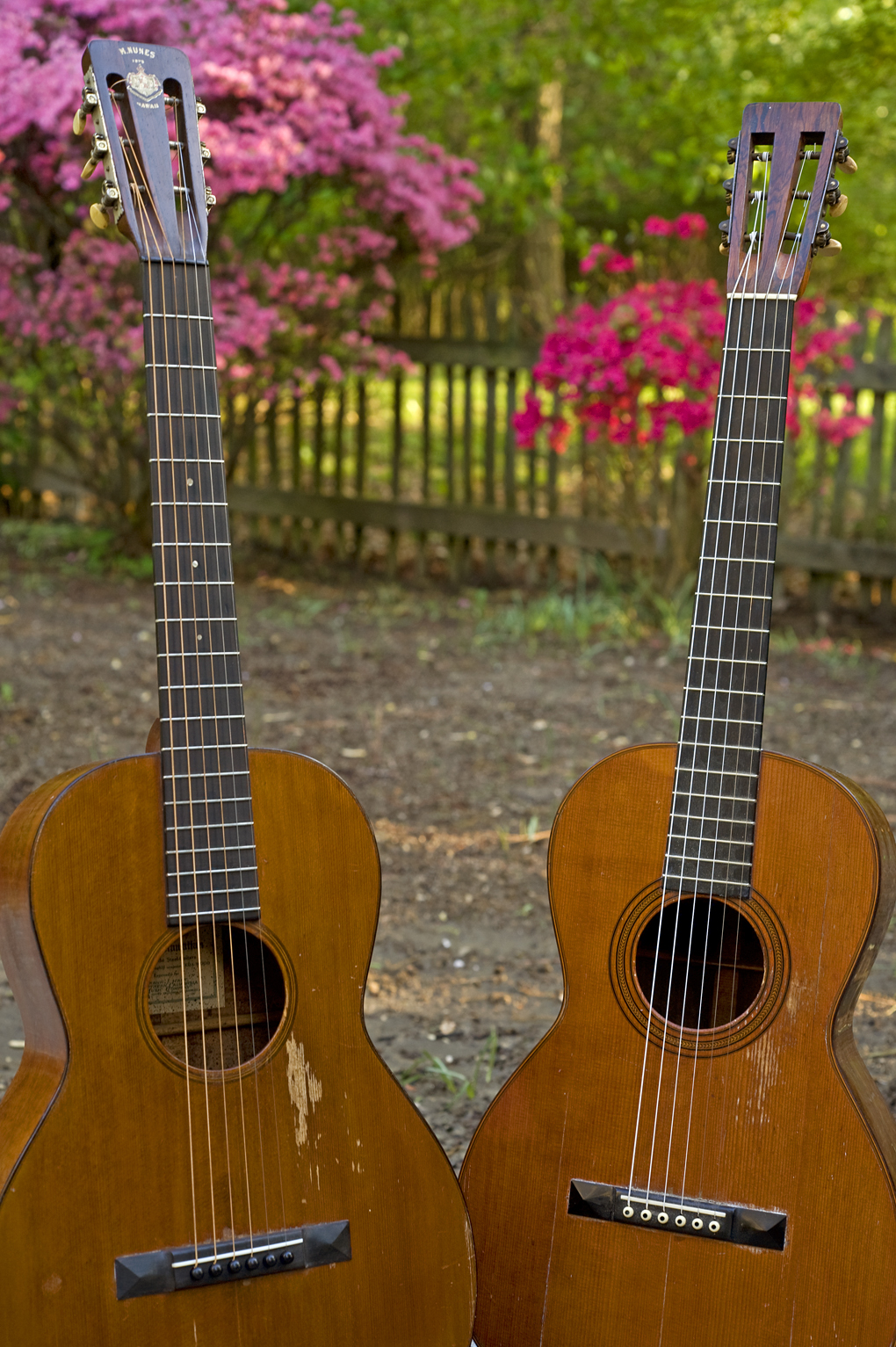
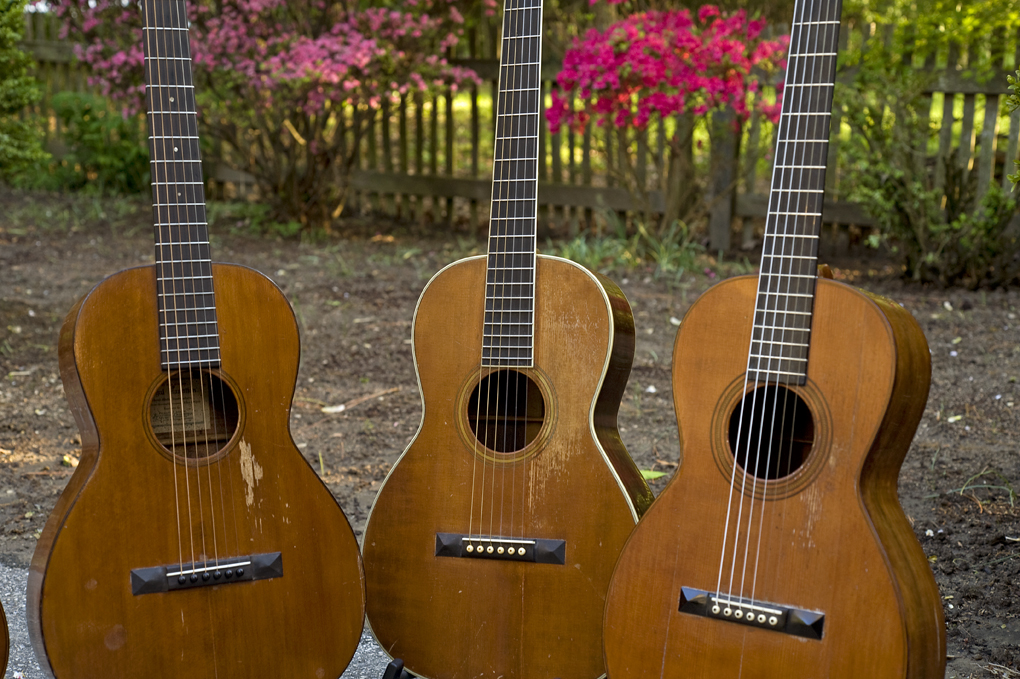
...including 1897 and 1898 Martins with dark tint & pumpkin tint options, 1916 Southern California Music spruce top sample,
light tint 1916 Ditson Style 22, Ditson Style 11 with $1 dark tint option, 1922 Olcott-Bickford 0-44, and 1931 Wm. Lange Paramount.
Note that every tint is slightly different in color.
The light tint Ditson Style 22, and Style 11 with $1 dark tint option from the "teens":
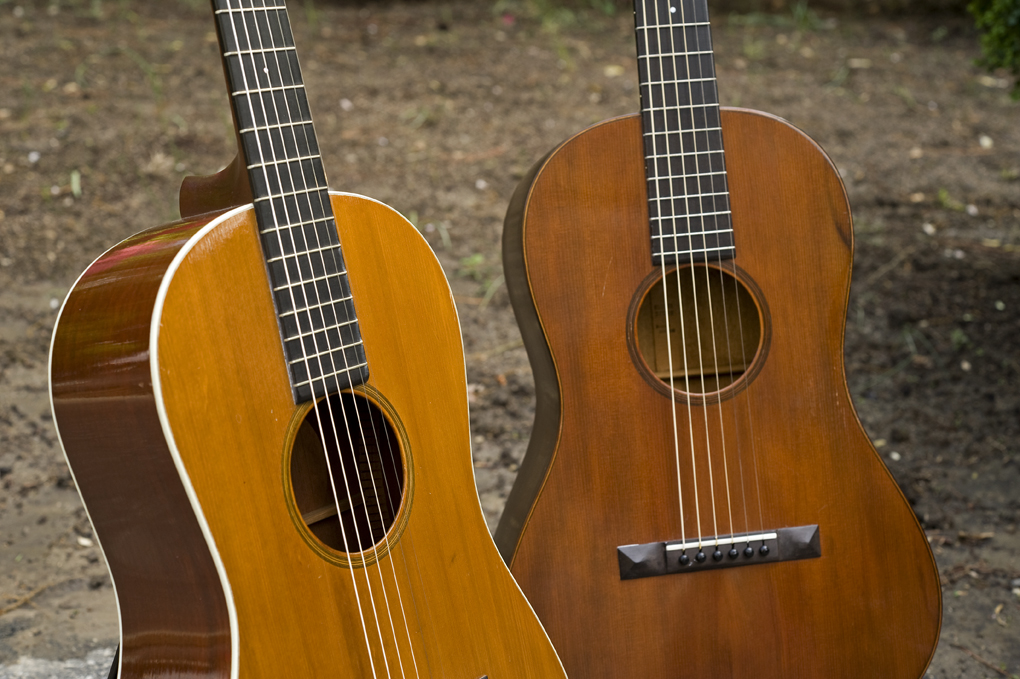
Comparing the 1897 Martin with dark tint with the 1916 Ditson Style 11 with dark tint option.
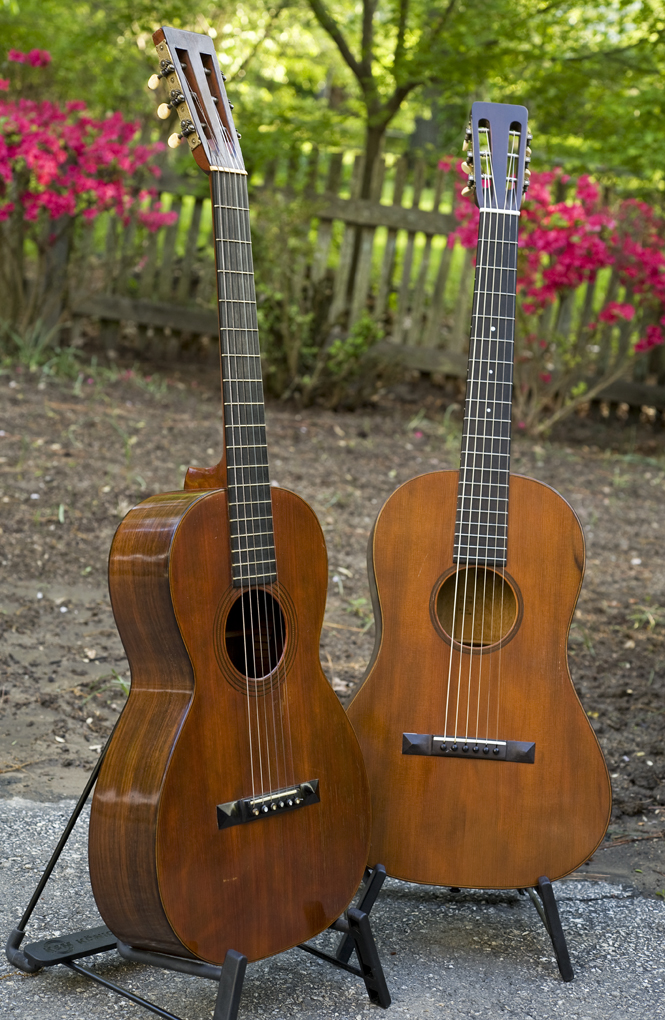
The 1897 martin has a darker tint.
The Style 33 has the darkest tint of any Martin built Ditson guitar, not quite as dark as an 1890's dark Martin top, but more consistent, and less brown, with more red.

Light tint 1916 Ditson Style 22, Spruce top 1917 sample Southern California Music, Pumpkin top 1898 Martin:
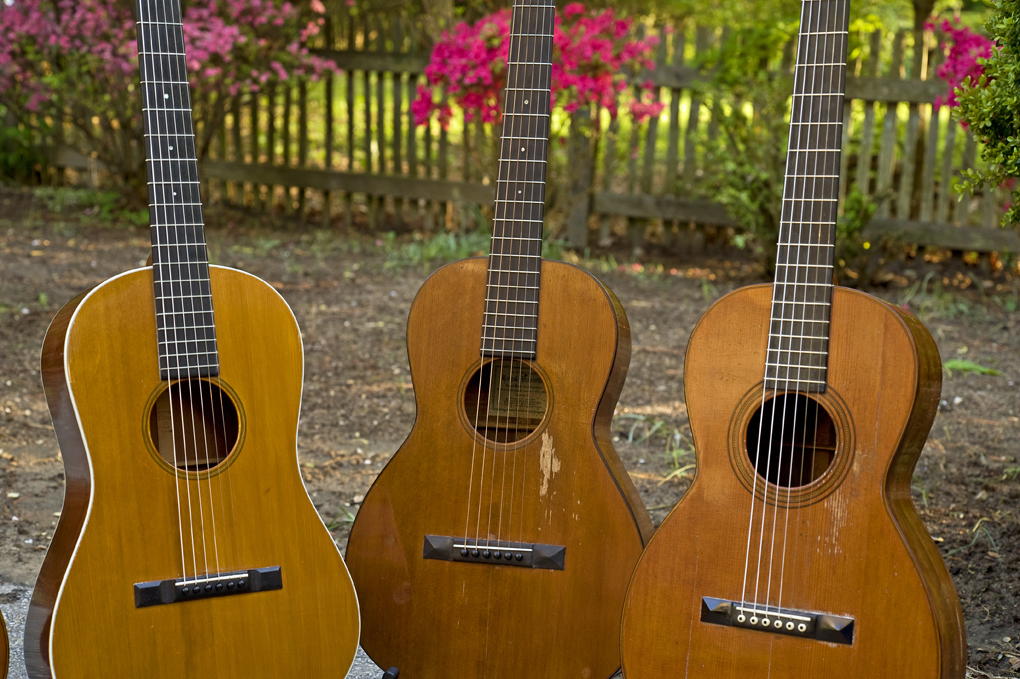
Spruce top sample Southern California Music, Pumpkin top 1898 Martin:
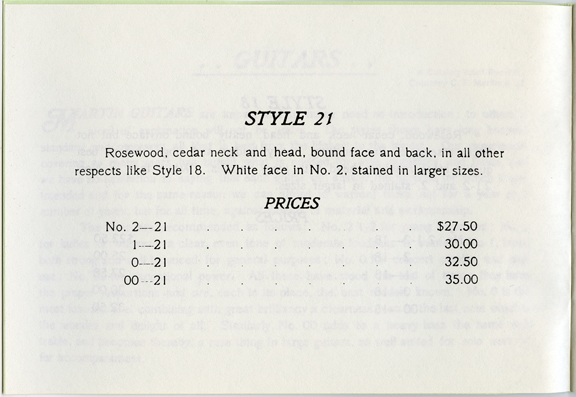
The 1898 Martin Catalog lists the "stained face" as standard on the Style 28 and the larger sizes of the Style 21.
Spruce top sample Southern California Music, Olcott-Bickford Style 0-44, Pumpkin top 1898 Martin:
Shaded Finishes on C. F. Martin Guitars
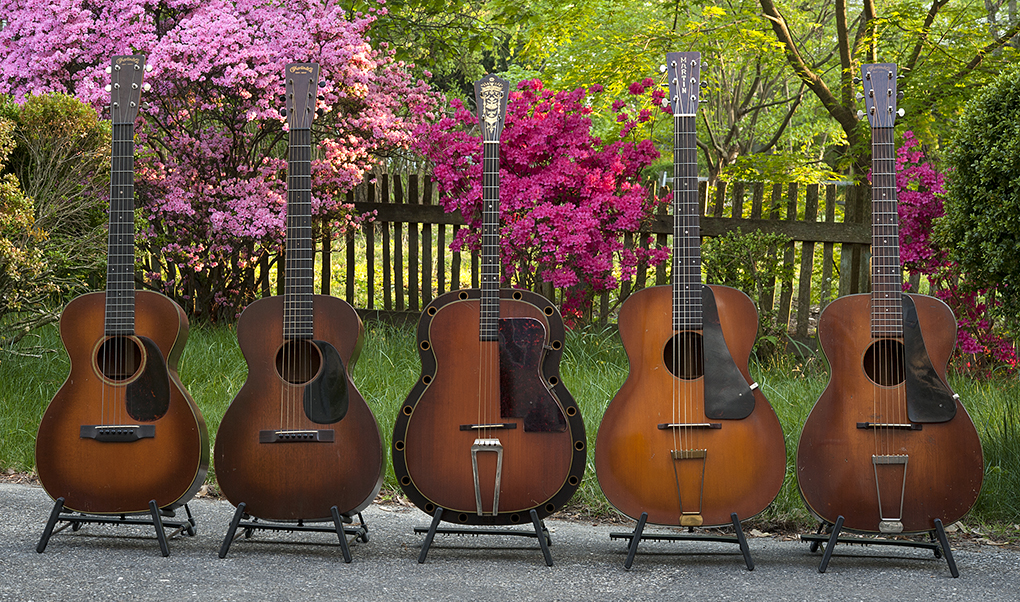
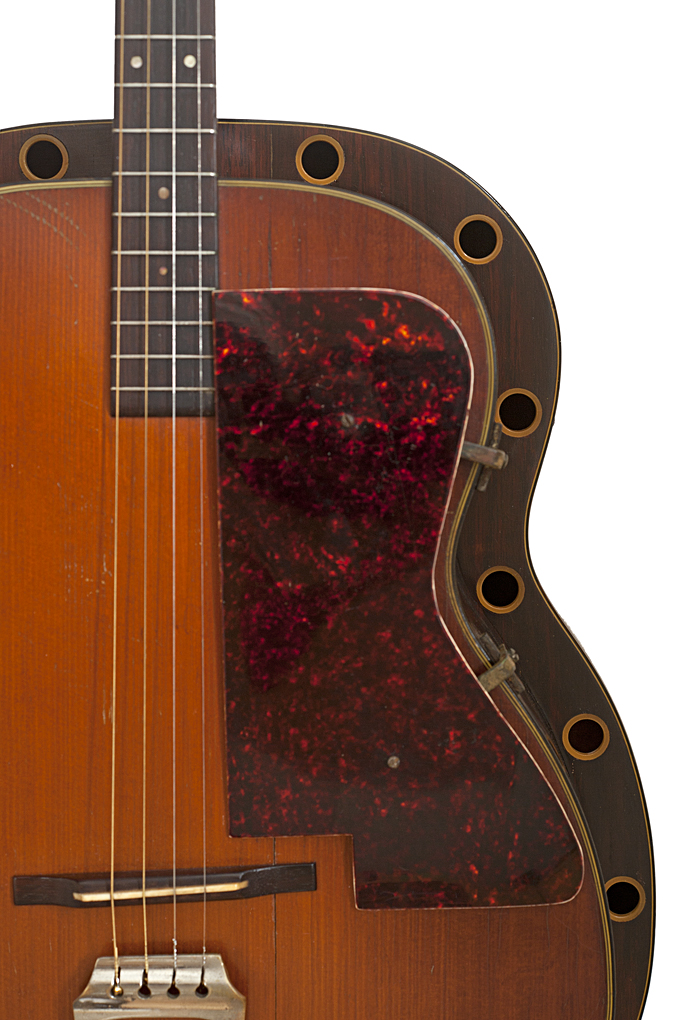
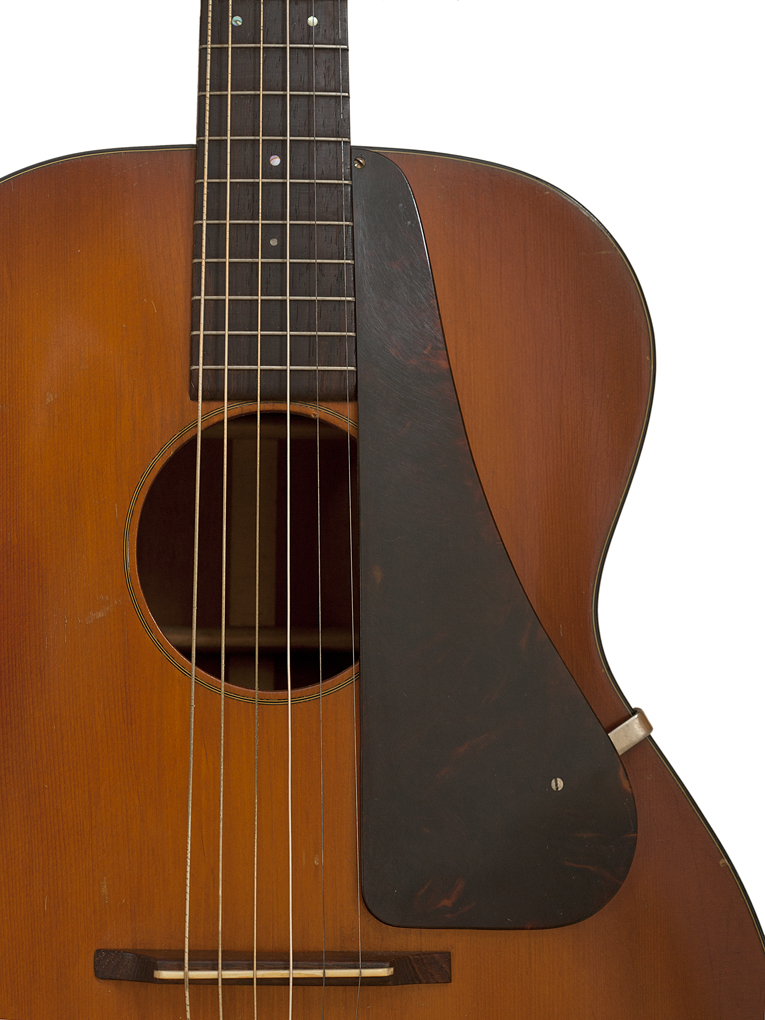
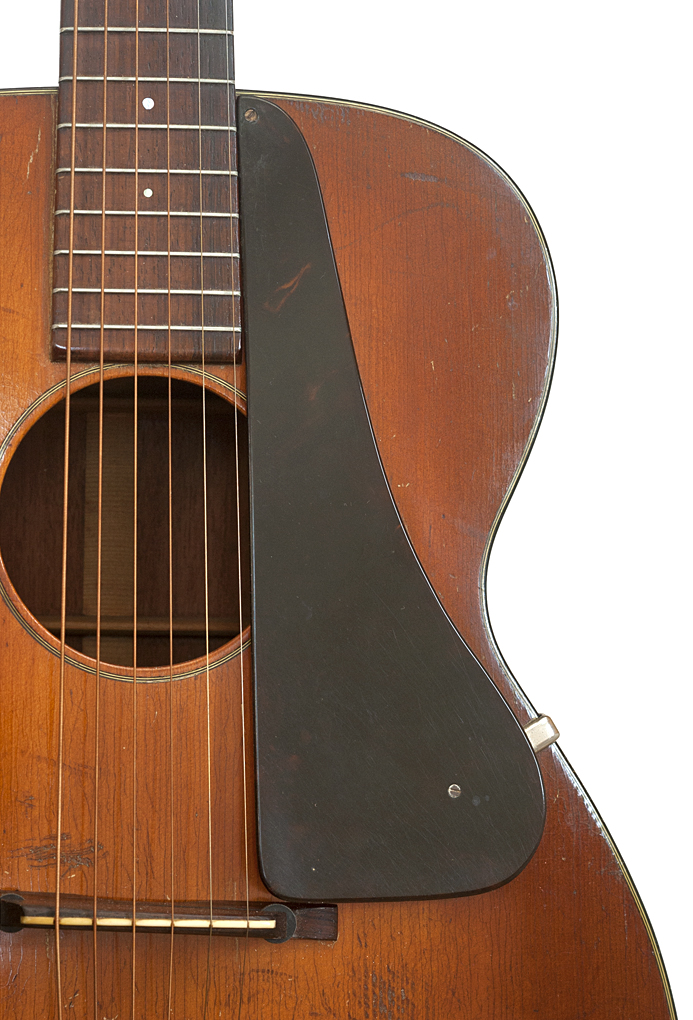
1932 Martin "32 Model" 0-18 and 1933 Martin 0-17 14 fret "Orchestra Models", 1931 Martin for Wm. Lange "Paramount" tenor, and 1931 C-1 and 1933 R-18 Martin archtops.
While "sunburst" finishes have played an important part on Gibson guitars from Lloyd Loar's mid-1920's "Master Models" until today, the more subtle "dark tops" or "shaded tops" became standard on several Martin models, such as the 0-17, 0-18, OM-18, as well as Martin's archtop models, in the early 1930's, but have played a relatively modest part in Martin's history, offered mostly as an option, and seen rather infrequently through the years. The scarcity of shaded Martins have helped them gain popularity and fetch high prices, but until relatively recently, shaded Martins were not perceived as desirable to vintage buyers, and were often tought to hide blemishes and inferior quality top wood. Most likely, shaded Martins were simply a response to potential customers who were attracted to the sound of Martins, but viewed more favorably the appearance of the sunburst Gibson archtops that Martin's "Orchestra Models" were originally intended to compete with.
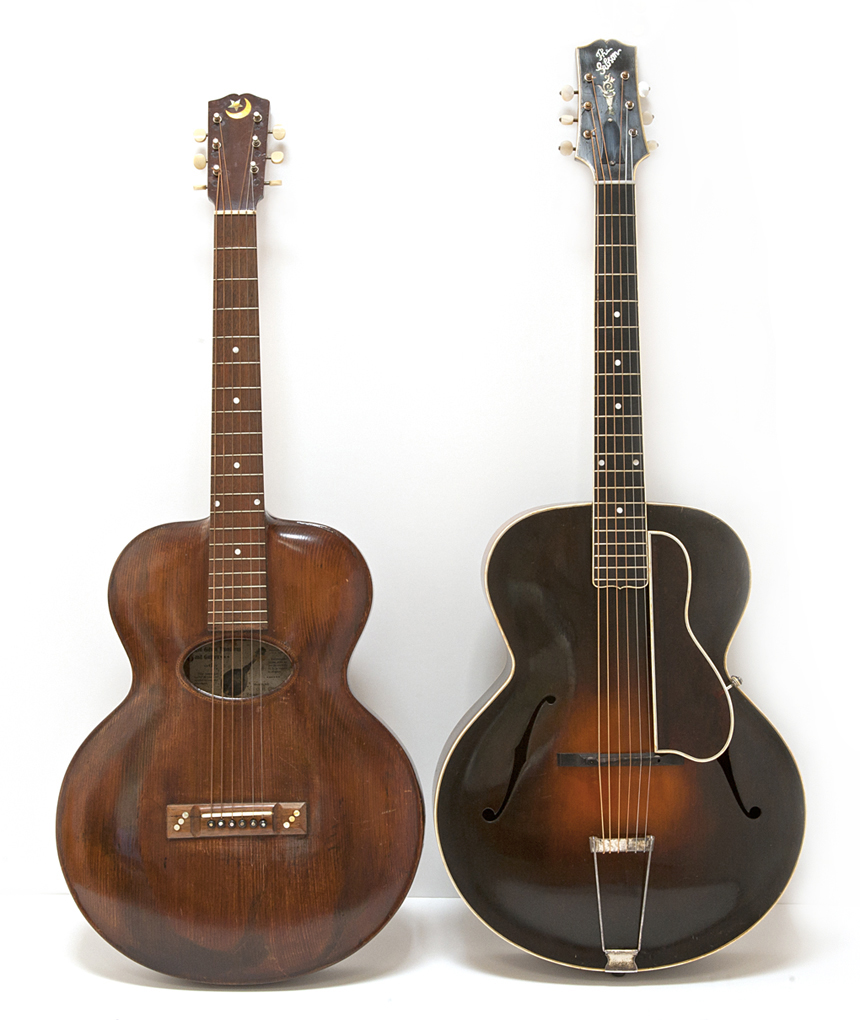
Stained 1898 Orville Gibson made Style "O" Guitar with 1924 "Lloyd Loar Master Model" L-5.
Martin "Paramount" Tenor for William Lange
Martin 1931 C-1 Archtop
Martin 1933 R-18 Archtop Guitar
Martin 1932 0-18 "model 32"
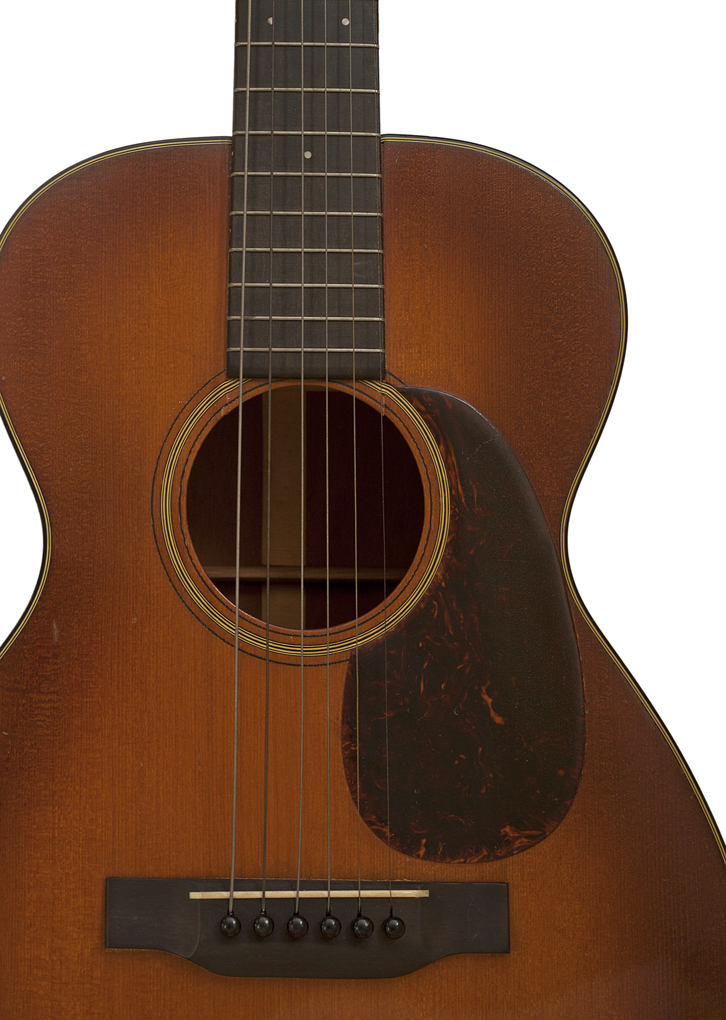
The Martin 0-17 and 0-18 were given the designation "32 Model" from February and March, 1932, respectively, to November, 1932. A standard feature of the new 14 fret "32 Model" 0-18 was it's shaded top.
The earliest shaded 0-17 I know of so far, #52465, from December, 1932, is from the first batch not to be labeled "32 Model". The first I know of to revert to having no shading is #53241, from mid-1933. I have heard of no non-shaded 0-17 between these times.
So I believe it's reasonable to assume, until we see evidence to the contrary, that Martin began to shade the tops, backs and sides as a standard feature of the 0-17 in December, 1932, at the same time the "32 Model" designation was dropped from both the 0-17 and 0-18, and shading of the 0-18 was discontinued, and continued shading the 0-17 until May or June of 1933.
Martin very rarely mentioned shading in their shop orders for any guitar in any period.
It's not unheard of for Martin to move features downscale, as the Style 17 became a glossy finish 00, and the Style 15 was introduced to fill the gap as a matte single 0.
The 0-17 was a popular model, so it may seem odd that so few are seen today with shading as a regular feature. Yet nearly every Ebay ad I've seen for a tortoise headstock 0-15 says "extremely rare, we've only seen one other like this", despite the fact that I've now identified sixteen separate batches of 0-15 Martins built with tortoise headstocks, with a minimum of 1680 built, compared to an estimated total of less than 300 shaded 0-17.
Martin 1933 0-17
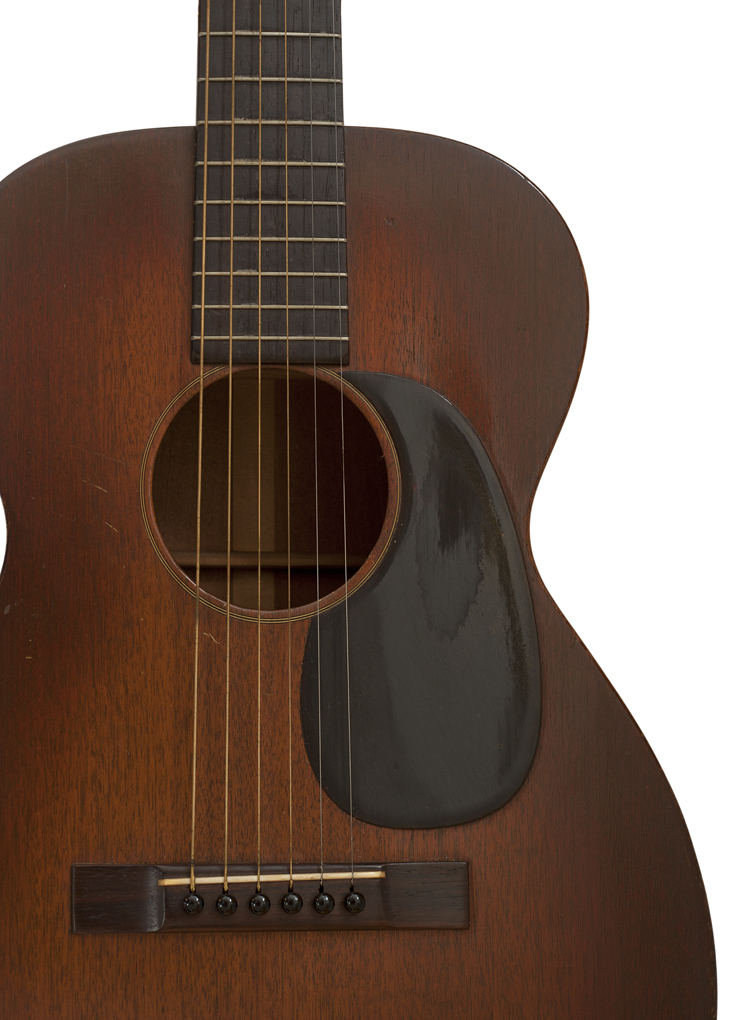
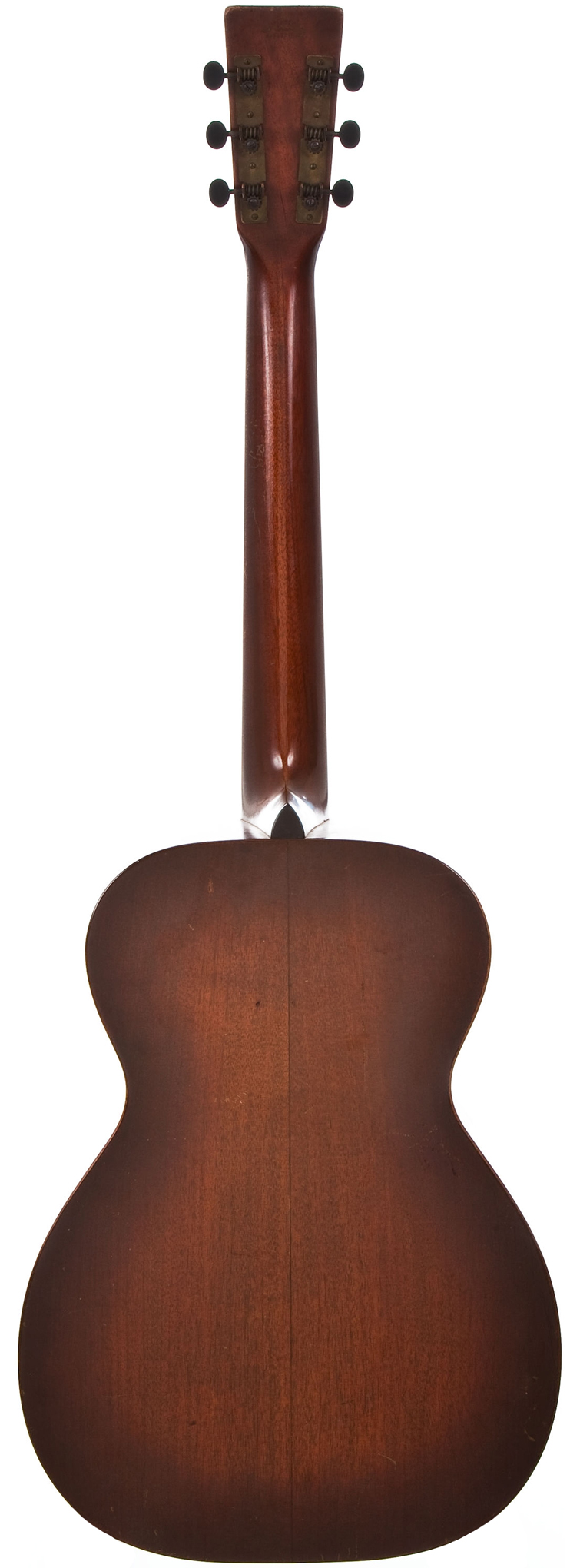
Martin 1942 R-18

Martin 1942 F-1

Photographs of Dark Finishes on Guitars
Martin's dark finishes changed many times over the years, but the changes were not unintentional. Martin was quite thoughtful about such things.
The variation in photographic color balance is much greater than any difference between the finishes on individual guitars at any given time.
These pics of my '24 Gibson Loar L-5 illustrate the difference between natural light and flash on a sunburst finish:


Over-Finishes or Over-Spray on C. F. Martin Guitars
A few words about "over-finish" or "overspray", refinished Martins, and values:
In the early days of French polish finishes, it was natural for Martin to add a bit of extra polish to spiff up a guitar when it came back to the factory. When Martin moved to lacquer, they continued the practice. This tended to happen most often to their best guitars, and the ones built for show, which means more pearl Martins than any others received this treatment. In the days of Martin's best work, the company often considered a guitar with over-finish to be superior to the guitar with the original finish, and swore that they sounded just as good, if not better.
Far more Martins than you would ever imagine with "original finish" were refinished by Martin, after fixing minor problems, either before leaving the factory, or before being sold by the dealer, with no negative impact at all.
Martin routinely refinished guitars if they had a problem when they reached the dealer, and sold them as new, and refinished almost new guitars if they had a problem covered by the warrantee. No one ever thought of these refinished guitars as inferior, and your guitar might just be one of them without you even knowing it! I have one old Martin with a replaced back that I never would have known about from a simple inspection.
Refinishing usually involves sanding, which can thin the wood of the top, often making a guitar louder, but without the full sound and balance of the original guitar. Martin has always been expert in refinishing guitars, and routinely does so with minimal noticeable thinning and little detrimental effect to the guitars.
Some folks automatically value any Martin without untampered original finish as being worth only 50%. I believe that following this "50% rule" is painting with a very wide brush. Or refinishing with a very wide brush, perhaps. Old Martin factory finish work doesn't bother me at all, and to lump these in the same category as crude, amateur refins with thick globs of finish and thinned tops, makes little sense. Fred Oster of Vintage Instruments in Philadelphia told me the best sounding Dreadnaught he had heard in decades was a 1944 D-18 with an old, light factory overspray.
If it takes endless inspection and debate to decide if a guitar is indeed refinished or oversprayed or not, could it really be that big a deal?
As people understand the history and context better, I don't think these guitars will be devalued by more than 15% or 20% or so. They can be some of the best guitars out there. Once we learn more abut the culture at Martin at the time the work was done, I think attitudes will change greatly.
While I don't believe in heavily discounting for quality, factory overfinishes, I would pay a premium for a totally untouched original example!
How to tell if a Martin has an "over-finish" or "overspray"
There's no substitute for experience, but I'll try to give you some of the benefit of my experience along with what I've learned from others.
One of the easiest ways to spot an overspray on a Martin with a stamp on the back of the headstock is to see what the finish does to the stamp.
In my experience, overfinish adds a blobby look, and reduces definition.
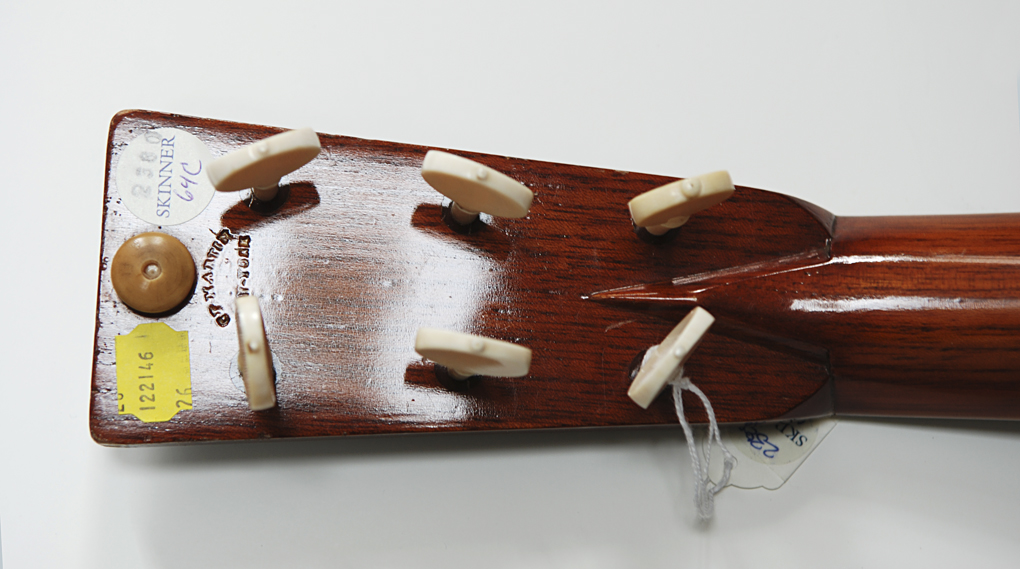
Headstock stamps can vary and take on many different looks, especially in different eras with different types of finishes, but the letters generally have a refined look to them.
A very light spray can hold definition, but the letters all tend to lose character and three dimensionality.
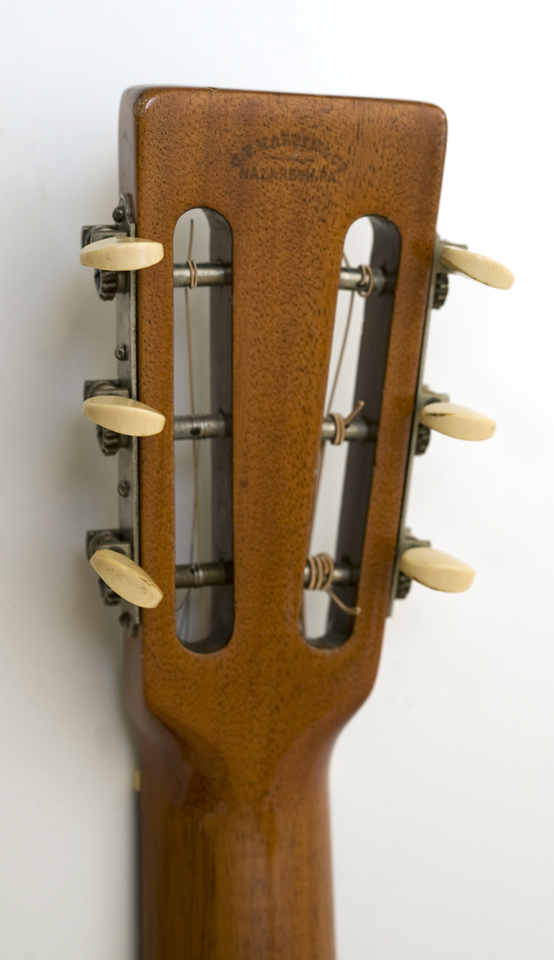
It is very common with Martin stamps for some letters to have a deeper imprint than others.
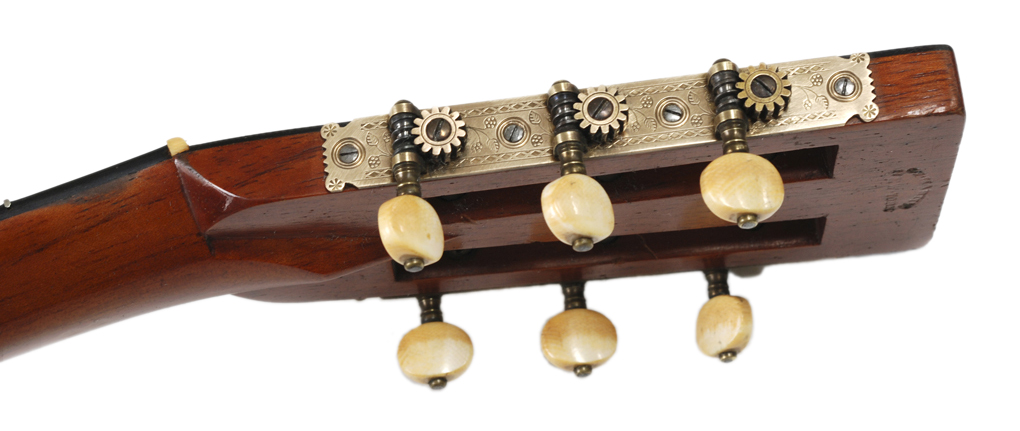
This should not be confused with overspray.
Martin finishes varied through the years, as materials and techniques evolved, so the best way to spot an overfinish is often by knowing how a finish from a particular year typically looks, and how a given example compares. We also know that Martin finishes had a tendency to look milky, for instance, in 1944, so many Martins from this year have been oversprayed.
Overspray on lacquer finishes have a tendency to create a wide crazing that has a characteristic look.
Overspray also has a tendency to dissolve celluloid binding and cause dark cracks in the binding.
When Martin finishes guitars with lacquer, the neck is sprayed before being attached to the guitar, and finish is only applied to the 12th or 14th fret, depending on where the neck joins the body. You will see that there is no finish on the side of the fingerboard where the fingerboard extension is adjacent to the top of the guitar. Any Martin with finish on the side of the fingerboard extension can be determined to have overspray.
---------
I believe an X year old factory refinish is every bit as good as an original X year old Martin finish. A Martin overspray is every bit as good as Martin without one. A refinish by someone else is just as good. Or not. Especially if the top was thinned.
My guess is that a lacquer finish prewar Martin refinished by Martin at least 20 years ago is is just as good as one with an original finish.
Of course, a 20's Martin with a lacquer refinish is not the same as an original pre-lacquer finish. An older finish with decent French Polish added should be as good as new.
Cleaning and Polishing Finishes on C. F. Martin Guitars
The patina of the finish can be one of the true delights of an old Martin guitar. Unfortunately, a new owner polishing an old guitar can destroy the original patina forever. This may not reduce the value by a dime, but once these guitars have all been polished, we will never again know what an original Martin finish from a given period actually looked like. This to me is just as harmful as an overspray from the Martin factory that many people believe to reduce the guitar's value by 50%.
Dealing with dirt, sweat, and nicotine residue is one thing.
Dirt and residue can can be eliminated with a soft cotton cloth, a gentle dishwashing soap, and a light touch. I've learned by mistake from doing too much at once how easy it is to damage an original finish. It's best to do a little amount at a time, to make sure you're not eliminating any finish.
Altering the texture of the finish itself is something else entirely.
Polish, by definition, is like sanding, rubbing the surface with a small grit to take away from the top layer of finish to eliminate the rough spots and leave a smooth surface. Martin guitars of different ages and finish types have varying signature textures to the finish that differentiate them. A Style 45 has been polished to a high gloss, while a Style 15 has a matte finish. A 1920's shellac based finish will have a different look than an early French Polish, or the distinctive transitional finish of 1930, or a glossy lacquer finish of the 1960's. And finishes naturally develop micro-crazing with age. Once these finishes are polished, both the original look of the finish, and the patina it has developed over time, will be gone forever.
There is also the issue of polishes with silicone leaving a residue that can make it extremely difficult to work on the guitar in the future.
I strongly suggest that you clean the crud, but not do anything to alter the finish itself unless it has already been irreparably altered.
To See Robert Corwin's Classic
Photography of Folk and Roots Musicians, visit: