Hawaiian Punch
Steel String Martin Hawaiian Guitars
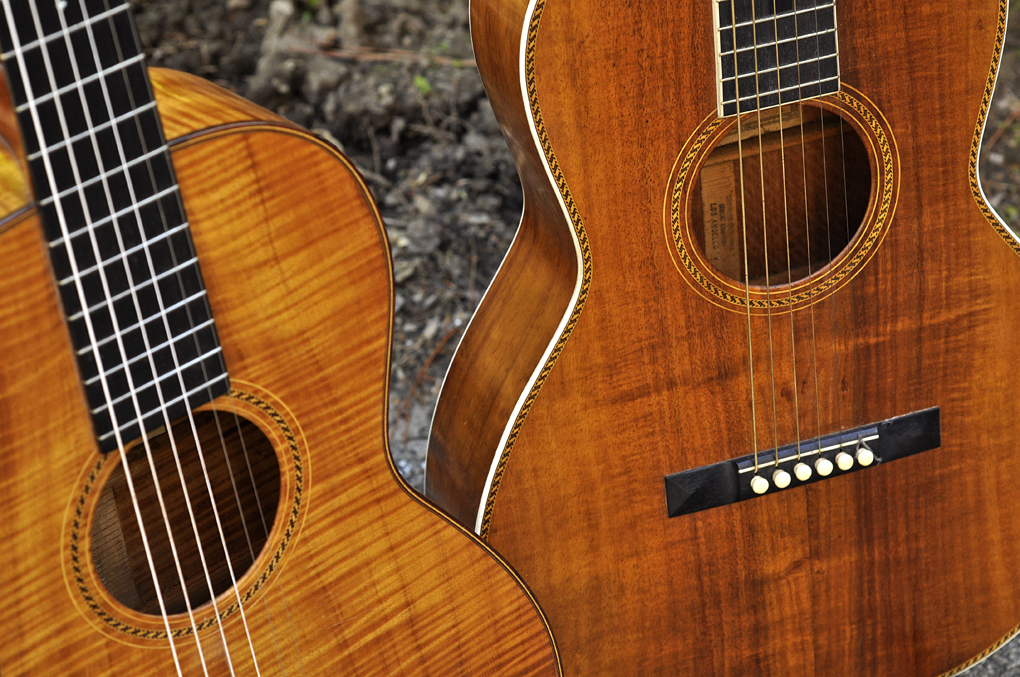
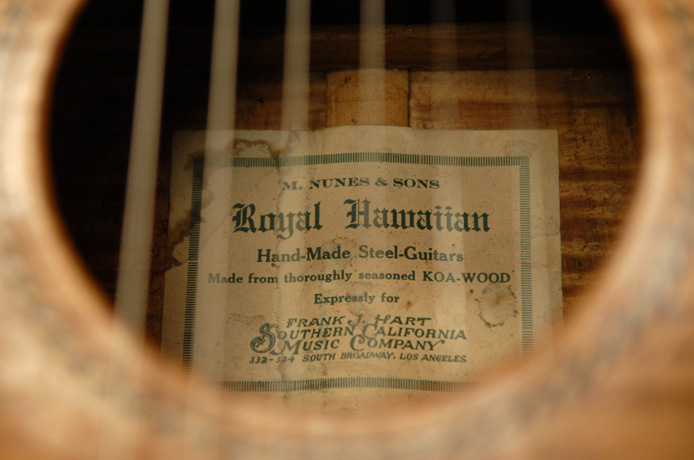
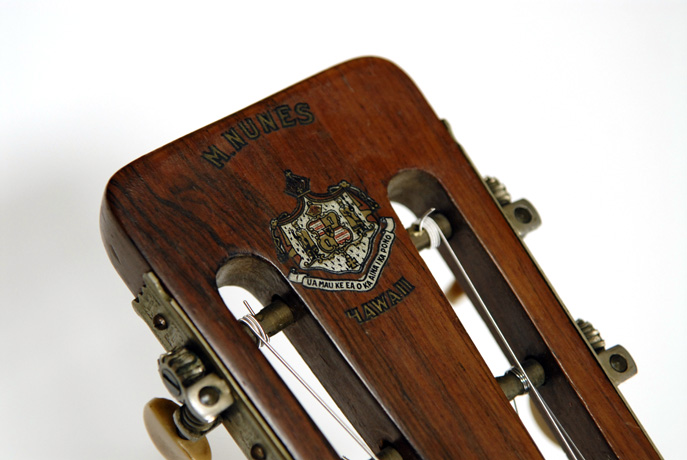
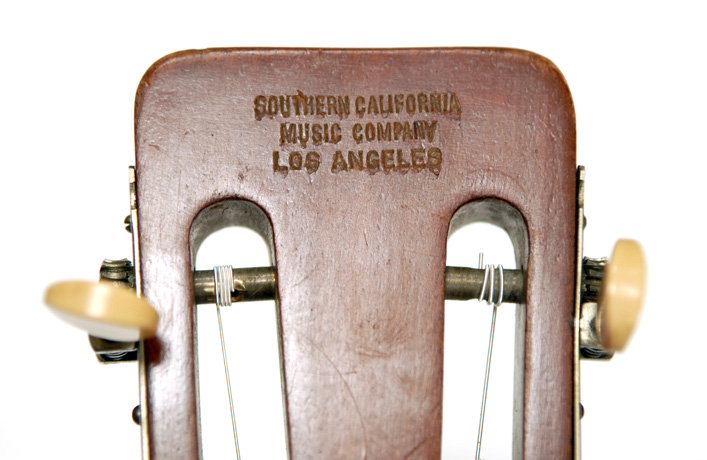
In July of 1916, with Hawaiian music all the rage, the C. F. Martin Co. shipped six samples each, of Hawaiian koa wood guitars with appointments generally similar to Martin's styles 0-18, 0-21, and 00-28, to the Southern California Music Company of Los Angeles, a chain of Southern California music stores, and one of Martin's largest accounts. SoCal provided Martin with the koa wood from Hawaii, and asked that the trim on these guitars, designed for playing in the Hawaiian style, be as close as possible to those of SoCal's popular ukuleles. To appeal to the Hawaiian market, SoCal asked that the Martin stamp be replaced with the Southern California Music Company stamp, and affixed decals on the headstocks bearing the name "M. Nunes & Sons, Hawaii" and labels inside with either the name "M. Nunes & Sons" or "Rolando". These early samples had koa wood back and sides and tinted spruce tops, but after seeing the samples, SoCal decided to offer all koa guitars, and to market the three models as the 1350, 1400, and 1500. The first of the new SoCal models was shipped in November of 1916.
These guitars, and those Hawaiian guitars designed at about the same time for the Oliver Ditson Company, were the first Martins to be built for steel strings. And while Martin had previously used fan bracing only for their gut string guitars in the Spanish Style, and had since switched it's production to X-bracing, Martin curiously decided to build these early heavier steel string guitars with braces in the shape of a fan. The Model 1500, however, for reasons we may never know, has X bracing.
The first "Hawaiian" Martins were actually not made specifically for Hawaiian playing, with high nuts and flush frets. Those features were only added in 1925.
From the time they were first made in the teens, "Hawaiian" Martins were catalogued with "steel strings and nut adjuster for Hawaiian playing. Suitable for regular playing with nut adjuster removed." The "H" models, with high nut and flush frets, were first produced after the change, in the late 20's.
As you'll see in the new Longworth book (p.234), "Unlike later Martin Hawaiian models, the Ditsons had conventional raised frets."
The same was true of the early Hawaiian models made for the Southern California Music Company, the pre-cursors to the "K" models. As the new edition of the Longworth book says (p. 245) "Although called Hawaiian models, the guitars had raised frets and were often played as regular guitars with steel strings, with a metal "nut adjuster" used to convert the guitar for Hawaiian style playing."
"M. Nunes & Sons" and "Rolando" Models 1350, 1400 and 1500
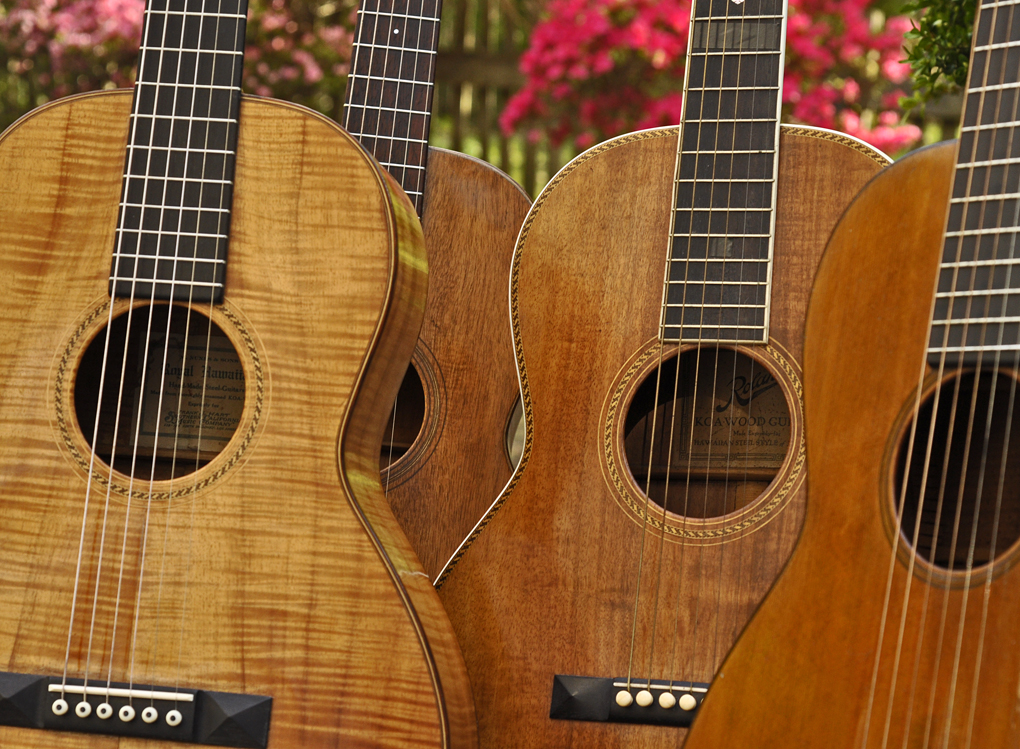
1916 Model 1400 #28, 1919 Model 1350 #14001, 1917 Model 1500 #181, and 1916 Spruce Top Sample with no serial number
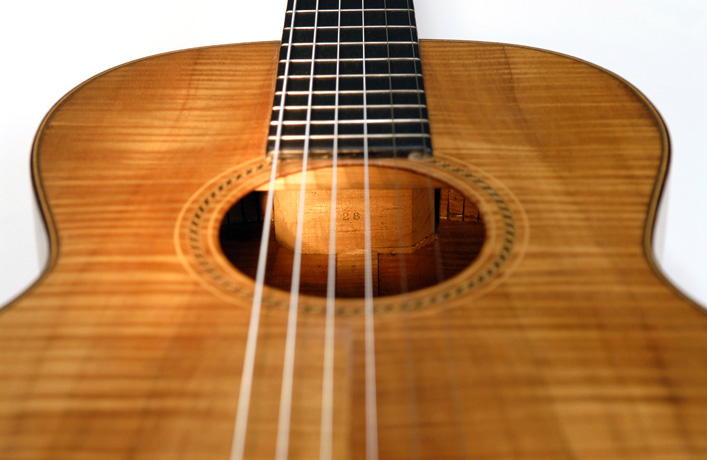
The guitars designed for SoCal had serial numbers of their own. The Model 1400 shown here, from the very first batch, is number 28. Their numbers started with number 19, apparently allowing for the eighteen samples which were sent without serial numbers. The latest Southern California Music Company Hawaiians have trim similar to a regular Martin, and Martin serial numbers. While earlier SoCals bear the Southern California Music Company name on the headstock, later examples have either both the SoCal and Martin names or the Martin name only.
The early Model 1350 and 1500 examples I've seen have the "Rolando Koa Wood Guitars" label, while the 1400 has the "M. Nunes & Sons, Royal Hawaiians" label inside. The later examples have the Martin stamp inside.
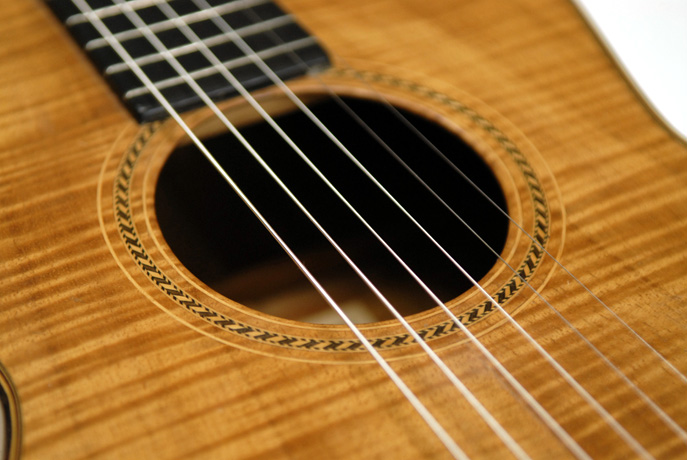
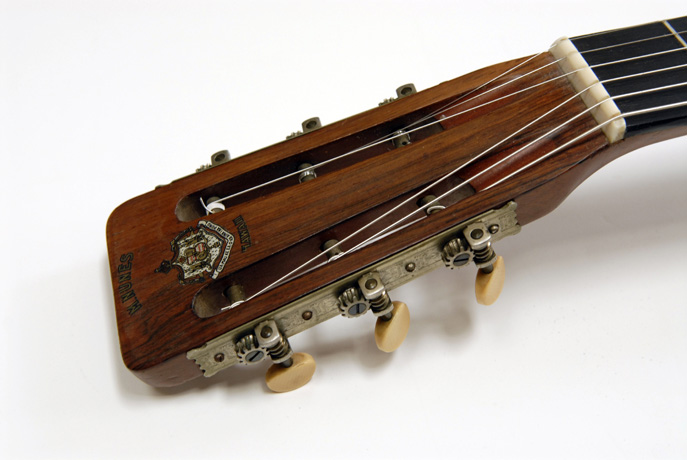
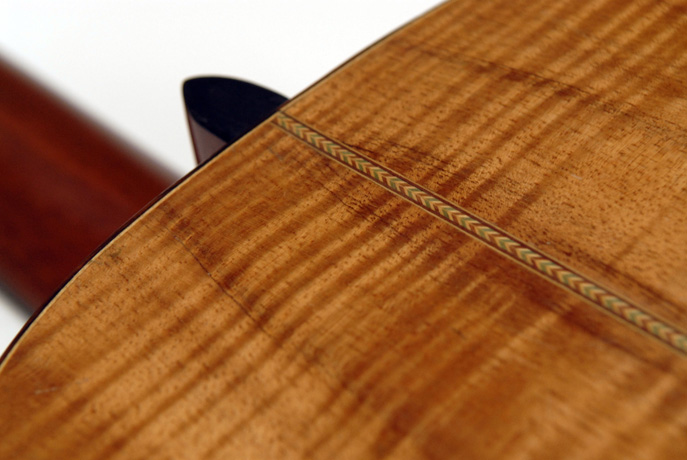
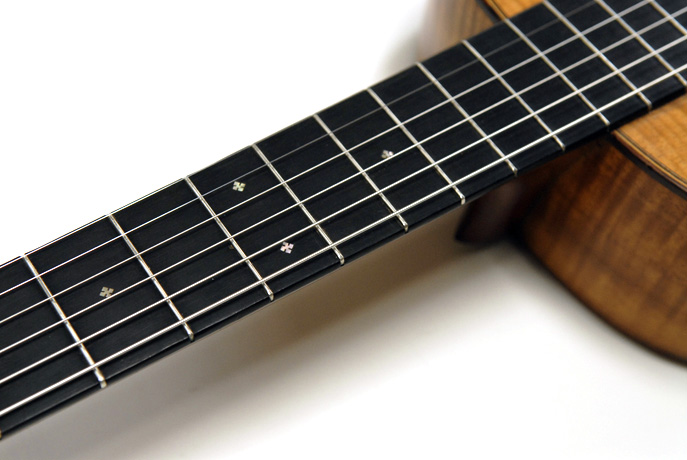
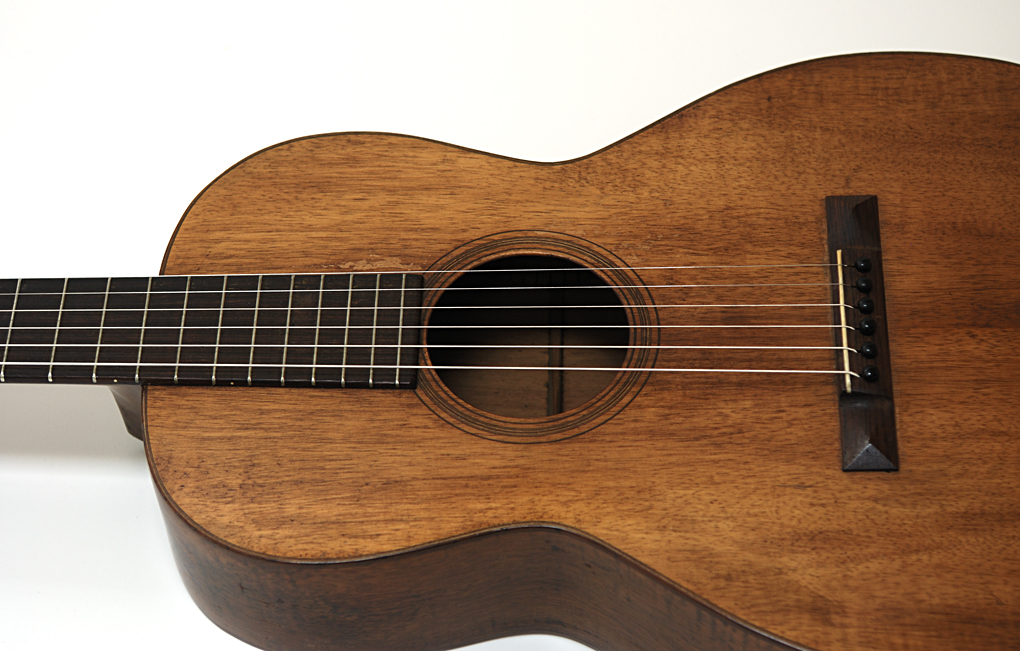
C.F. Martin/Southern California Music Company Model 1400
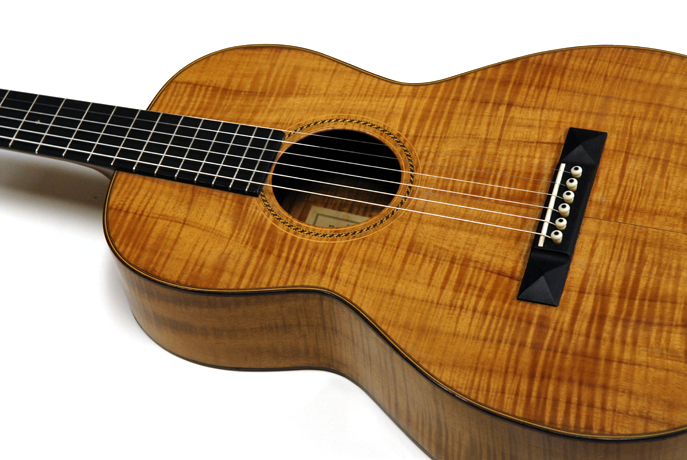
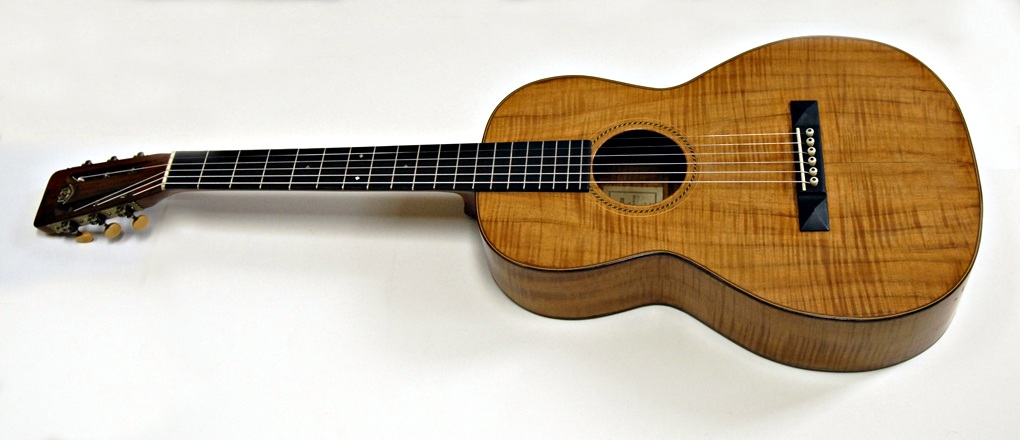
1916 Southern California Music Company Model 1400
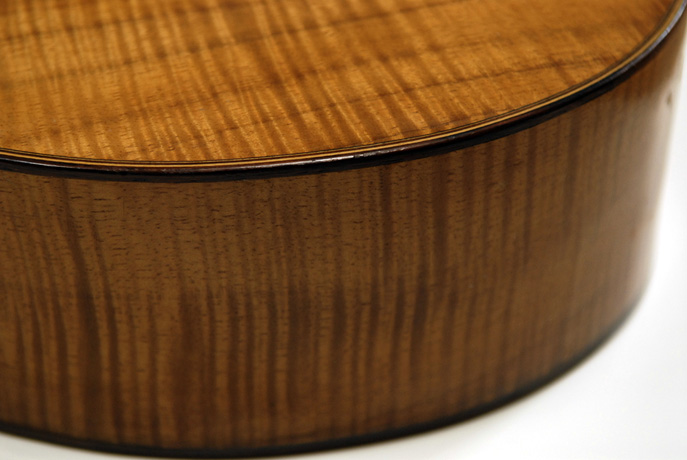
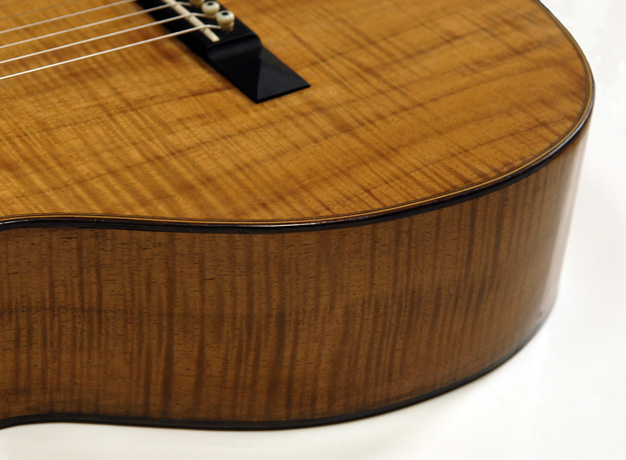
Beautiful original condition variation of a style 21 guitar made for the Southern California Music Company, and sold as the Model 1400.
From the first batch of production SoCal guitars, this was also one of the first batch of Martins to utilize all Koa wood construction.
Along with the early Ditson dreadnaught, also made with fan bracing, this was also one of the first production Martins made for steel strings.
The pyramid style bridge is a replacemement.
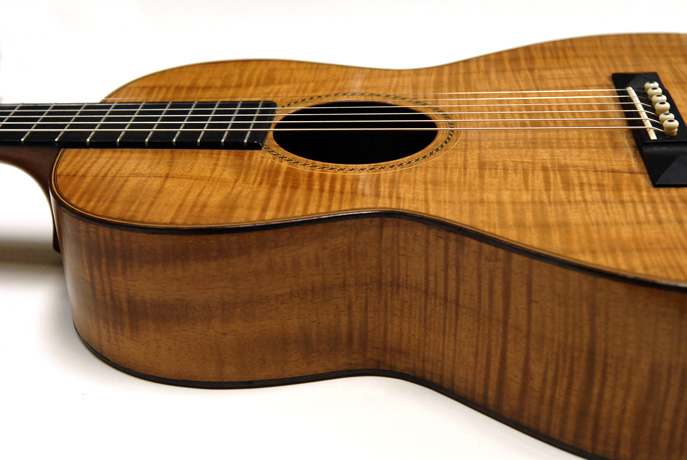
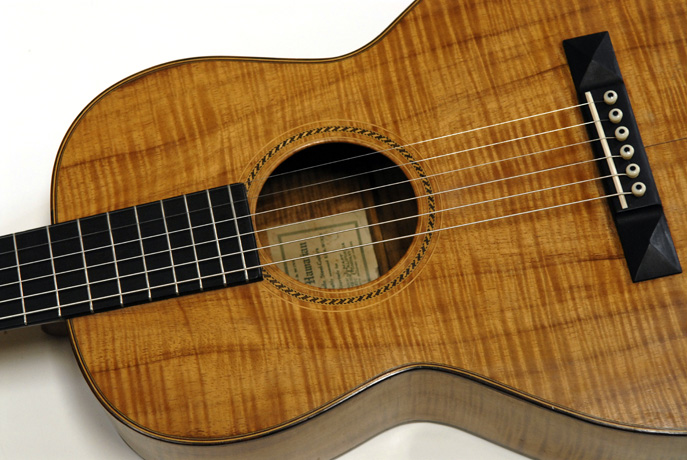
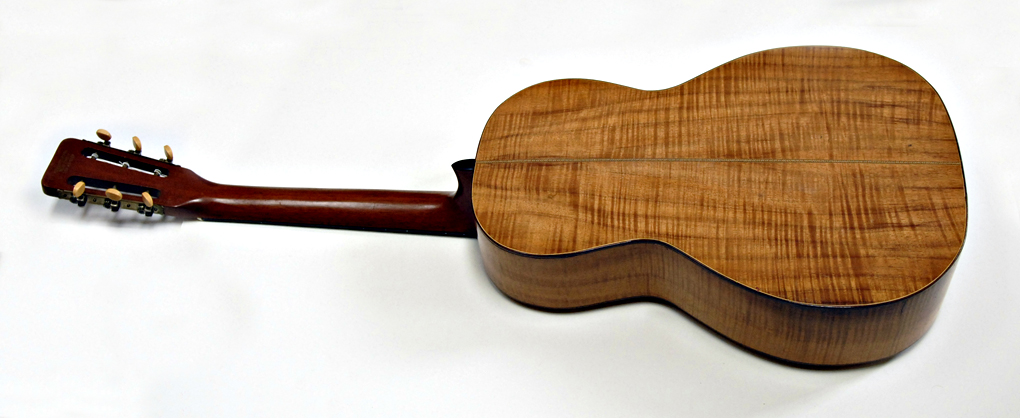
C.F. Martin/Southern California Music Company Model 1350
1919 Southern California Music Company Model 1350
Fan style braces similar to a Ditson dreadnaught.
Stamped inside, "C.F. Martin & Co., Nazareth, PA"
Stamped on back of headstock "Southern California Music Company, Los Angeles"
Both the initial samples for the Model 1350 and the earlier 1350 with the Rolando label have a single ring rosette like some of the guitars Martin made for others such as Ditson, Wurlitzer, and Foden, but the later examples with Martin serial numbers have a standard Martin three ring rosette.
Serial numbers 14001 and 14003.
#14001

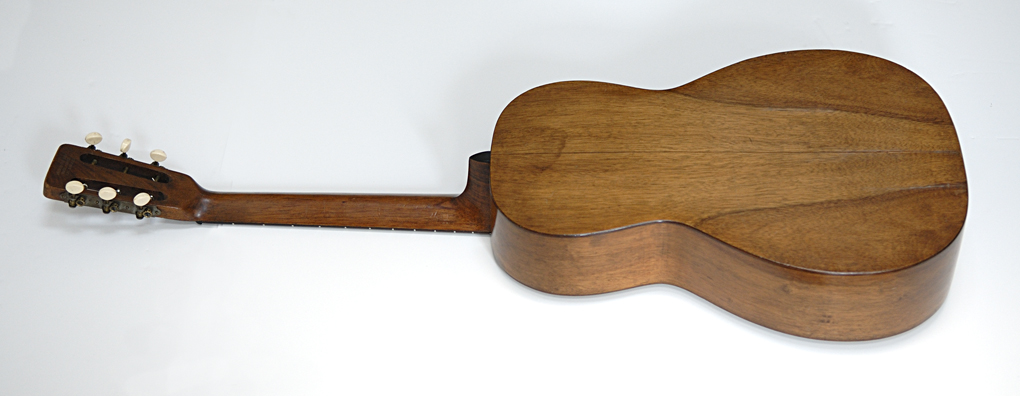
#14003

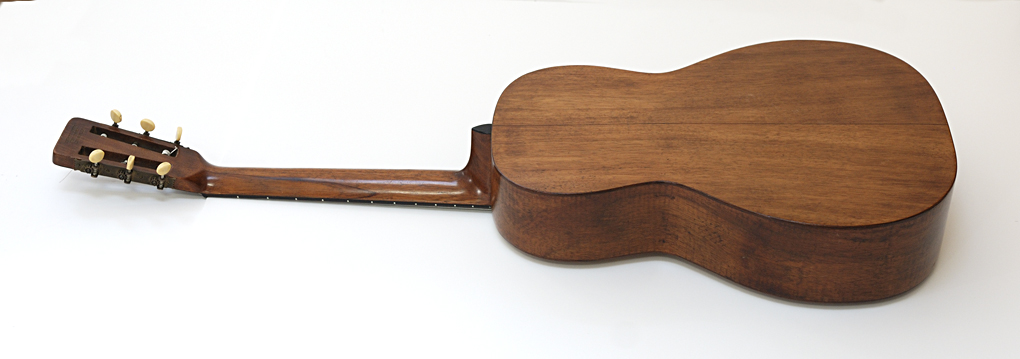
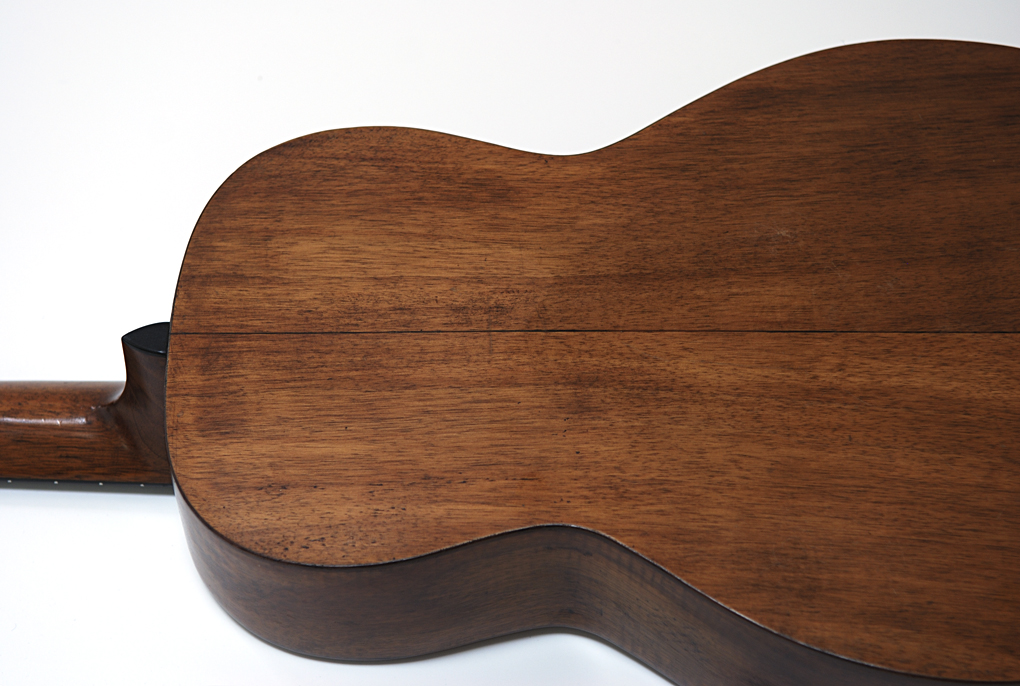
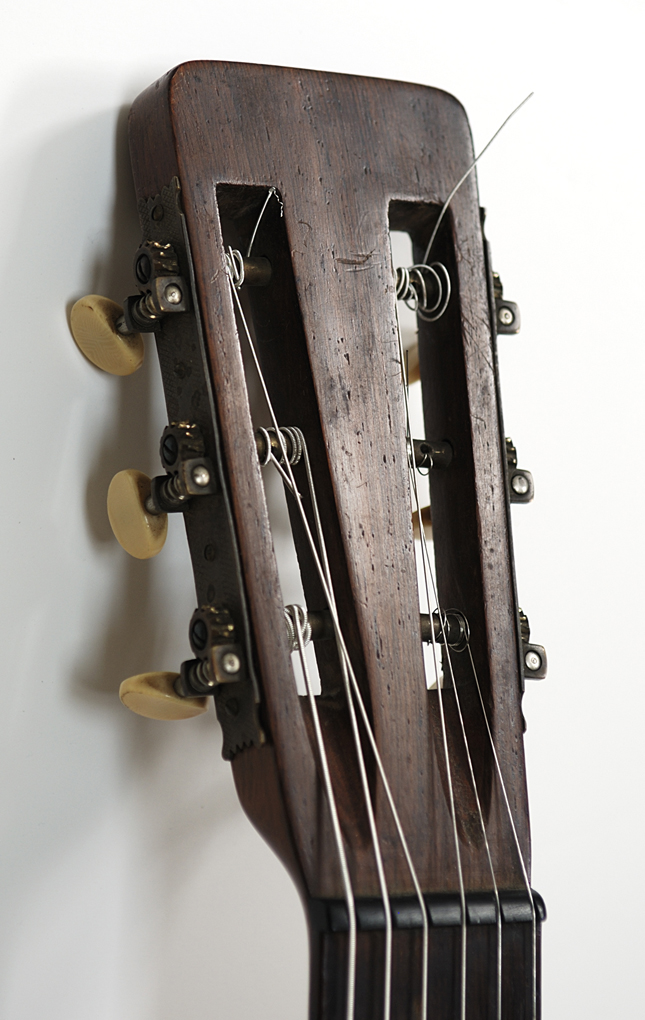
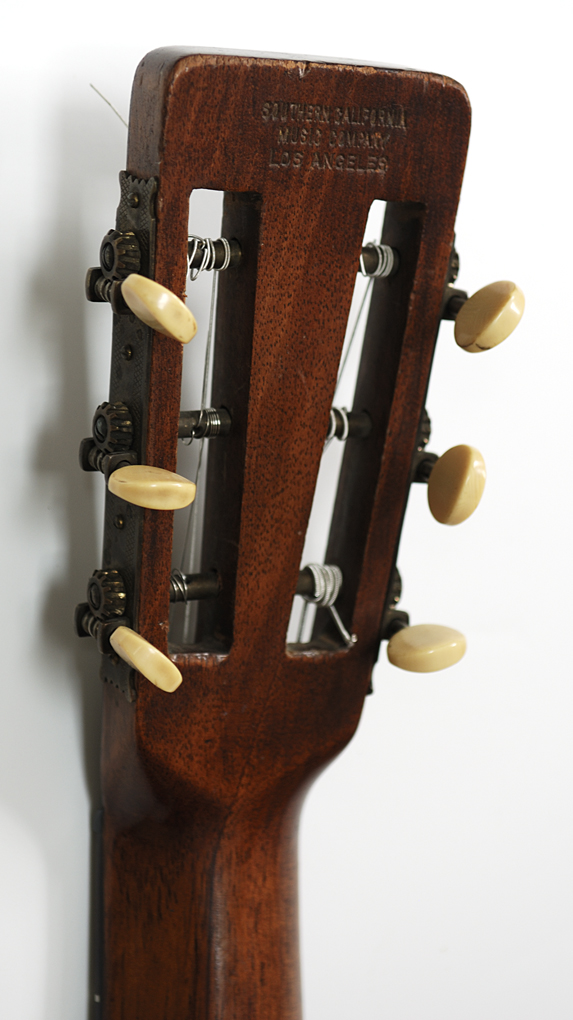
In 1919, Martin began selling their less expensive guitars with rounded slots in the headstock. Previously, all Martins had square slots, a process that took extra time which was in short supply as as Martin's production was doubling yearly. Curiously, these two guitars, two serial numbers away and both from the same batch, have different style headstocks, which is not surprising if you follow Martin history. No doubt, the necks were made first, and different styles appeared when the worker reached into the pile when it came time to attach a neck.
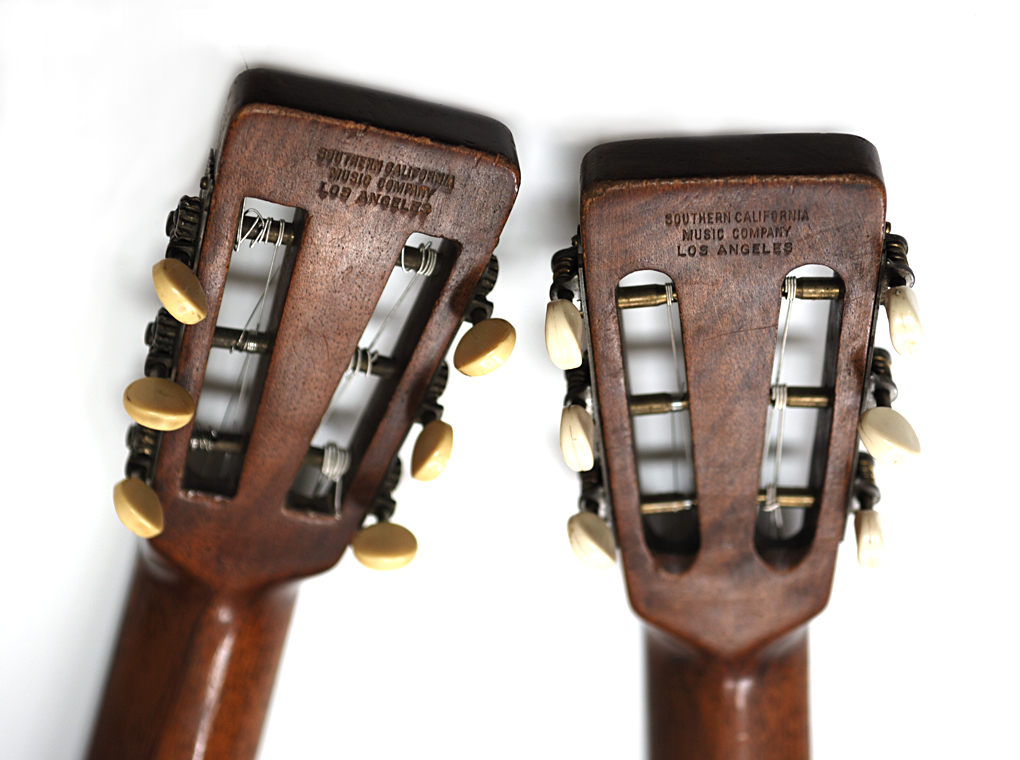
14003 and 14001
C.F. Martin Guitars Hawaiian Guitars Made for Oliver Ditson & Co.
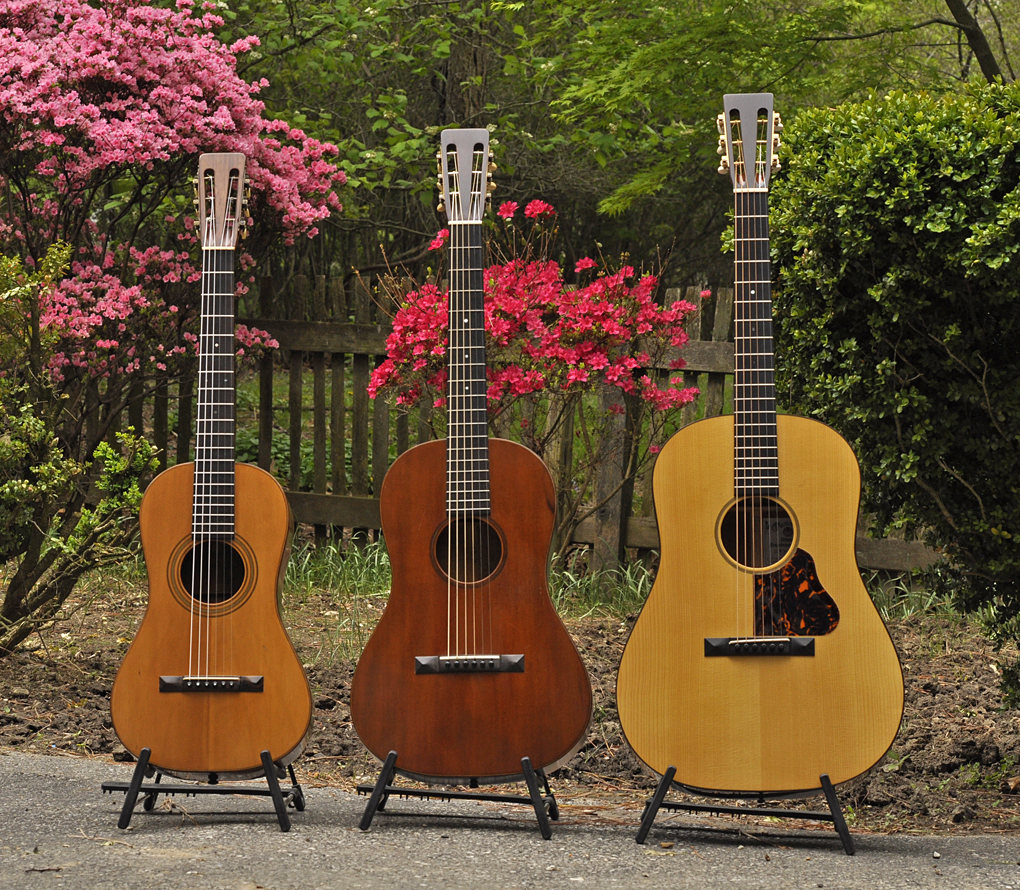
The "Standard" size Ditson Model 1-21, "Concert" size Ditson Model 11, and "Extra Large" (Dreadnaught) size Ditson Model 111 reissue.
Martin's "Ditson Model" guitars, with their wide waisted body shapes reminiscent of early European guitars, were made expressly for the Ditson Stores and came in three sizes, Standard, Concert, and Extra Large.
The Standard Model has a width at the lower bout of 11 1/8"
The Concert Model has a width at the lower bout of 12 3/4"
The Extra Large Model has a width at the lower bout of 15 5/8"
The Extra Large model, requested by Harry Hunt of the Ditson Company, and designed with the help of Martin shop foreman John Deichmann, became known as "the Dreadnaught", and was the first Dreadnaught guitar ever made.
The Ditson Models had their own model designations, and unlike other Martins, their trim level was designated as 1, 2, or 3, but their size was designated by the number of digits, ie. 1, 11 or 111.
All of these regular Ditson Models were made with a spruce top and mahogany back and sides.
Some Ditson Model guitars have either lighter orange tinted tops or dark stained tops. In some years the stained top was an option.
While fan bracing is generally associated with lighter guitars made for gut or nylon strings, the Ditson models have the same style of fan bracing as seen on the koa wood guitars made for the Southern California Music Company, which were originally made to be played with heavier steel strings in the Hawaiian style.
The Models 1, 11 and 111 have dark binding on front, none on the back.
The Models 2, 22 and 222 have white binding front and back.
The earlier Ditson models had bridges supplied by Lyon & Healy of Chicago with raised flat topped squares on the wings rather than the pyramids typical of many of the better vintage Martins.
The 3 and 33 were fancier models which changed a bit through the years. These had pearl inlaid bridges supplied by Lyon & Healy, and the earliest examples had fancy fingerboard inlays. The extra large 333 was catalogued, but none seem to have been made.

Early Ditson Model 2 #144 and Model 22 #160, both from December, 1916

Early Ditson Model 22 #160 from December, 1916 with white binding, standard tinted top and Chicago style bridge, and one from the very last batch of small Martin "Ditson Model" guitars, a Model 11, #565 from January, 1921 with dark binding on top only, optional dark tinted top and standard Martin pyramid bridge. The Model 111 was revived in 1923, and 19 more were made between then and 1930, with standard Martin X bracing replaing the earlier fan bracing.
Ditson also sold guitars which combined the trim levels of regular Martin Styles with the same small, narrow body shape of the Ditson "Standard" size, an example of which is the Style 1-21 shown here. The 1-21 has standard Martin Style 21 trim, including herringbone design marquetry in the rosette around the soundhole and in the center strip on the back. Besides the 1-21, this Ditson size was also available as Ditson Models 1-18, 1-28, 1-30, 1-42, and 1-45.
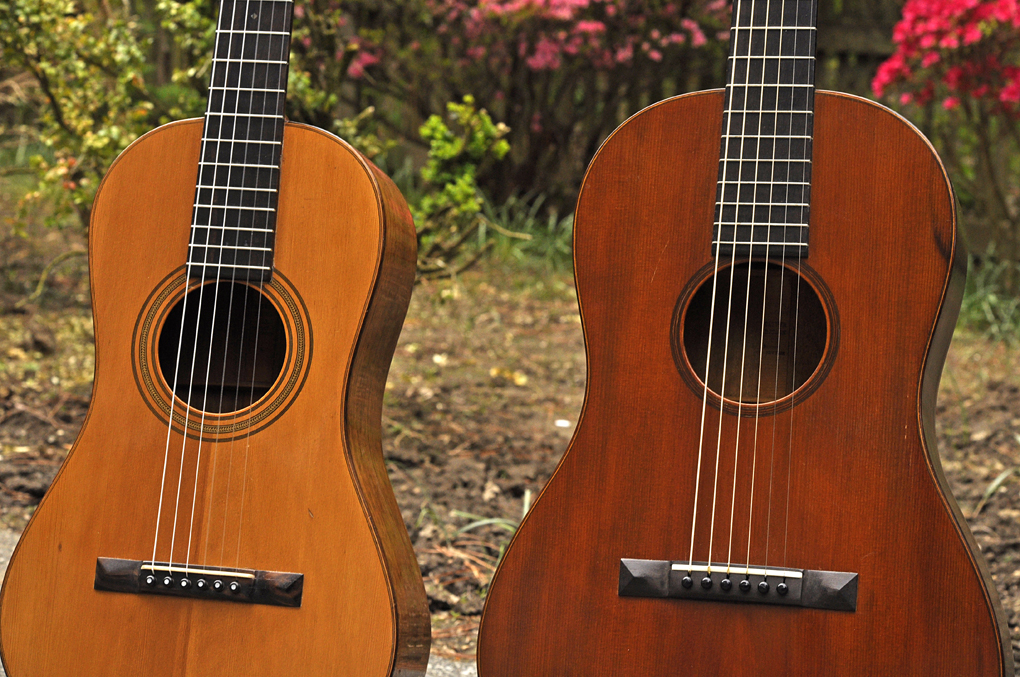
Ditson Model 1-21 #433 from July, 1919 and Model 11 #565 from January, 1921
Ditson was a large music retailer with stores in New York and Boston (and earlier in Philadelphia), and was one of Martin's largest customers, selling guitars and other instruments, including many mandolins. Besides the "Ditson Model" Martins, a large number of regular Martin models, stamped with the C. F. Martin name only, were sold by Ditson. A number of the regular Martin models were also sold by Ditson with the Ditson stamp on the back of the headstock and/or on the inside center strip. And many other models, such as the Empire, were made by other manufacturers for Ditson. So finding an instrument with the Ditson stamp does not necessarily mean you've found a "Ditson Model" Martin, or even an instrument that was made by Martin at all.
C.F. Martin 1918 000-42
In 1918, Martin made their first two Style 42 guitars in the relatively new and larger 000 size. While one of the two was a rather conventional Style 42 in the 000 size, this 000-42 was special ordered by the Ditson Company in 1918 in the style of Ditson's new Dreadnaught guitars, which were built for Hawaiian style playing with steel strings. That makes this guitar a rare example of an extremely early 000 size Martin built for steel strings, as well as a rare example of a Martin built for steel strings with an ivory pyramid style bridge. As was true of the early Martin Dreadnaught, and all of Martin's early Hawaiian steel string guitars built for both the Ditson Company and The Southern California Music Company, this guitar was built with fan braces. This guitar was also special ordered with a cloud shaped pickguard inlaid into the top.
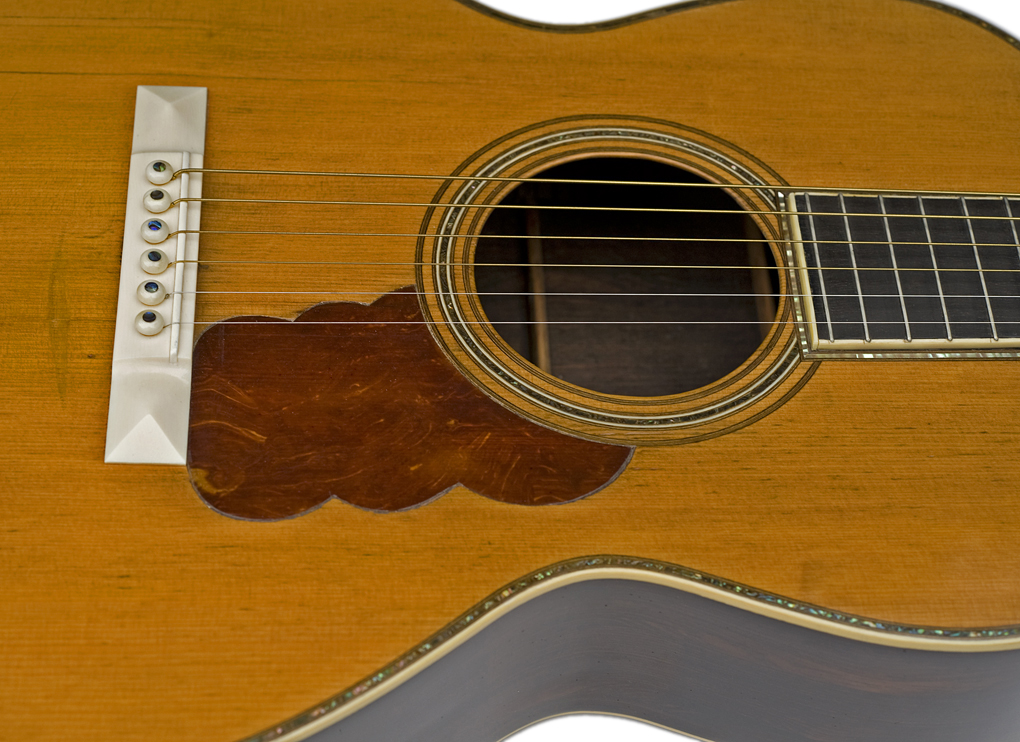
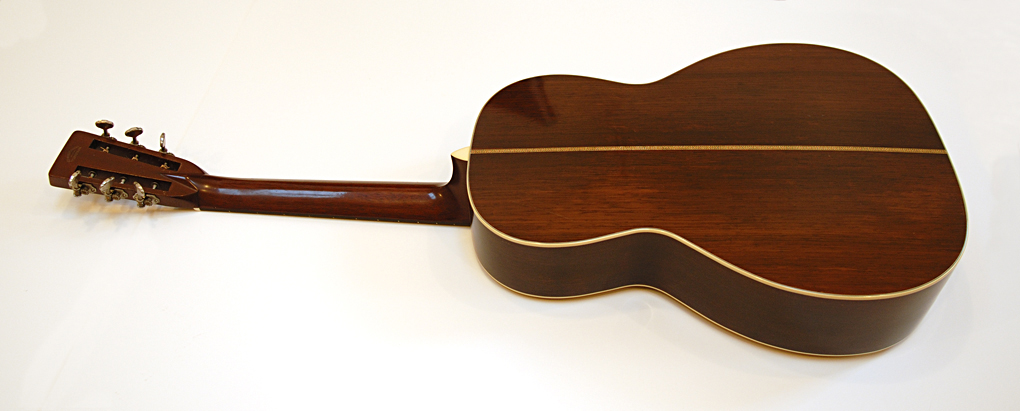
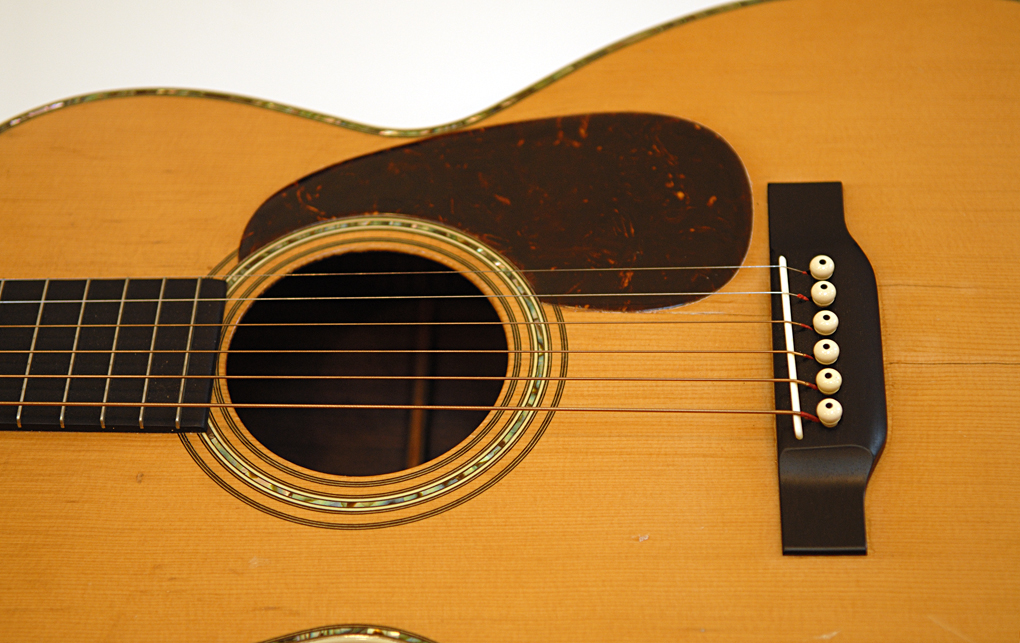
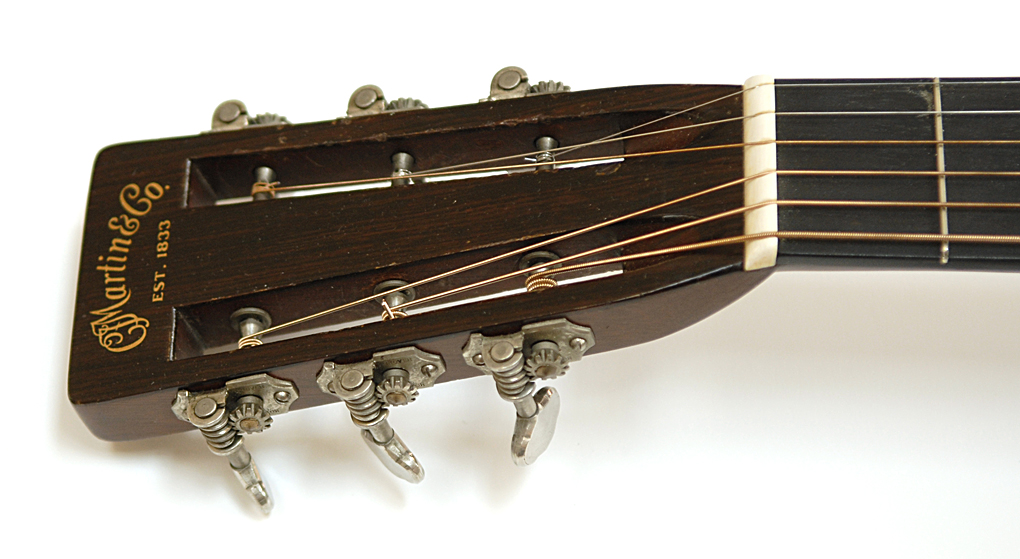
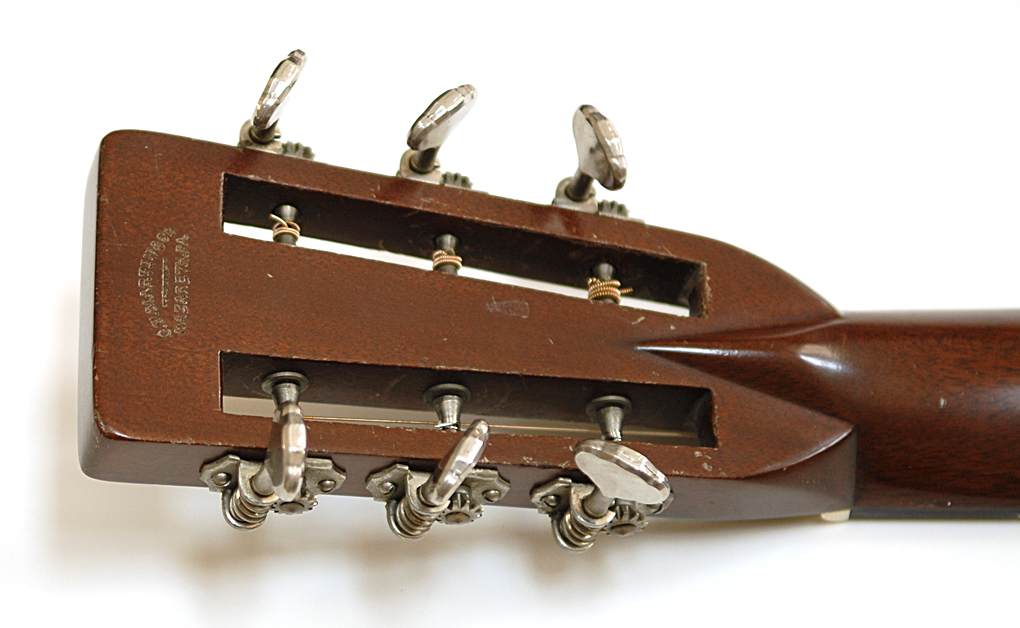
C.F. Martin 1934 00-40H
One of 12 made in 1934. Excellent original condition aside from conversion from original Hawaiian style.
Abalone pearl border inlaid on the top of the guitar and into the soundhole ring. 45 style wood marquetry in backstripe. Back and sides of Brazilian Rosewood, with top of red spruce, and fingerboard in ebony with abolone inlays.
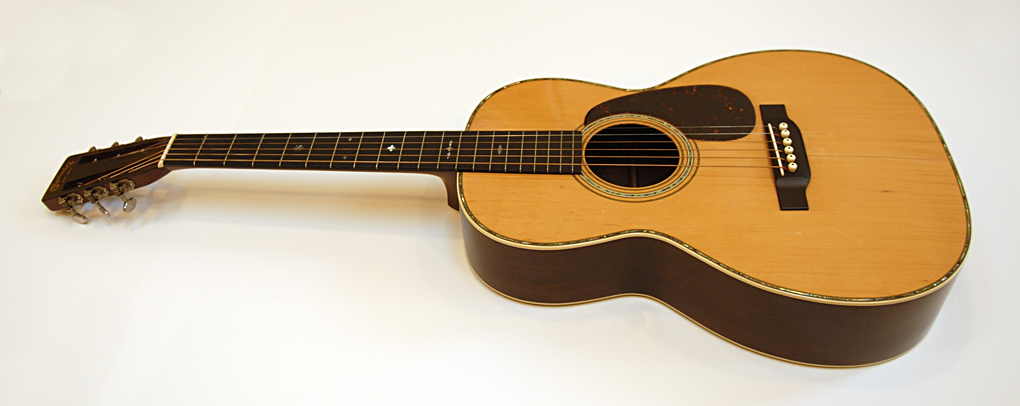
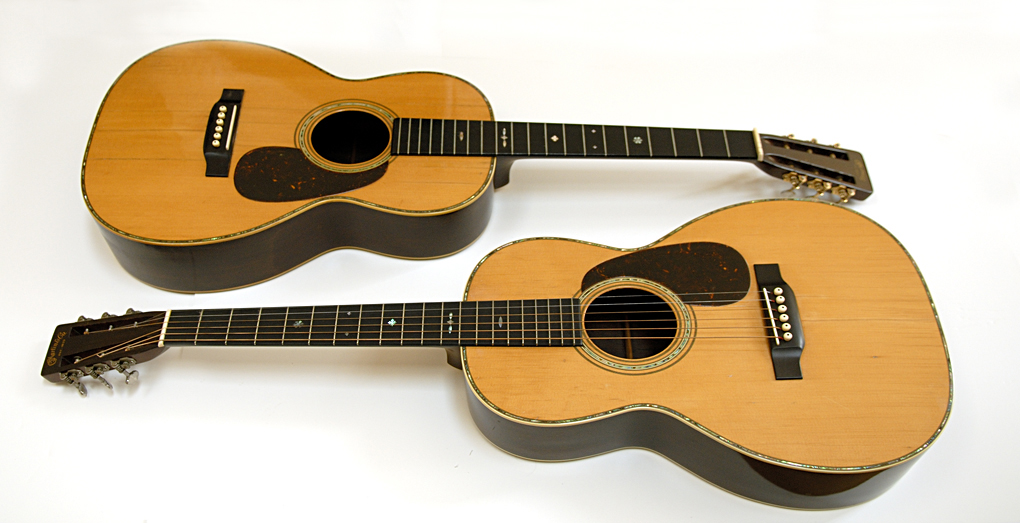
56430 with 56433
earlymartin.com
To See Robert Corwin's Classic Photography of Folk and Roots Musicians, visit:
Steel String Martin Hawaiian Guitars
In July of 1916, with Hawaiian music all the rage, the C. F. Martin Co. shipped six samples each, of Hawaiian koa wood guitars with appointments generally similar to Martin's styles 0-18, 0-21, and 00-28, to the Southern California Music Company of Los Angeles, a chain of Southern California music stores, and one of Martin's largest accounts. SoCal provided Martin with the koa wood from Hawaii, and asked that the trim on these guitars, designed for playing in the Hawaiian style, be as close as possible to those of SoCal's popular ukuleles. To appeal to the Hawaiian market, SoCal asked that the Martin stamp be replaced with the Southern California Music Company stamp, and affixed decals on the headstocks bearing the name "M. Nunes & Sons, Hawaii" and labels inside with either the name "M. Nunes & Sons" or "Rolando". These early samples had koa wood back and sides and tinted spruce tops, but after seeing the samples, SoCal decided to offer all koa guitars, and to market the three models as the 1350, 1400, and 1500. The first of the new SoCal models was shipped in November of 1916.
These guitars, and those Hawaiian guitars designed at about the same time for the Oliver Ditson Company, were the first Martins to be built for steel strings. And while Martin had previously used fan bracing only for their gut string guitars in the Spanish Style, and had since switched it's production to X-bracing, Martin curiously decided to build these early heavier steel string guitars with braces in the shape of a fan. The Model 1500, however, for reasons we may never know, has X bracing.
The first "Hawaiian" Martins were actually not made specifically for Hawaiian playing, with high nuts and flush frets. Those features were only added in 1925.
From the time they were first made in the teens, "Hawaiian" Martins were catalogued with "steel strings and nut adjuster for Hawaiian playing. Suitable for regular playing with nut adjuster removed." The "H" models, with high nut and flush frets, were first produced after the change, in the late 20's.
As you'll see in the new Longworth book (p.234), "Unlike later Martin Hawaiian models, the Ditsons had conventional raised frets."
The same was true of the early Hawaiian models made for the Southern California Music Company, the pre-cursors to the "K" models. As the new edition of the Longworth book says (p. 245) "Although called Hawaiian models, the guitars had raised frets and were often played as regular guitars with steel strings, with a metal "nut adjuster" used to convert the guitar for Hawaiian style playing."
"M. Nunes & Sons" and "Rolando" Models 1350, 1400 and 1500
1916 Model 1400 #28, 1919 Model 1350 #14001, 1917 Model 1500 #181, and 1916 Spruce Top Sample with no serial number
The guitars designed for SoCal had serial numbers of their own. The Model 1400 shown here, from the very first batch, is number 28. Their numbers started with number 19, apparently allowing for the eighteen samples which were sent without serial numbers. The latest Southern California Music Company Hawaiians have trim similar to a regular Martin, and Martin serial numbers. While earlier SoCals bear the Southern California Music Company name on the headstock, later examples have either both the SoCal and Martin names or the Martin name only.
The early Model 1350 and 1500 examples I've seen have the "Rolando Koa Wood Guitars" label, while the 1400 has the "M. Nunes & Sons, Royal Hawaiians" label inside. The later examples have the Martin stamp inside.
C.F. Martin/Southern California Music Company Model 1400
1916 Southern California Music Company Model 1400
Beautiful original condition variation of a style 21 guitar made for the Southern California Music Company, and sold as the Model 1400.
From the first batch of production SoCal guitars, this was also one of the first batch of Martins to utilize all Koa wood construction.
Along with the early Ditson dreadnaught, also made with fan bracing, this was also one of the first production Martins made for steel strings.
The pyramid style bridge is a replacemement.
C.F. Martin/Southern California Music Company Model 1350
1919 Southern California Music Company Model 1350
Fan style braces similar to a Ditson dreadnaught.
Stamped inside, "C.F. Martin & Co., Nazareth, PA"
Stamped on back of headstock "Southern California Music Company, Los Angeles"
Both the initial samples for the Model 1350 and the earlier 1350 with the Rolando label have a single ring rosette like some of the guitars Martin made for others such as Ditson, Wurlitzer, and Foden, but the later examples with Martin serial numbers have a standard Martin three ring rosette.
Serial numbers 14001 and 14003.
#14001
#14003
In 1919, Martin began selling their less expensive guitars with rounded slots in the headstock. Previously, all Martins had square slots, a process that took extra time which was in short supply as as Martin's production was doubling yearly. Curiously, these two guitars, two serial numbers away and both from the same batch, have different style headstocks, which is not surprising if you follow Martin history. No doubt, the necks were made first, and different styles appeared when the worker reached into the pile when it came time to attach a neck.
14003 and 14001
C.F. Martin Guitars Hawaiian Guitars Made for Oliver Ditson & Co.
The "Standard" size Ditson Model 1-21, "Concert" size Ditson Model 11, and "Extra Large" (Dreadnaught) size Ditson Model 111 reissue.
Martin's "Ditson Model" guitars, with their wide waisted body shapes reminiscent of early European guitars, were made expressly for the Ditson Stores and came in three sizes, Standard, Concert, and Extra Large.
The Standard Model has a width at the lower bout of 11 1/8"
The Concert Model has a width at the lower bout of 12 3/4"
The Extra Large Model has a width at the lower bout of 15 5/8"
The Extra Large model, requested by Harry Hunt of the Ditson Company, and designed with the help of Martin shop foreman John Deichmann, became known as "the Dreadnaught", and was the first Dreadnaught guitar ever made.
The Ditson Models had their own model designations, and unlike other Martins, their trim level was designated as 1, 2, or 3, but their size was designated by the number of digits, ie. 1, 11 or 111.
All of these regular Ditson Models were made with a spruce top and mahogany back and sides.
Some Ditson Model guitars have either lighter orange tinted tops or dark stained tops. In some years the stained top was an option.
While fan bracing is generally associated with lighter guitars made for gut or nylon strings, the Ditson models have the same style of fan bracing as seen on the koa wood guitars made for the Southern California Music Company, which were originally made to be played with heavier steel strings in the Hawaiian style.
The Models 1, 11 and 111 have dark binding on front, none on the back.
The Models 2, 22 and 222 have white binding front and back.
The earlier Ditson models had bridges supplied by Lyon & Healy of Chicago with raised flat topped squares on the wings rather than the pyramids typical of many of the better vintage Martins.
The 3 and 33 were fancier models which changed a bit through the years. These had pearl inlaid bridges supplied by Lyon & Healy, and the earliest examples had fancy fingerboard inlays. The extra large 333 was catalogued, but none seem to have been made.
Early Ditson Model 2 #144 and Model 22 #160, both from December, 1916
Early Ditson Model 22 #160 from December, 1916 with white binding, standard tinted top and Chicago style bridge, and one from the very last batch of small Martin "Ditson Model" guitars, a Model 11, #565 from January, 1921 with dark binding on top only, optional dark tinted top and standard Martin pyramid bridge. The Model 111 was revived in 1923, and 19 more were made between then and 1930, with standard Martin X bracing replaing the earlier fan bracing.
Ditson also sold guitars which combined the trim levels of regular Martin Styles with the same small, narrow body shape of the Ditson "Standard" size, an example of which is the Style 1-21 shown here. The 1-21 has standard Martin Style 21 trim, including herringbone design marquetry in the rosette around the soundhole and in the center strip on the back. Besides the 1-21, this Ditson size was also available as Ditson Models 1-18, 1-28, 1-30, 1-42, and 1-45.
Ditson Model 1-21 #433 from July, 1919 and Model 11 #565 from January, 1921
Ditson was a large music retailer with stores in New York and Boston (and earlier in Philadelphia), and was one of Martin's largest customers, selling guitars and other instruments, including many mandolins. Besides the "Ditson Model" Martins, a large number of regular Martin models, stamped with the C. F. Martin name only, were sold by Ditson. A number of the regular Martin models were also sold by Ditson with the Ditson stamp on the back of the headstock and/or on the inside center strip. And many other models, such as the Empire, were made by other manufacturers for Ditson. So finding an instrument with the Ditson stamp does not necessarily mean you've found a "Ditson Model" Martin, or even an instrument that was made by Martin at all.
C.F. Martin 1918 000-42
In 1918, Martin made their first two Style 42 guitars in the relatively new and larger 000 size. While one of the two was a rather conventional Style 42 in the 000 size, this 000-42 was special ordered by the Ditson Company in 1918 in the style of Ditson's new Dreadnaught guitars, which were built for Hawaiian style playing with steel strings. That makes this guitar a rare example of an extremely early 000 size Martin built for steel strings, as well as a rare example of a Martin built for steel strings with an ivory pyramid style bridge. As was true of the early Martin Dreadnaught, and all of Martin's early Hawaiian steel string guitars built for both the Ditson Company and The Southern California Music Company, this guitar was built with fan braces. This guitar was also special ordered with a cloud shaped pickguard inlaid into the top.
C.F. Martin 1934 00-40H
One of 12 made in 1934. Excellent original condition aside from conversion from original Hawaiian style.
Abalone pearl border inlaid on the top of the guitar and into the soundhole ring. 45 style wood marquetry in backstripe. Back and sides of Brazilian Rosewood, with top of red spruce, and fingerboard in ebony with abolone inlays.
56430 with 56433
earlymartin.com
To See Robert Corwin's Classic Photography of Folk and Roots Musicians, visit:
For Information on Photography for
Exhibition, Publication, CD's, Promotion, Web Pages, Tour Books,
to Purchase Photographic Prints, or
If You Have Questions About An Early Martin Guitar:
e-mail: Robert Corwinentire site copyright ©1998 through 2010 Robert Corwin/Photo-Arts. All rights reserved.