Martin Style 15, 17, and 18
The early Style 17 and 18 were nearly identical, but offered in different sizes. Early Styles 17 and 18, like almost all early Martins, were built with spruce tops and Brazilian rosewood back and sides.
In 1917, the Style 18 was given mahogany backs and sides, and became the simplest of the spruce top, mahogany back and sides Martins, and in 1922 the Style 17 was reborn with the Model 2-17, an inexpensive mahogany top guitar. After the Style 18 had it's flat finish replaced with a dark gloss finish in 1935, at which time it became generally offered in a 00 size only, the all-mahogany Style 0-15 was added in 1940 as a lower price alternative with semi-gloss finish.
The early Style 17 had rosewood binding on the top only. The 2-17 was re-designed in 1929 as the style "25", which dropped all bindings to make it more affordable during the depression.
1893 2 1/5 -17
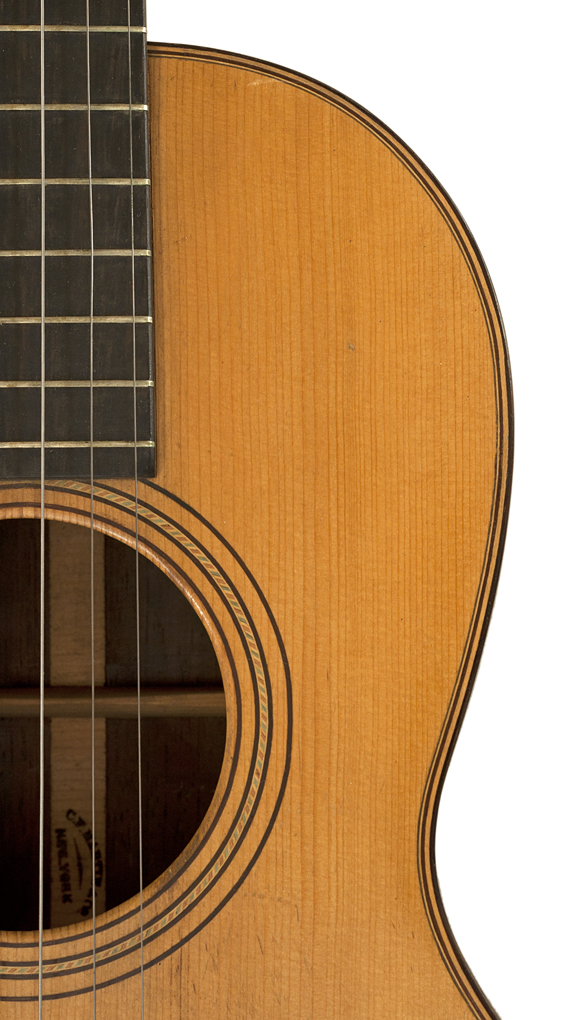
1936 Martin 0-17
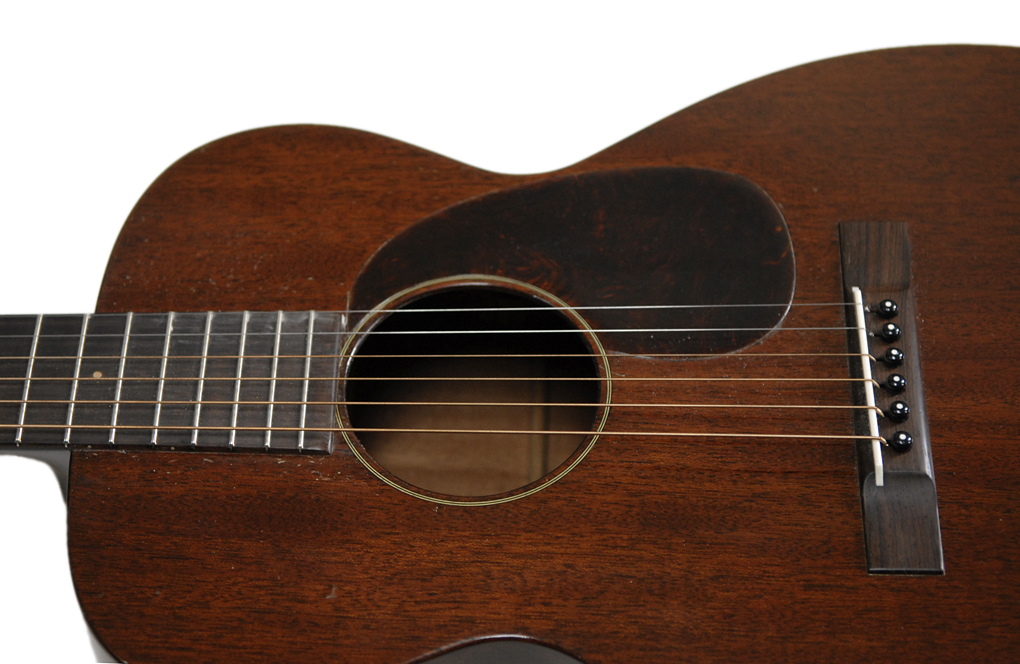
The Style 18 has been distinguished from it's inception in the 1850's by a five ply top border and since soon after the turn of the century by a nine band central rosette ring surrounded by two single black rings.
The Style 18 began life with rosewood bindings which were changed to black Fiberloid plastic in 1934. According to the new "Longworth" book, "tortoiseshell plastic" bindings appeared by 1939, earlier on smaller models, which were replaced by black Boltaron in 1966 with serial #212100.
1943 Martin 00-18
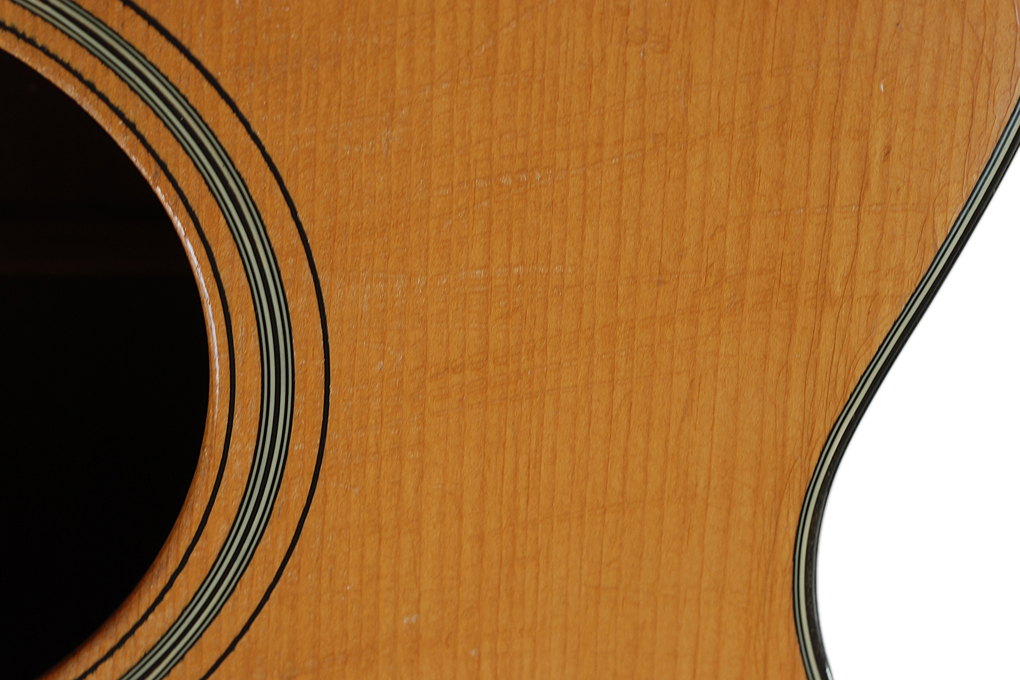
1944 Martin D-18
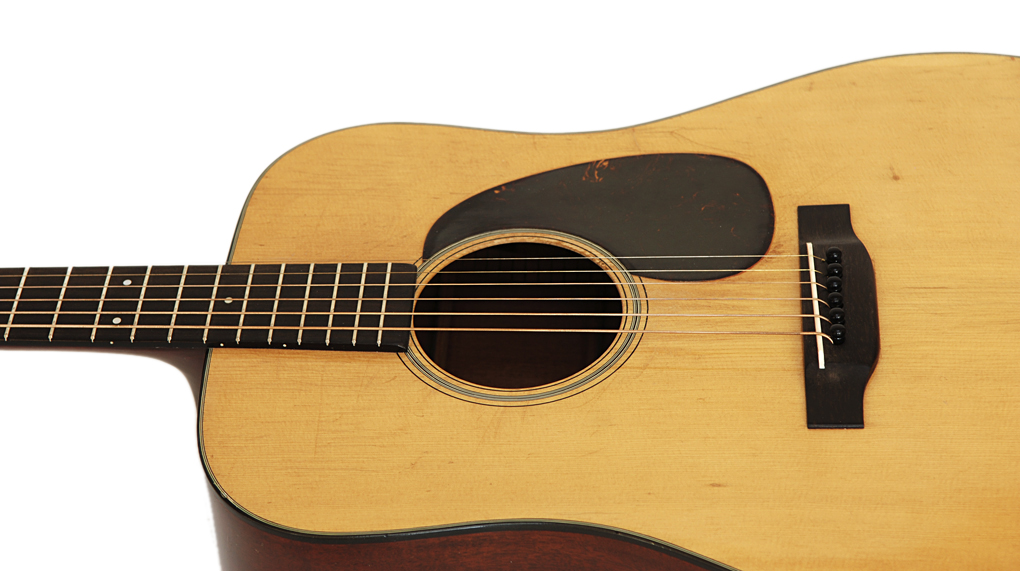
The Martin Style 2-17 and "25 Model" 2-17
These Style 2-17 guitars illustrate the difference in trim through the years.
This first 2-17, one of the first two to ship in 1922, has a standard Martin rosette and top border.
1922 Martin Style 2-17
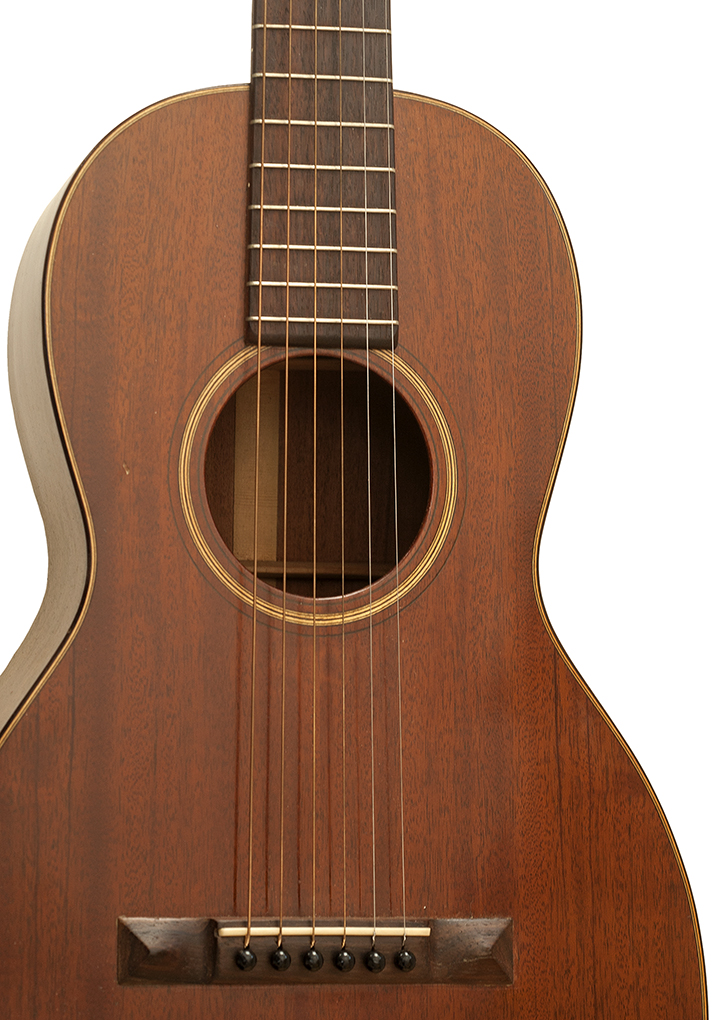
By 1924, Martin the design had changed with a distinctive new single ring rosette with a dark center, and the pyramid bridge was gone.
1924 Martin "Wolverine" Style 2-17

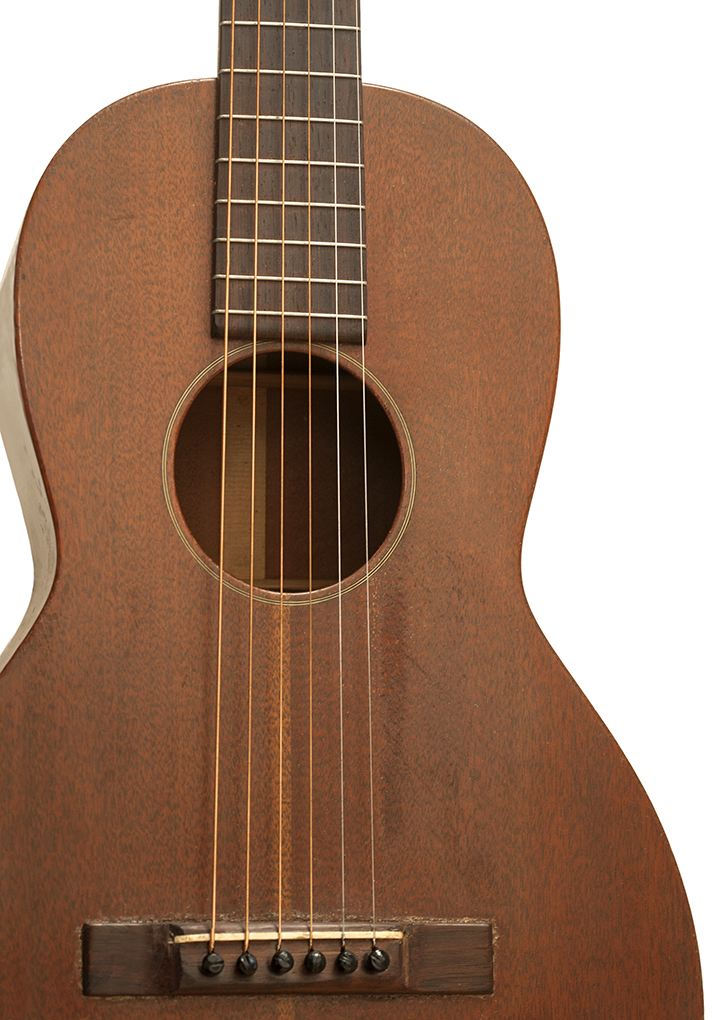
In 1930, Martin marketed the 2-17 as a "Model 25" and simplified the appointments, with a single ring rosette and no top border or binding, in order to lower the price for the depression era market.
1930 Martin Style 2-17
The Martin "32 Model" 0-17 and 0-18
In 1932, Martin introduced their first 14 fret models to follow the Martin OM, a special "32 model" Style 0-17 and 0-18, with low prices to match the post-depression market. Surprisingly, while the 32 model 0-18 had a standard shaded top, the 0-17 became shaded when the "32 model" designation was dropped.
1932 Martin 0-18 "model 32"
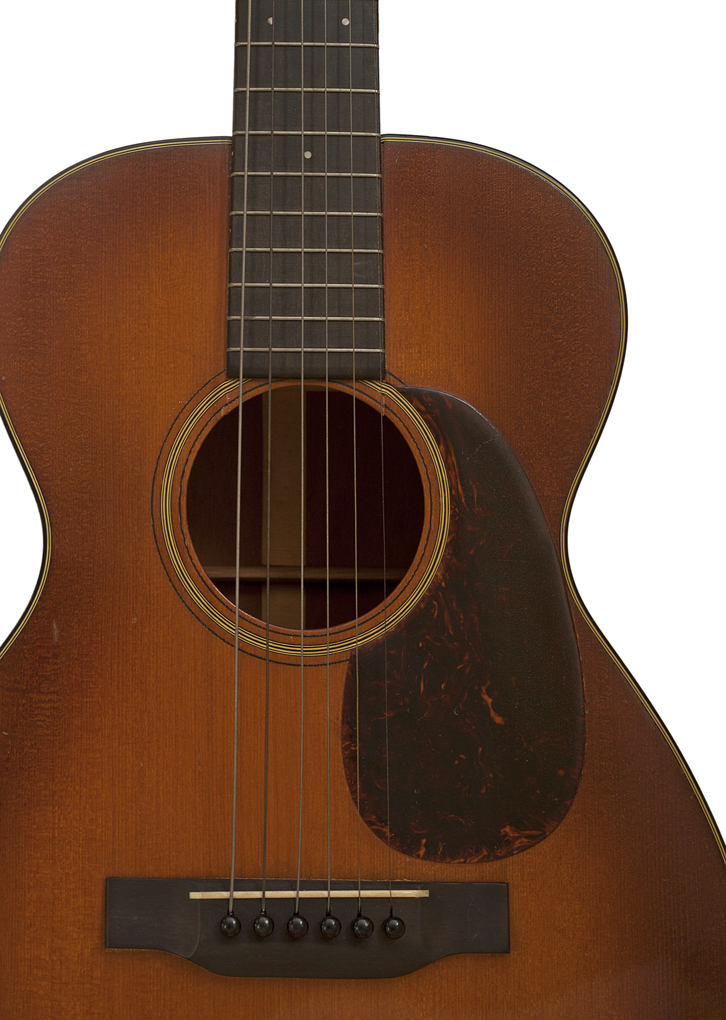
The Martin 0-17 and 0-18 were given the designation "32 Model" from February and March, 1932, respectively, to November, 1932. A standard feature of the new 14 fret "32 Model" 0-18 was it's shaded top.
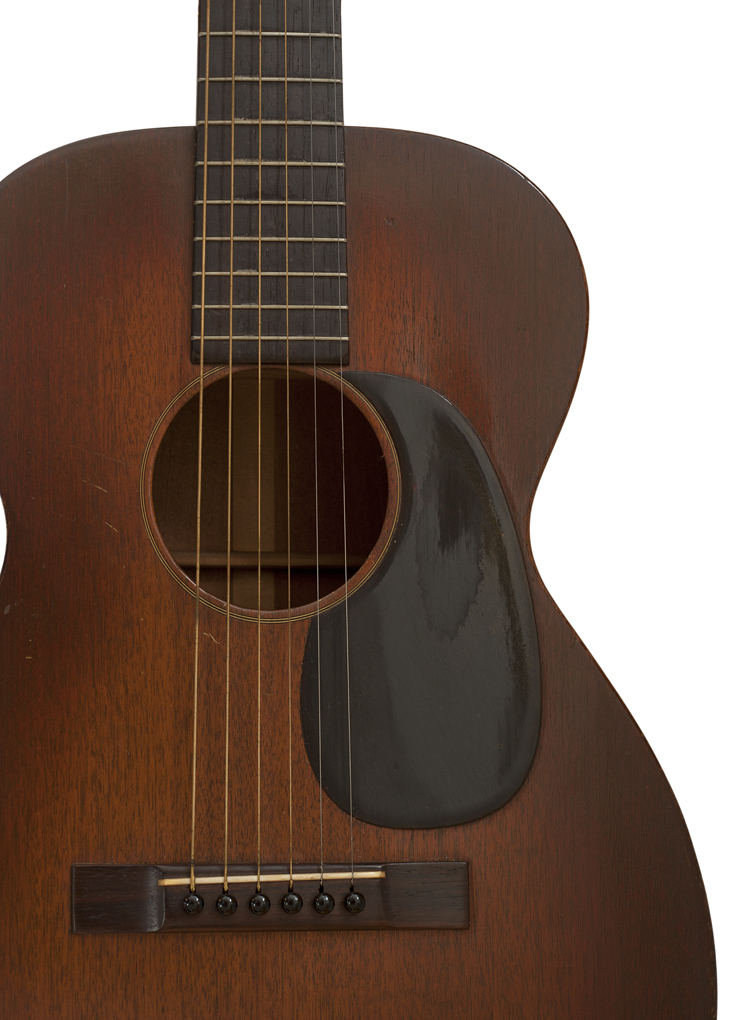
The earliest shaded 0-17 I know of so far, #52465, from December, 1932, is from the first batch not to be labeled "32 Model". The first I know of to revert to having no shading is #53241, from mid-1933. I have heard of no non-shaded 0-17 between these times.
So I believe it's reasonable to assume, until we see evidence to the contrary, that Martin began to shade the tops, backs and sides as a standard feature of the 0-17 in December, 1932, at the same time the "32 Model" designation was dropped from both the 0-17 and 0-18, and shading of the 0-18 was discontinued, and continued shading the 0-17 until May or June of 1933.
Martin very rarely mentioned shading in their shop orders for any guitar in any period.
It's not unheard of for Martin to move features downscale, as the Style 17 became a glossy finish 00, and the Style 15 was introduced to fill the gap as a matte single 0.
The 0-17 was a popular model, so it may seem odd that so few are seen today with shading as a regular feature. Yet nearly every Ebay ad I've seen for a tortoise headstock 0-15 says "extremely rare, we've only seen one other like this", despite the fact that I've now identified sixteen separate batches of 0-15 Martins built with tortoise headstocks, with a minimum of 1680 built, compared to an estimated total of less than 300 shaded 0-17.
1933 Martin 0-17
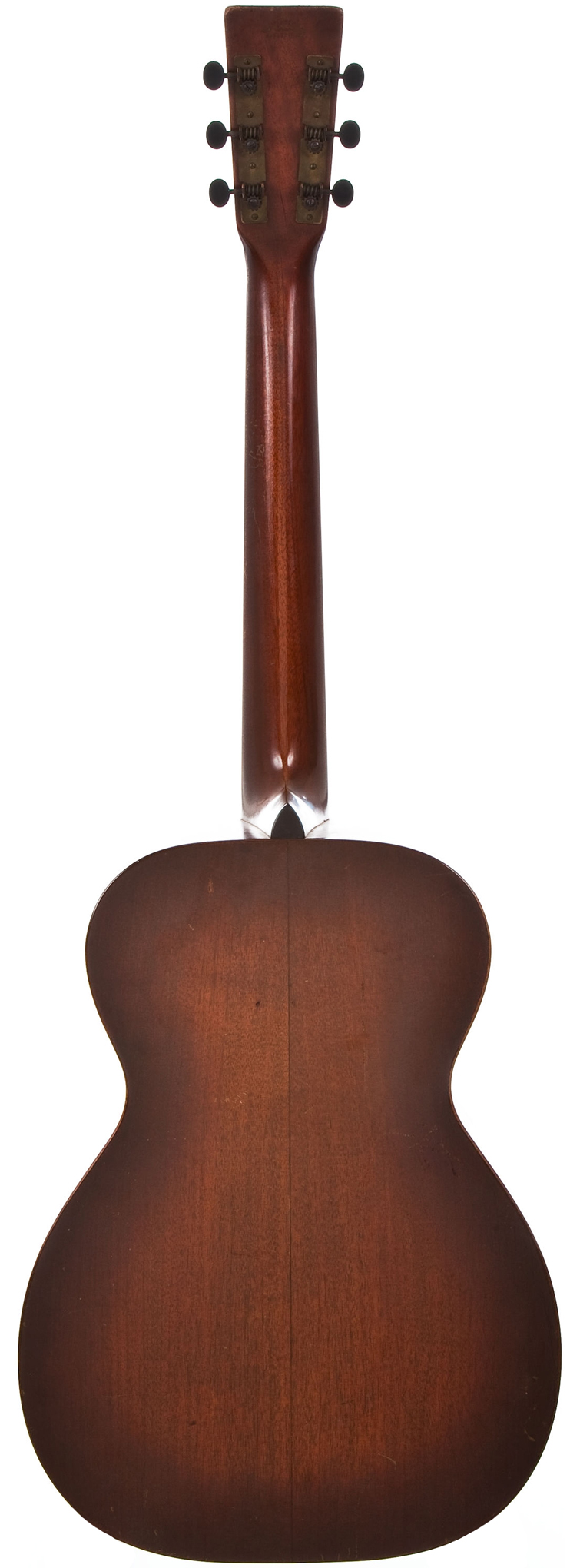
Style 18 Tenors
1930 Martin 0-18T
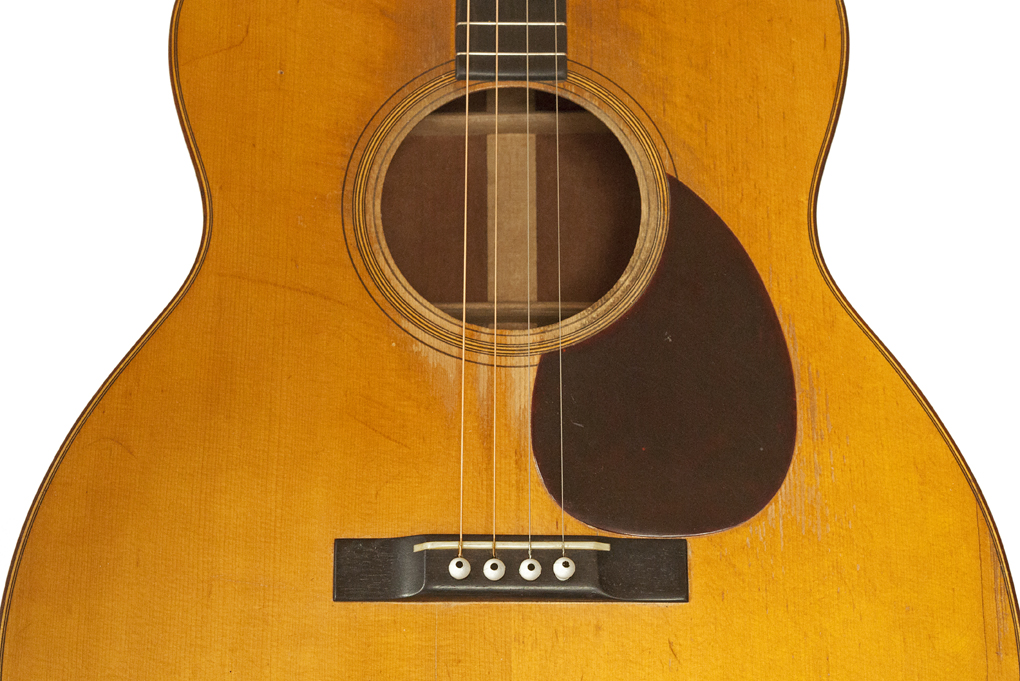
1931 Martin 0-18T
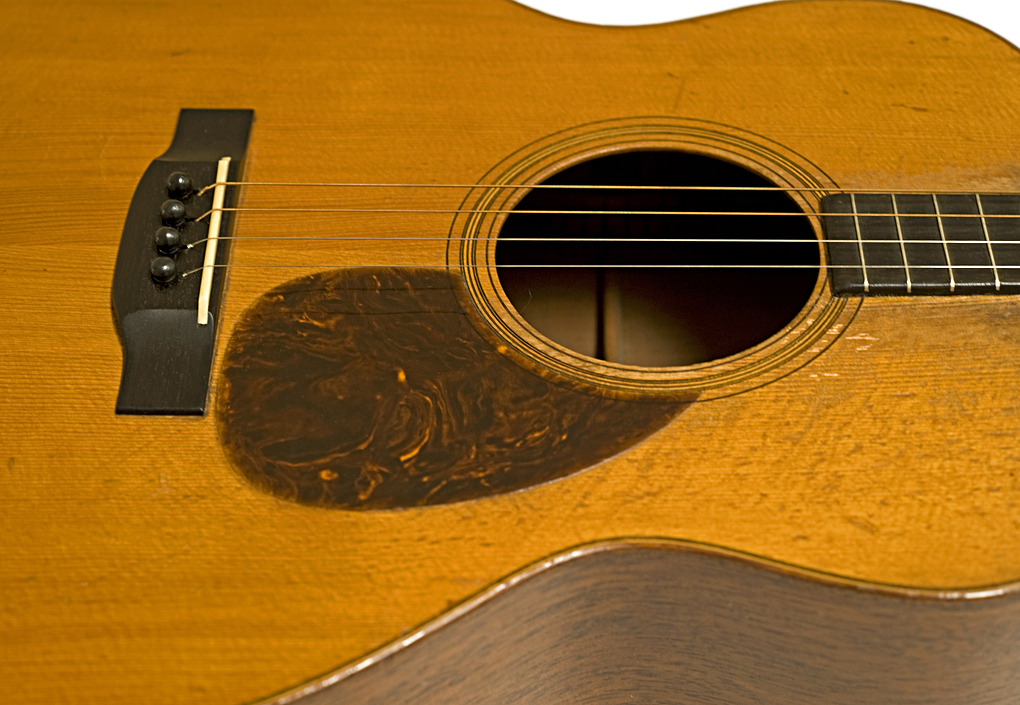
Fretboard Inlays
Martin Guitars built before 1898 had no inlays on the fretboard.
By 1906, and again when reintroduced in 1922, the Style 17 Martins had small dot inlays on the fifth, seventh (2), and ninth frets.
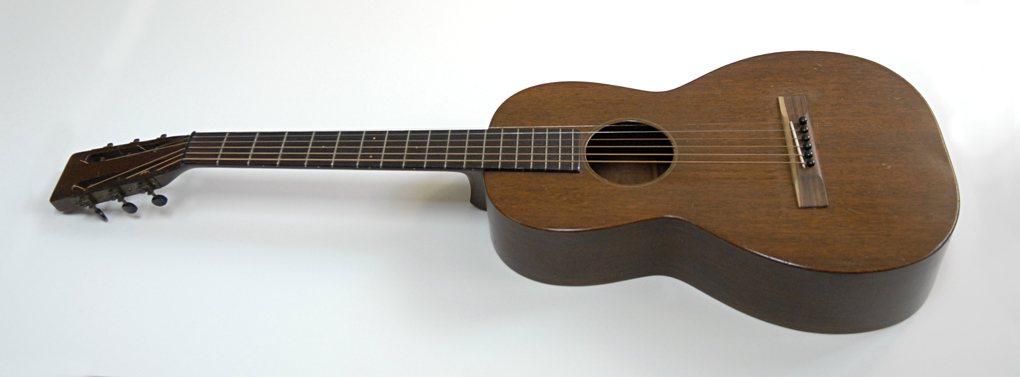
Starting in early 1932, Style 17 Martins had small dot inlays on the fifth, seventh (2), ninth, twelth (2), and fifteenth frets.
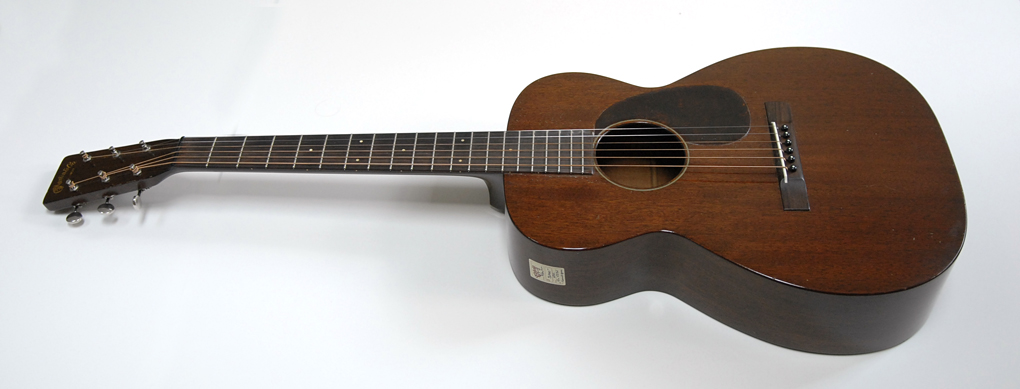
Starting with it's introduction in 1939, Style 15 Martins had small dot inlays on the fifth, seventh, ninth, and twelth frets, with no double dots.
By 1902, Style 18 Martins had small dot inlays on the fifth, seventh, and ninth frets.
Surprisingly, with a single dot on the seventh fret, the Style 18 had fewer dots than the Style 17.

Starting in early 1932, Style 18 Martins had small dot inlays on the fifth, seventh, ninth, twelth, and fifteenth frets which were graduated in size.
Here again, the Style 18 had fewer dots on the ninth fret than the Style 17.
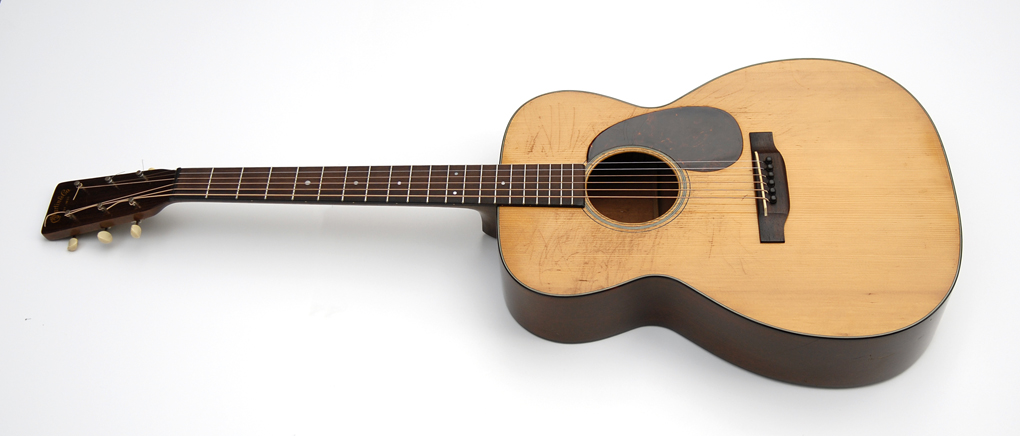
In 1946, Style 18 Martins had large dot inlays on the fifth, seventh, ninth, twelth, and fifteenth frets which were uniform in size. (not to seventeenth fret as of 1944 as stated in Gruhn's Guide.)

Starting in 1947, Style 18 Martins had large dot inlays on the fifth, seventh, ninth, twelth, and fifteenth frets which were graduated in size.
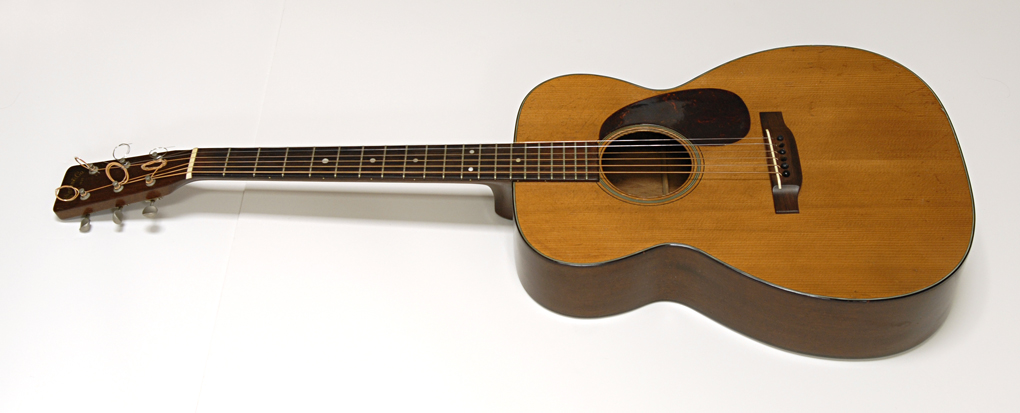
Martin Style 17 and 18 Variations Made for Other Firms
At about the same time as Martin formally introduced the pickguard as standard, other forms of the pickguards appeared on Martin guitars madefor other companies on special order, including the 0-17S, a spruce top variation of the 0-17 made for the Montogomery Wards Stores.
1930 Montgomery Wards 0-17S
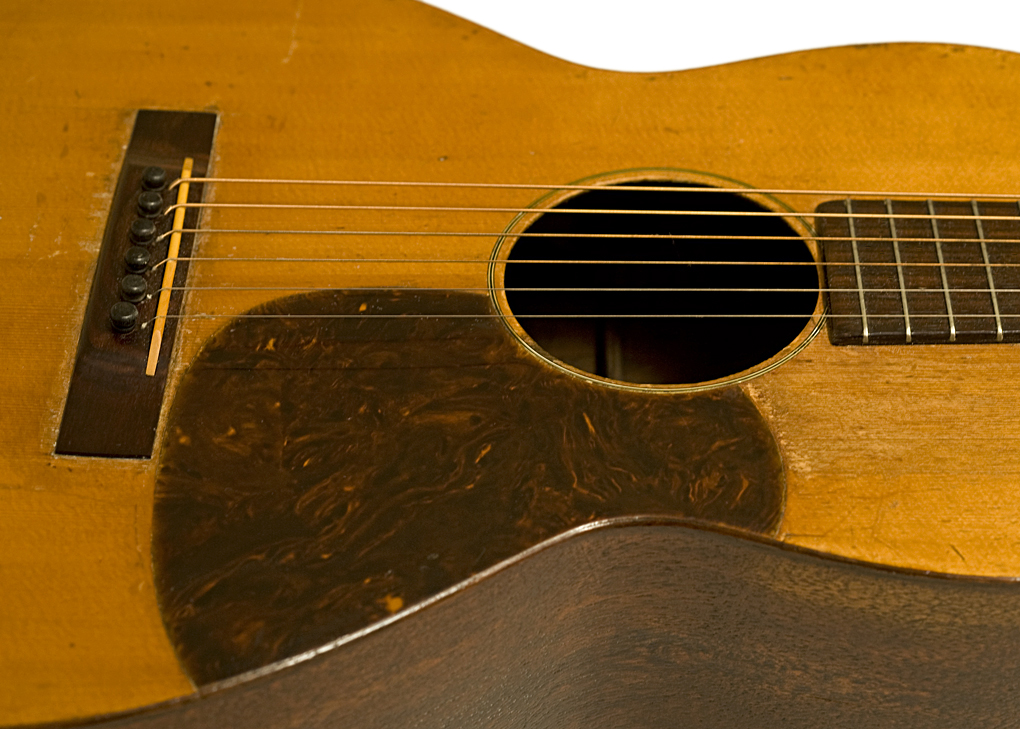
B & J S.S. Stewart 0-17S
This upgraded Style 17 with a spruce top was a special edition made as the S.S. Stewart 0-17S.
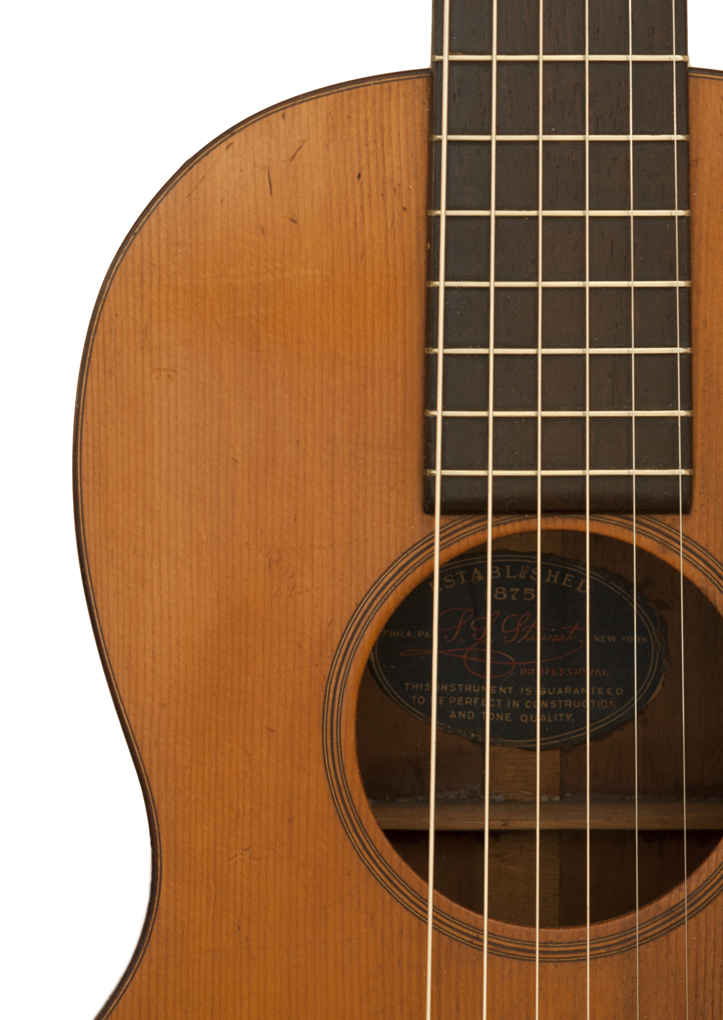
This upgraded Style 17 was a special edition made as the Beltone 2-17S.
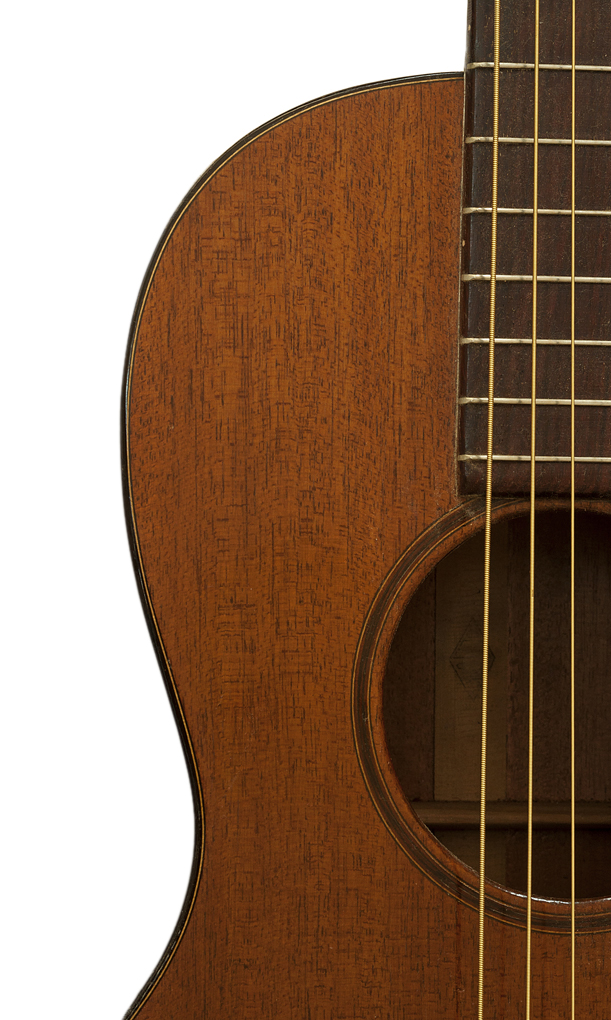
Martin 0-15 with Fiberloid tortoise shell color headstock veneer
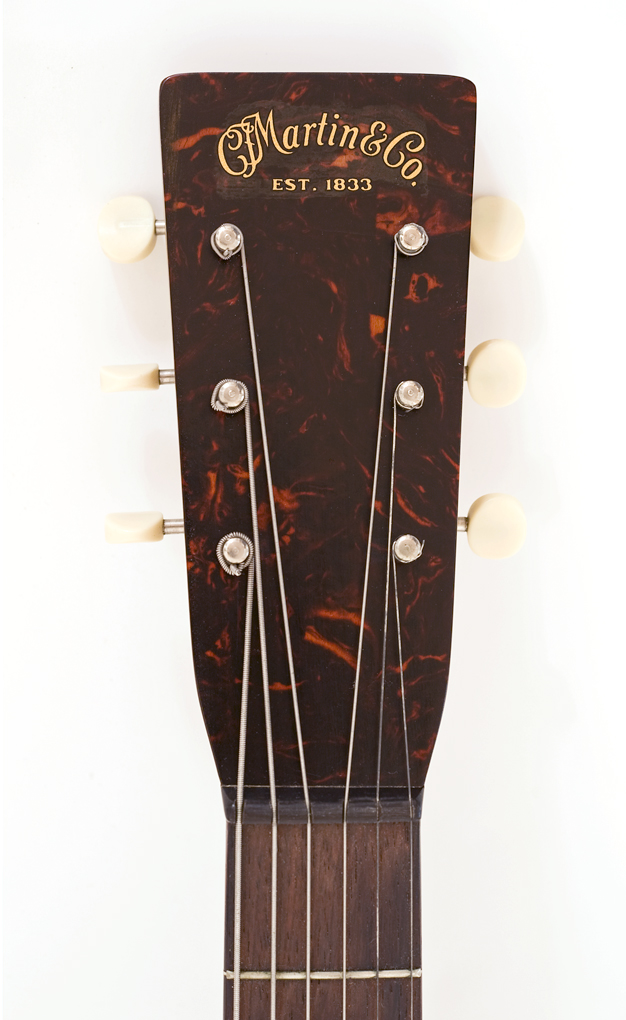
Beginning in 1938, a number of Martin guitars were built with a "Fiberloid" tortoise shell colored head veneer, starting with asunburst top-of-the-line D-45 #71663 formerly owned by Don Teeter, and including a 1940 D-45 later sold by Bernie Leadon to the Japanesecollector Mac Yasuda, and a third D-45 from 1941, as well as a small handful ofothers, reportedly including a D-28, a couple of 1939 D-18's and a 000-45.
By 1940, the tortoise head veneer appeared on the inexpensive budget model 0-15. It's interesting that a feature apparently desirableenough to be used on special order for the exclusive D-45 should soon find itself as a regular distinctive feature of Martin's cheapest andmost plentiful guitar, but plastics were pretty hot stuff at first!
I've seen several Ebay ads for 0-15 Martins with tortoise headstock veneers with words to the effect of: "Extremely rare, one of two or three ever seen."
The full production run was from March, 1940 to October, 1943.
The first batch was specified with "Fiberloid tortoise shell colored head veneer"
I think it's safe to say that tortoise was standard for the 0-15 from the first run in March, 1940 until at least March, 1943, which would mean at least 1,680 tortoise headstock 0-15's were made.
Tortoise headstock 0-15 sightings:
74696 from 4/40
74756 from 4/40
74796 from 4/40
74992 and
75003 from 5/40
75228 from 6/40
76811 from 1/41
78413 from 7/41
78768 from 9/41
78872 from 9/41
79049 from 10/41
79190 and
79202 from 10/41
79839 and
79846 from 12/41
80064 from 1/42
81219 from 3/42
82238 from 8/42
83631 from 3/43
We still await any 0-15 sightings from guitars built from March to October, 1943, but it now seems likely that tortoise was standard for the entire run of the Style 0-15 from 1940 to 1943.
The Style 2-17 Martin Guitar and Steel Strings
The first question one asks about a vintage Martin guitar is often "was it built for steel strings?"
Thanks to the extensive research in the Martin archives by John "Woody" Woodland, we now know that Martin began the process of shipping their guitars with steel strings as regular equipment with two Martin Style 2-17 guitars, #16879 and #16887, shipped to the John Wanamaker Department Store in Philadelphia on March 27, 1922.
This is #16879:
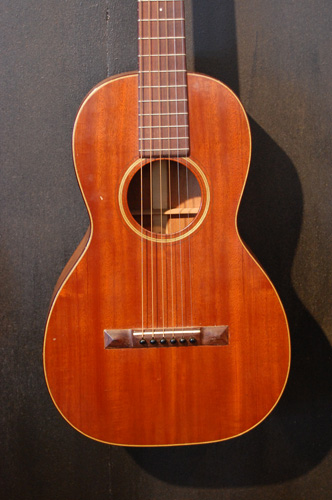
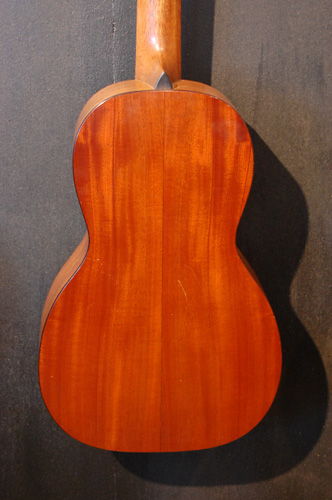
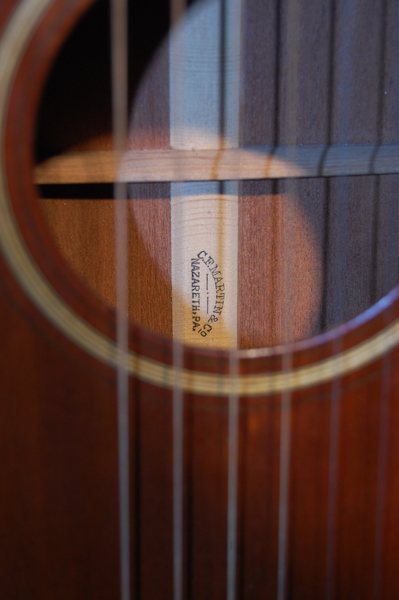
The Martin Style 2-17 sold for a price of $25 each retail, $12.50 wholesale, with canvas duck cases selling wholesale for $2.38 each.
The 0-17 and other Style 17 Martins followed soon after with steel strings as regular equipment.
Martin announced the style 18 as having steel strings as regular equipment on January 1, 1923.
By 1926, the Style 28 was shipped with steel strings as regular equipment, but this is not something that can be detected by measuring the bridge plate and top thickness or bracing. There are no such clear cut differences in build, because Martin did not "brace" their guitars for steel strings as such. It was more a matter of "regulating" for gut on request by then, by setting proper stringheight and such. Martin, in fact, thickened the bridge plate after they had already been shipping their guitars with steel strings for several years. Perhaps the clearest physical difference in guitars regulated for steel is the width of the grooves in the nut. Unfortunately, most dealers and repairers of Martin guitars don't yet have an understanding of such things.
vintagemartin.com
To See Robert Corwin's Classic Photography of Folk and Roots Musicians, visit:
For Information on Photography for
Exhibition, Publication, CD's, Promotion, Web Pages, Tour Books,
to Purchase Photographic Prints, or
If You Have Questions or Suggestions About This Web Site or Vintage Martin Guitars:
e-mail: Robert Corwinentire site copyright ©1998 through 2012 Robert Corwin/Photo-Arts. All rights reserved.