C. F. Martin Style 27, 30, and 34 Guitars
The Style 27 has roots as a size 2 guitar selling for $27. A 1-27 was added later. The Styles 30 and 34 both began as size 2 guitars, both expanding later to include several other sizes.
The Style names are derived from the price of the instrument, so it may seem odd that a Style 27 appears fancier than a Style 28, and it is! At the time the style names were set, the plainer Martin 0-28 was more expensive than the pearl adorned Martin 2-27 because of it's larger size.
Style 27, 30, and 34 Top Borders and Rosettes
1893 Martin 2-27
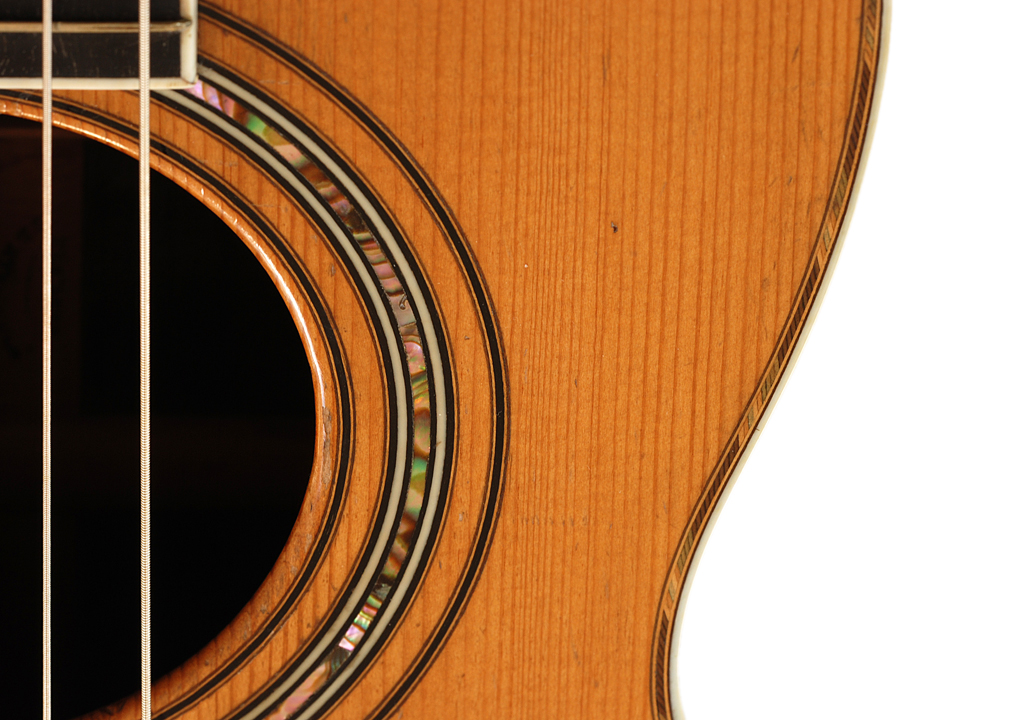
1870's 2-27
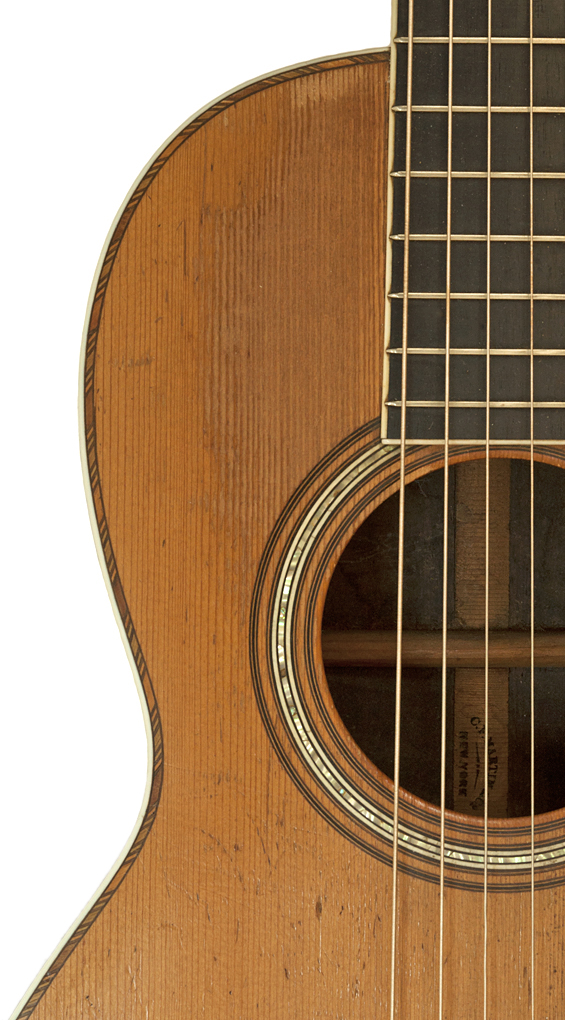
1860's 2-27 with rosewood veneer spruce back
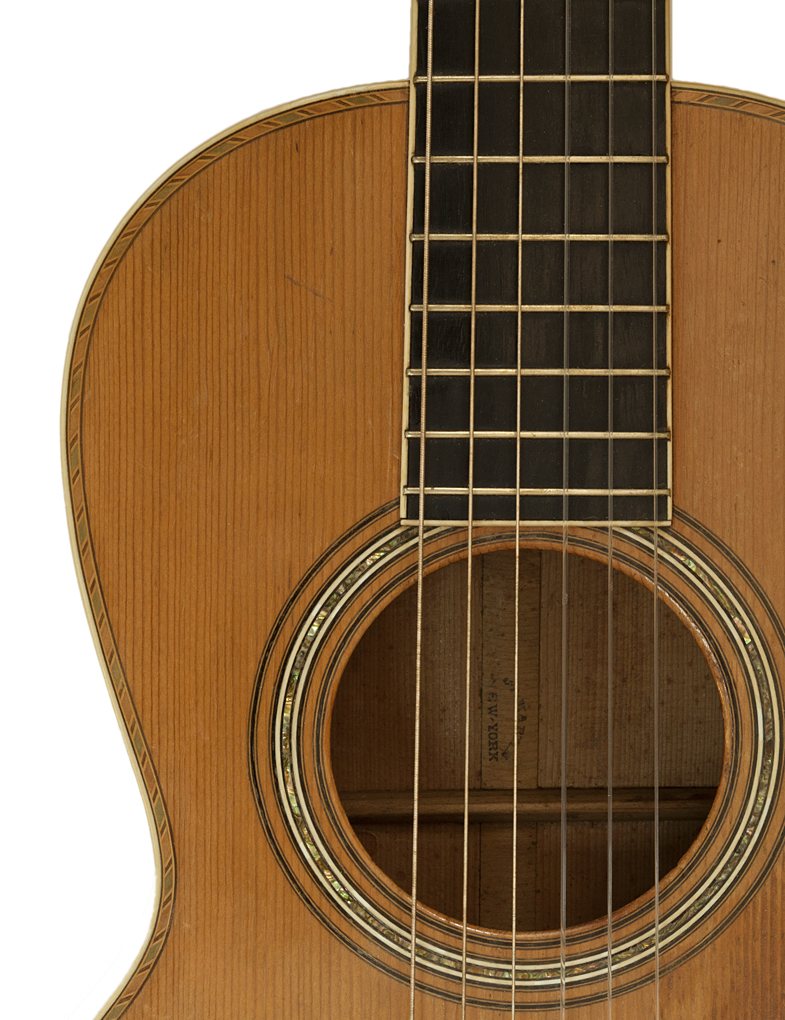
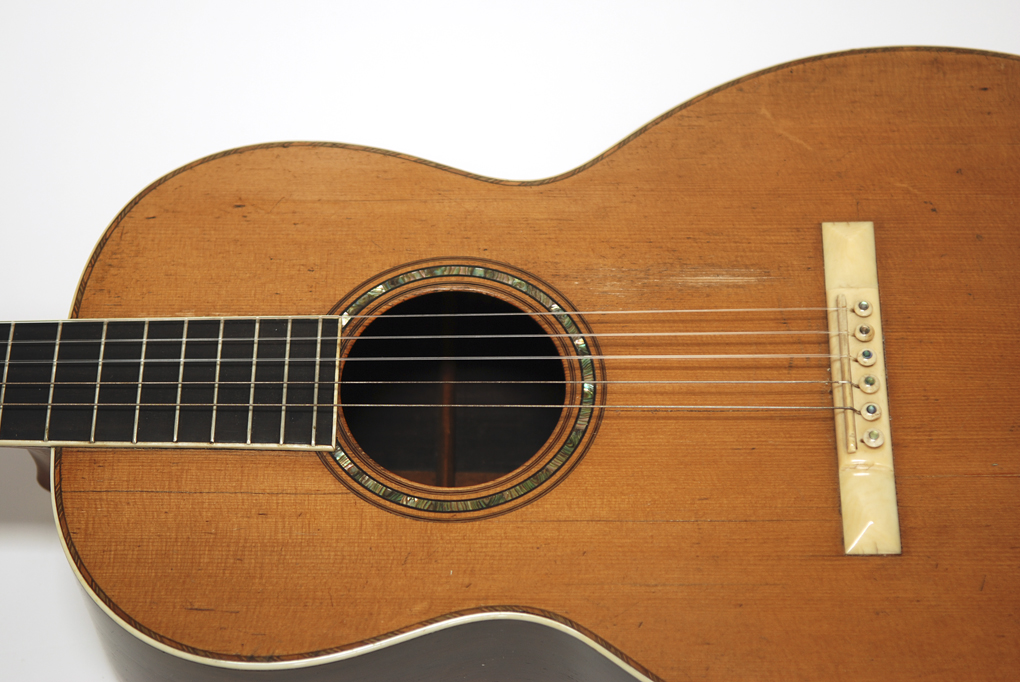
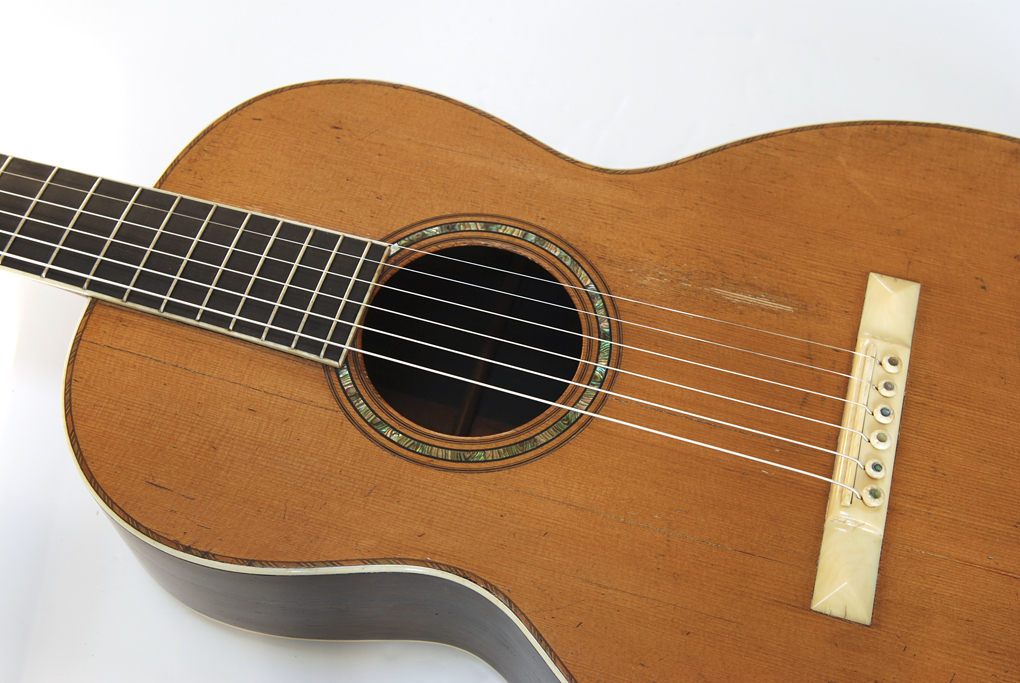
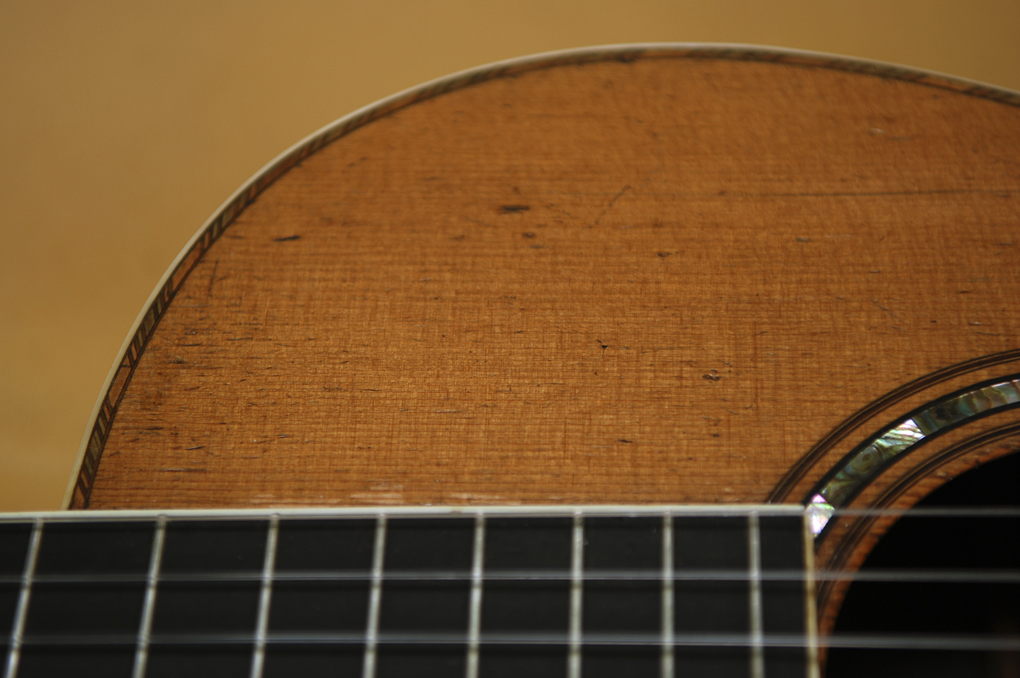
The Style 27, 30, and 34 Martins can be identified by the combination of pearl in the rosette with fancy wood marquetry around the top border of the guitar.
The styles 27 and 30 differ little. In fact, the Style 27 of some years is almost exactly the same as the style 30 of other years. The only consistent distinguishing feature is the use of brass tuner plates on the Style 27 and silver tuners on the Style 30. The Style 27 was typically made in size 2, while the Style 30 was typically made in size 0.
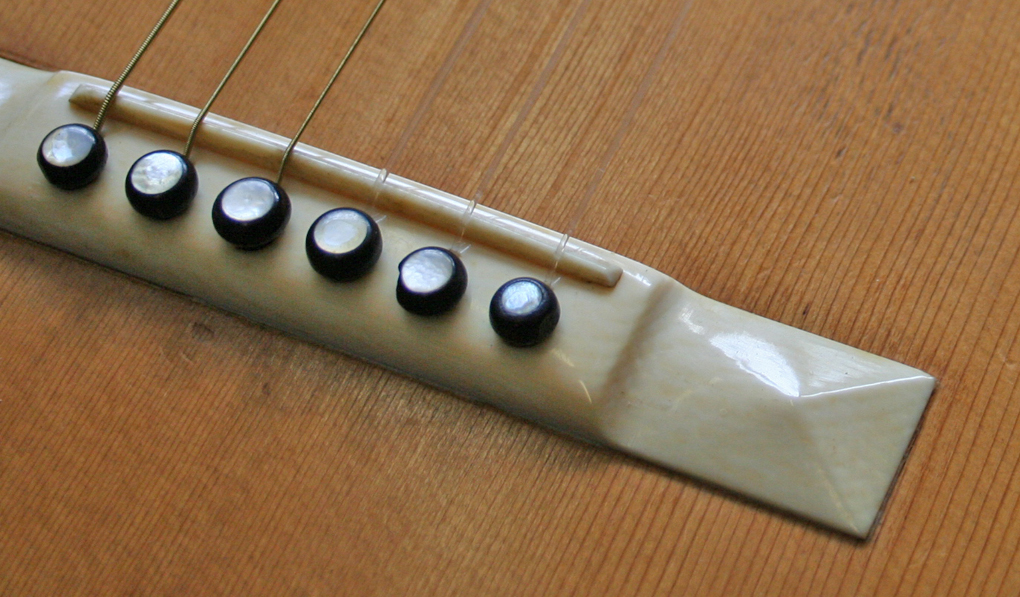
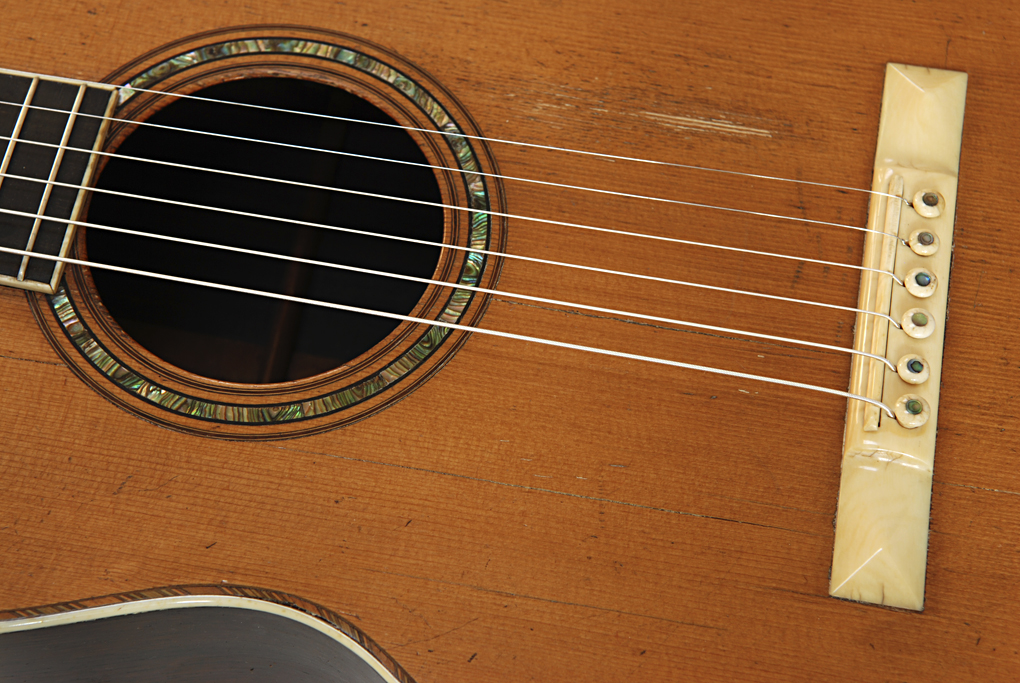
Styles 27 and 30 have an ebony wood pyramid bridge, while a style 34 differs mainly in having a solid ivory pyramid bridge.
The top and back, as well as the fingerboard, were bound with genuine Elephant ivory. As noted in Longworth, all three Styles were desribed as "ivory to the nut", having ivory binding which extended the length of the neck.
Here we can see a Style 27 from 1893 with a Style 30 made in 1917.
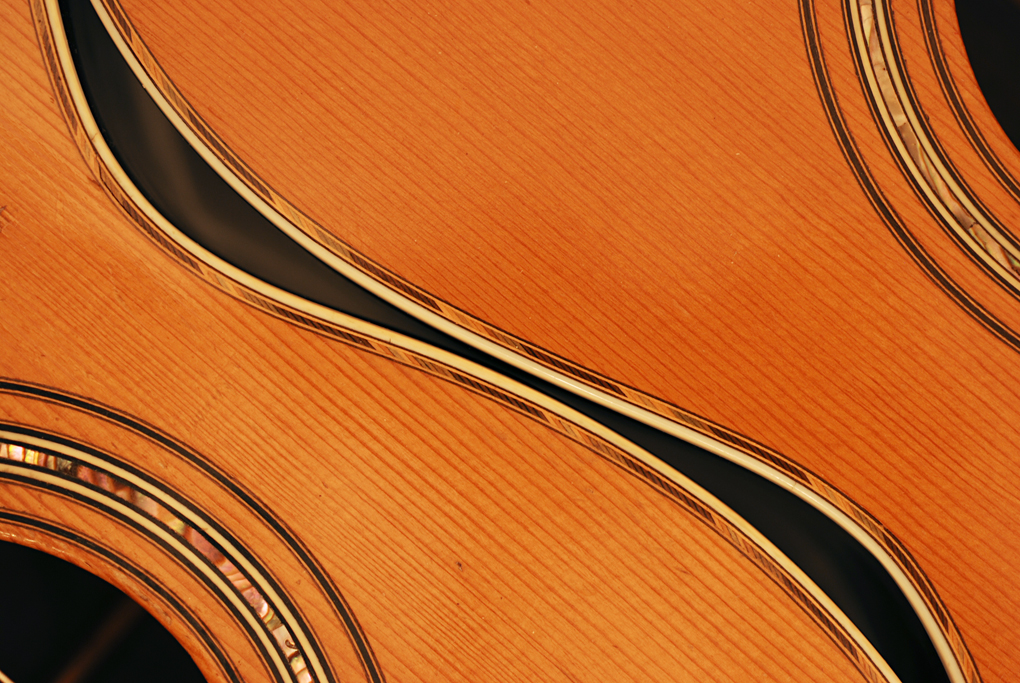
The "Z" pattern was also common on the 0 Size Style 30 in a more colorful version in the early 20th Century.
1907 Martin 0-30
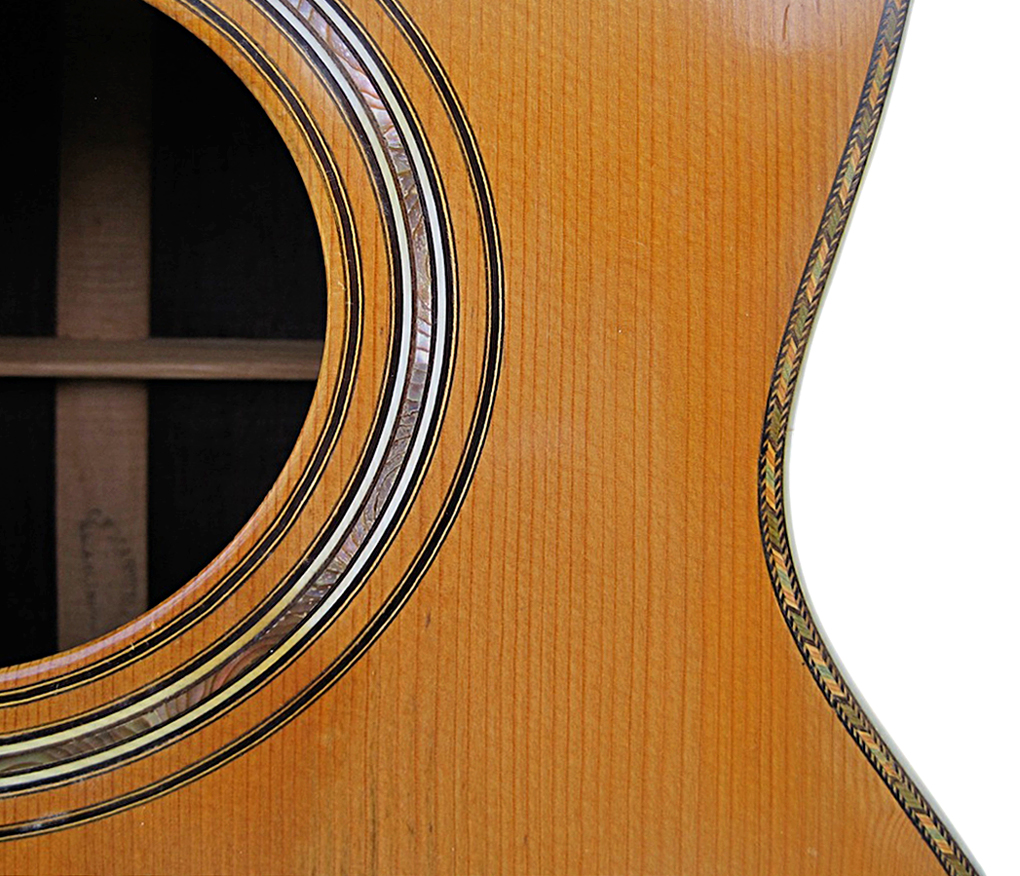
The Style 34 is the same basic guitar as the Style 30 with the addition of an ivory bridge.
The border on this 0-34 is one of Martin's most attractive, and is the one often seen on 0-34 Martins from the 20th Century, though this example is from the 19th century:
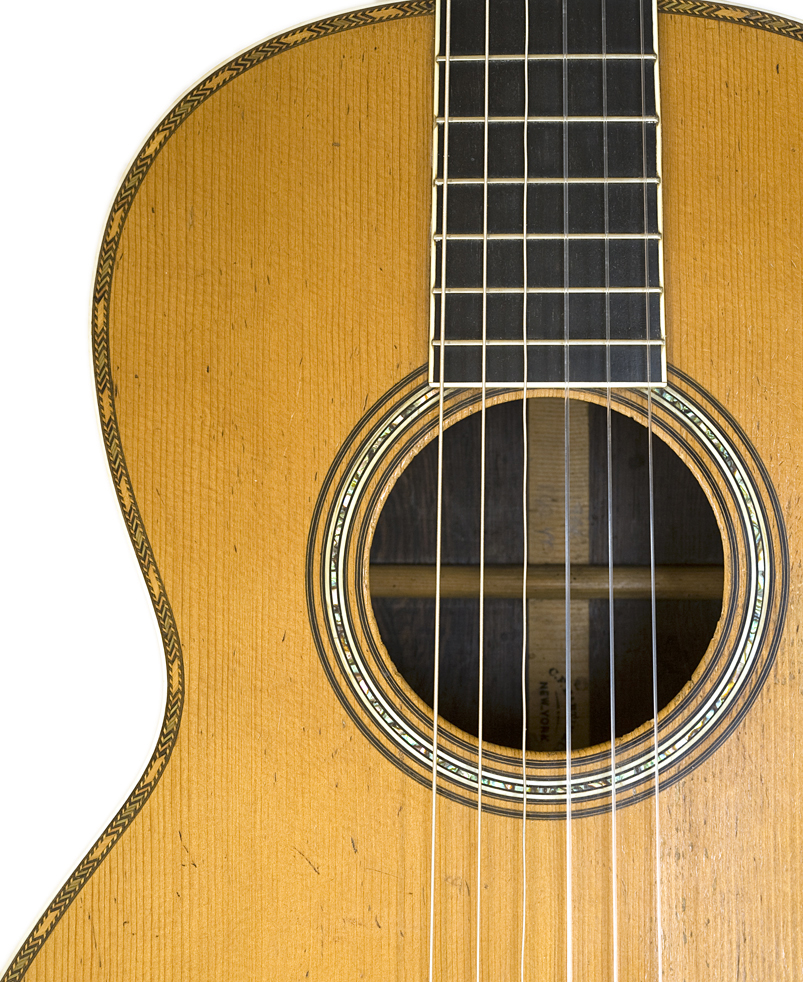
In the late 19th century, the Style 2-34 was also often seen with a colored herringbone top border.
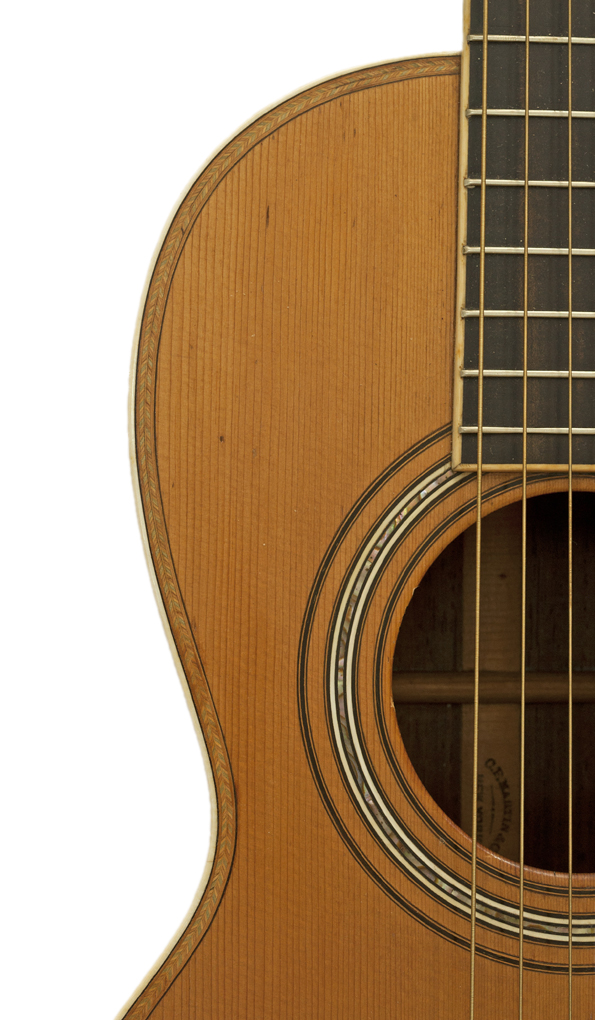
1840's Size 1 Alternate X brace Spanish Style Guitar
The rosette on this guitar features a single band of tiny pearl diamonds, another of the three rosette styles featuring bands of small pearl diamonds in the 1840's.
This Spanish Size 1 could be seen as the precursor to the Style 30.
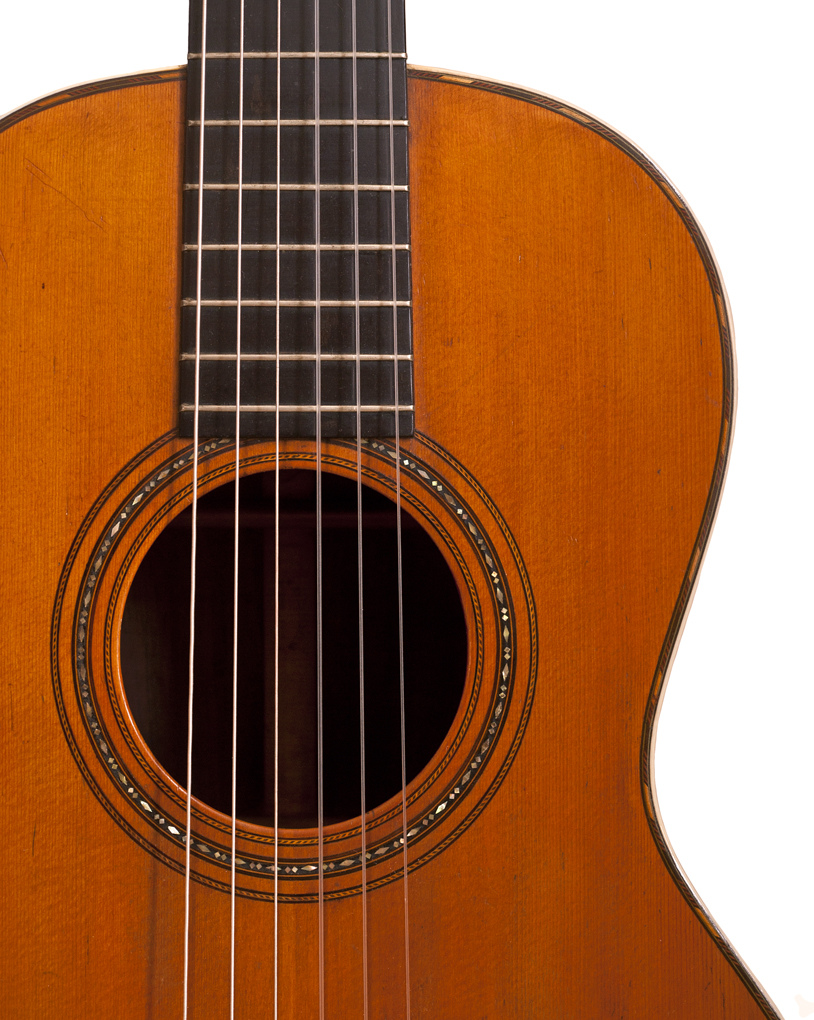
1850's Martin Style 33 with pearl rosette and pendant.
Beautiful spruce lined variations of the Style 30 and 34, among the most attractive Martins ever made, appeared in the 1850's with decorative pendants on the bridge and marquetry on the sides, adjacent to the ivory binding, likely raising the price to $33.
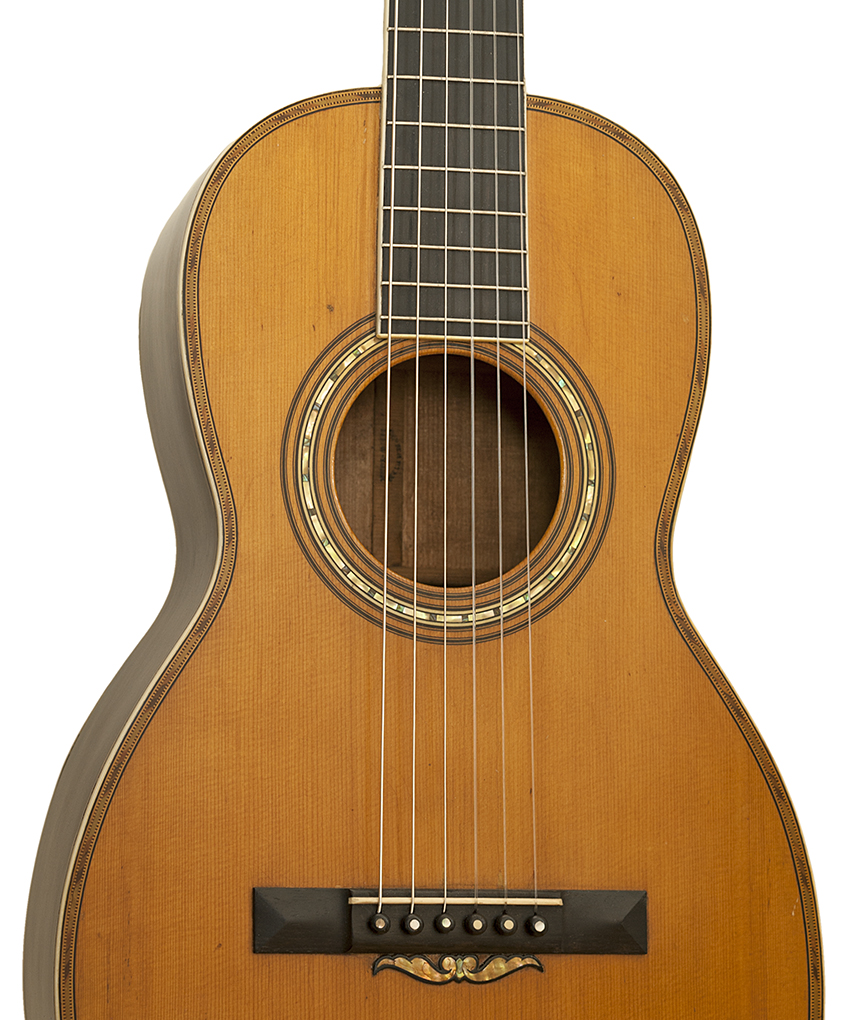
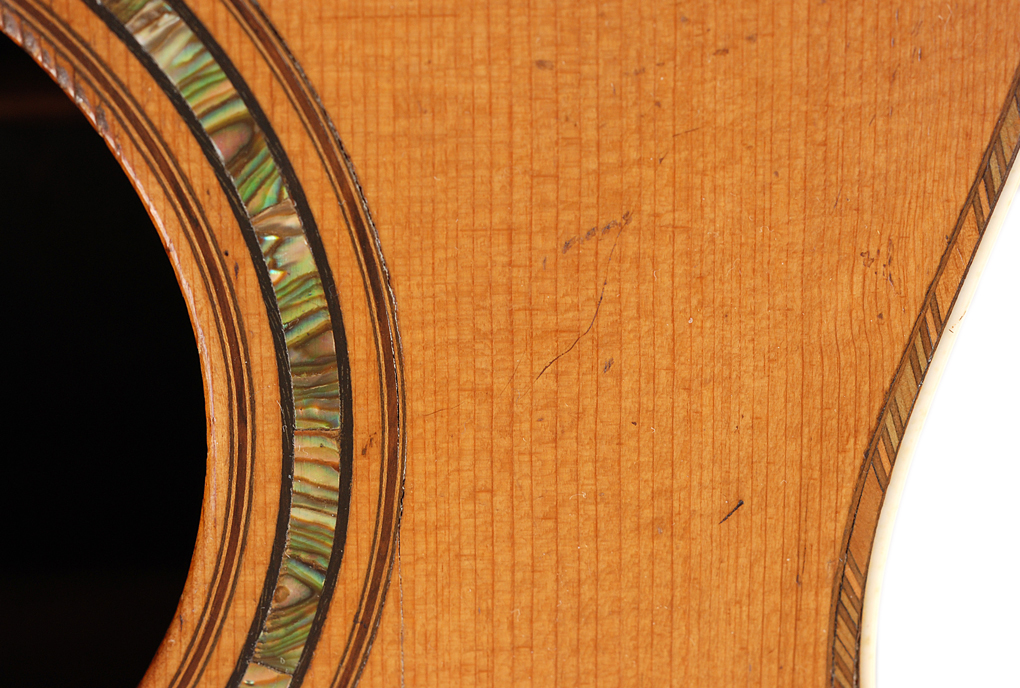
This example has a unique rosette with colorful aqua blue abalone we have not seen before or since.
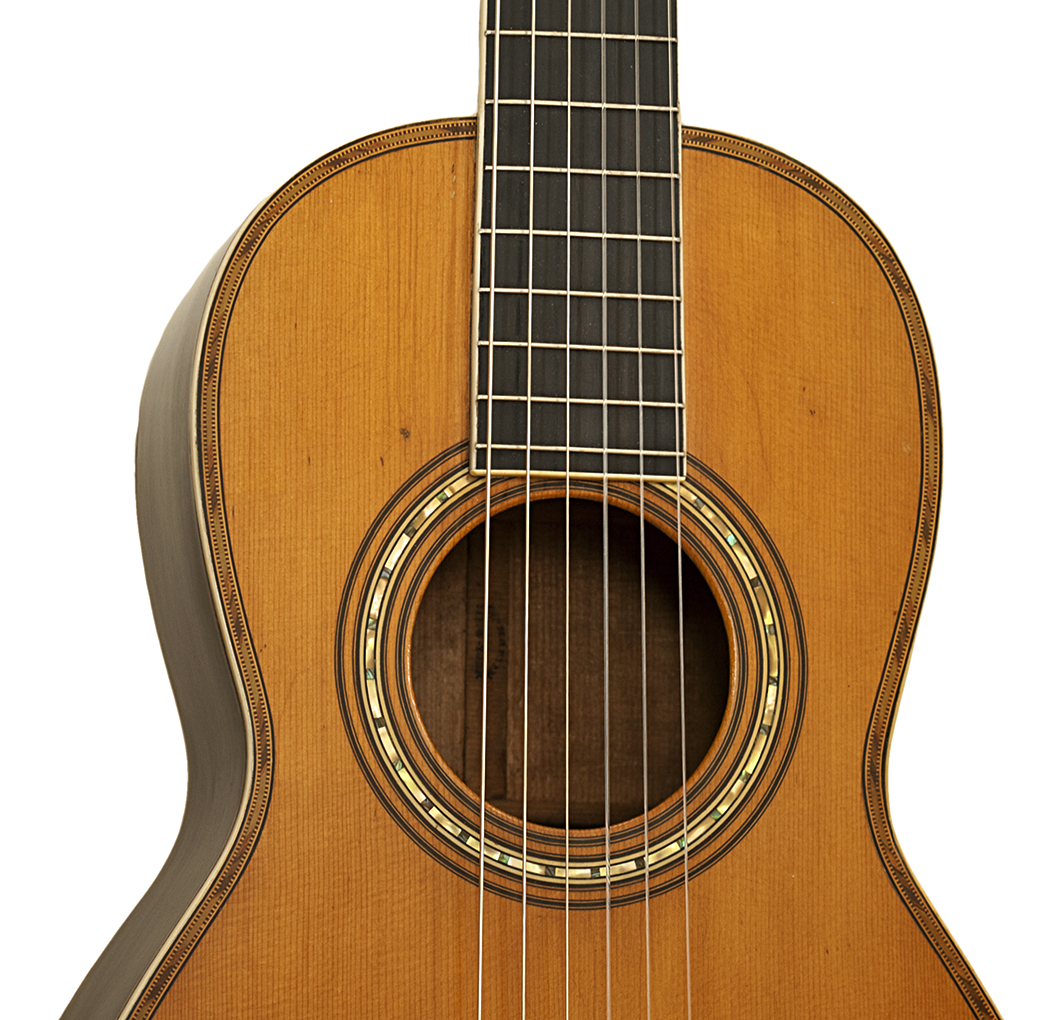
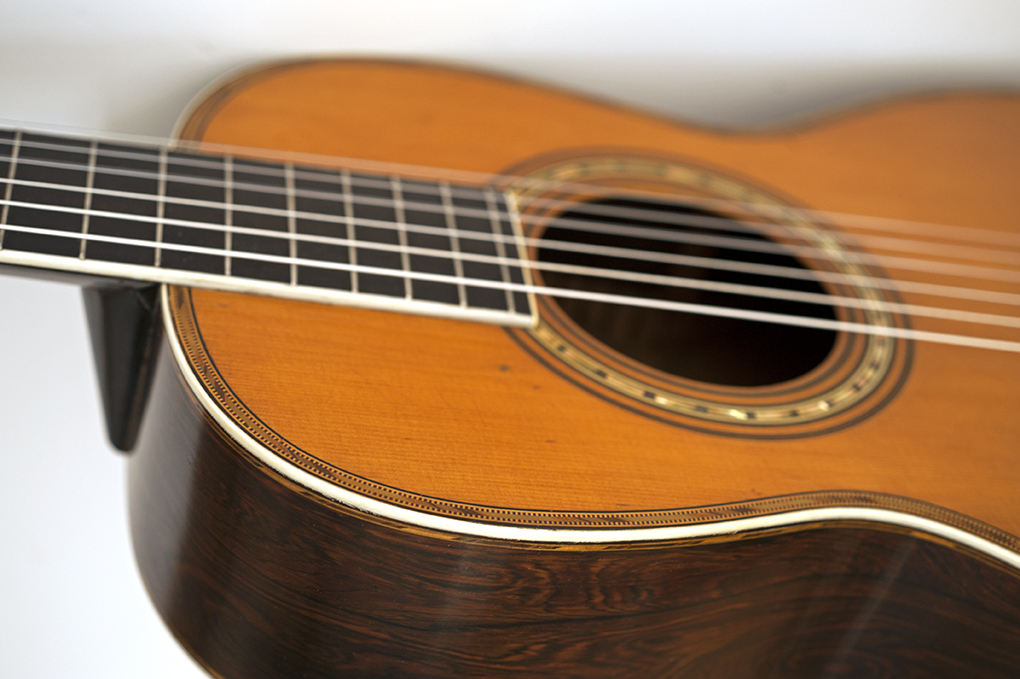
C. 1867 Style 34 With Wide Band of Pearl in Rosette.
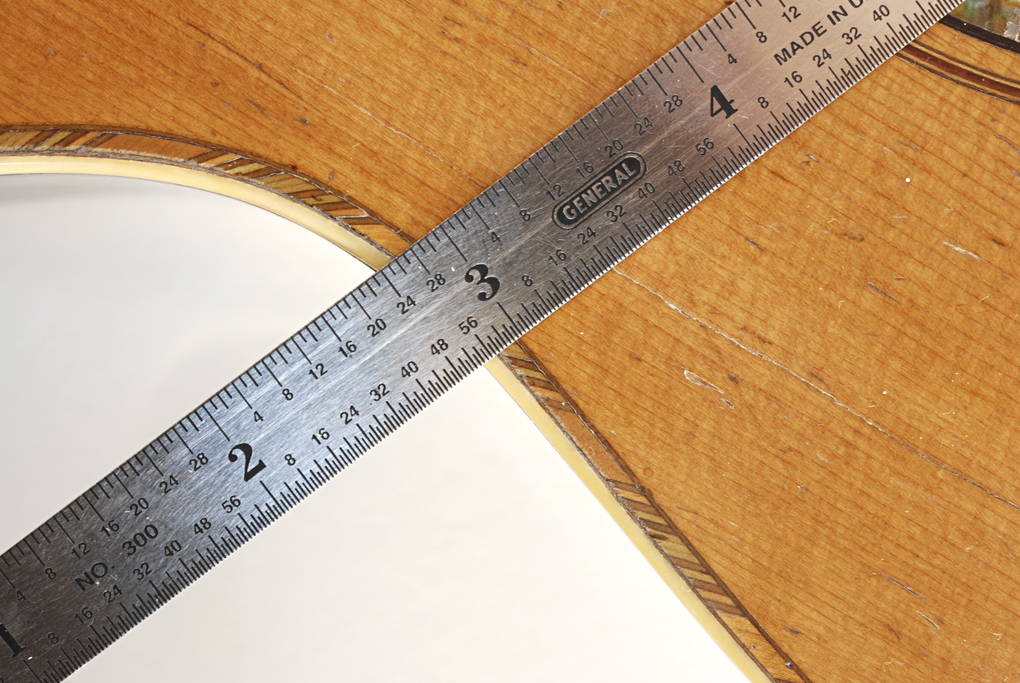
This unique 0-34 has a wide pearl center rosette ring which to my knowledge has not been seen on another example. In the 1840's, similar wide bands of pearl were used in combination with bands of small pearl diamonds and squares.
The color of the wood on the outer rosette rings is also unusual, though you'll also notice natural wood rings on the Martin Style 24.
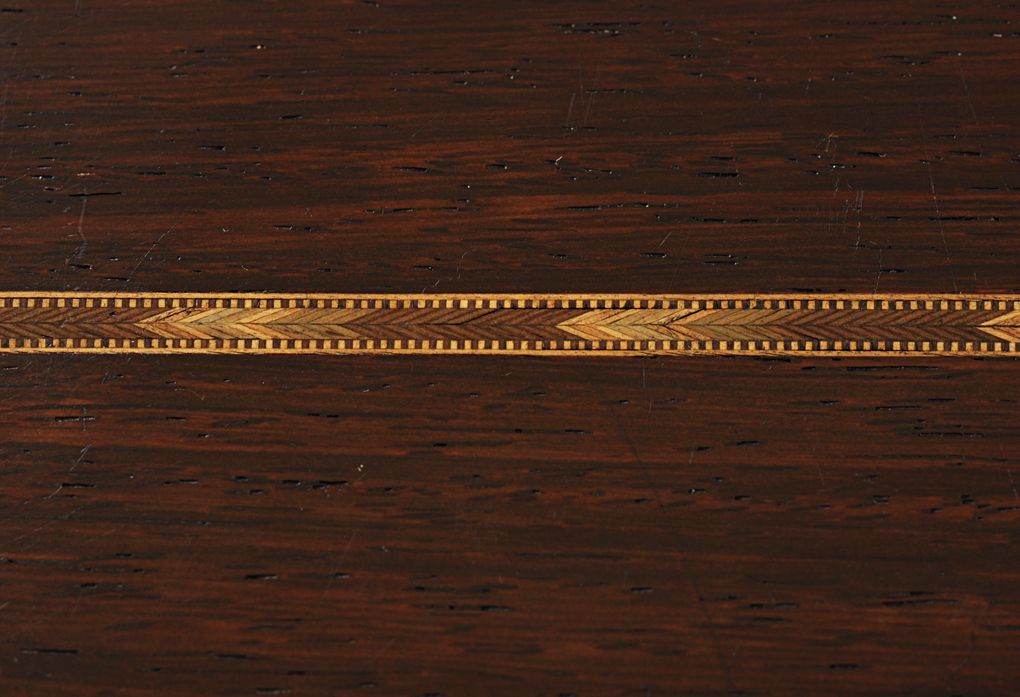
Style 27, 30, and 34 Backstrips
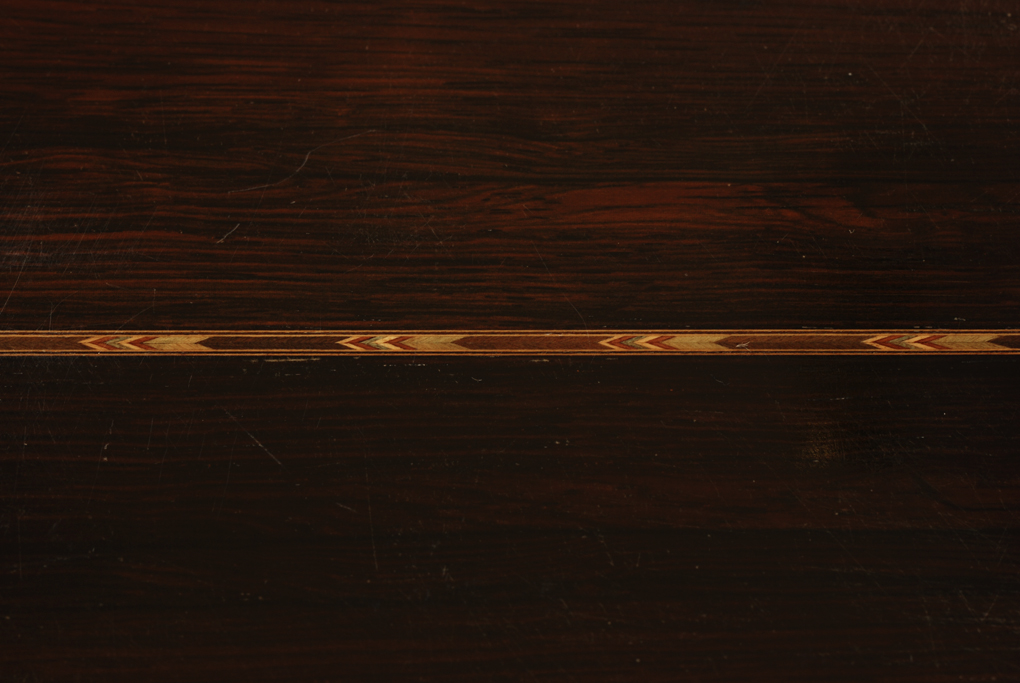
The "arrowhead" back strip was typical for a Style 27:
1893 Martin 2-27
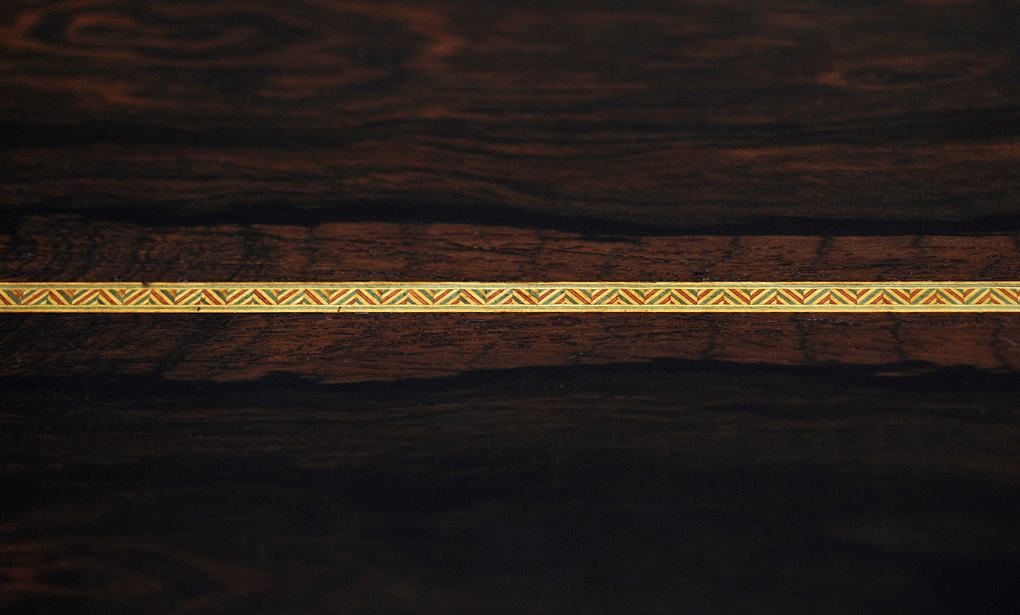
This multi-colored zig zag is less typical:
1870's Martin 2-27
The following two back strips were typical for a Style 30:
1907 Martin 0-30
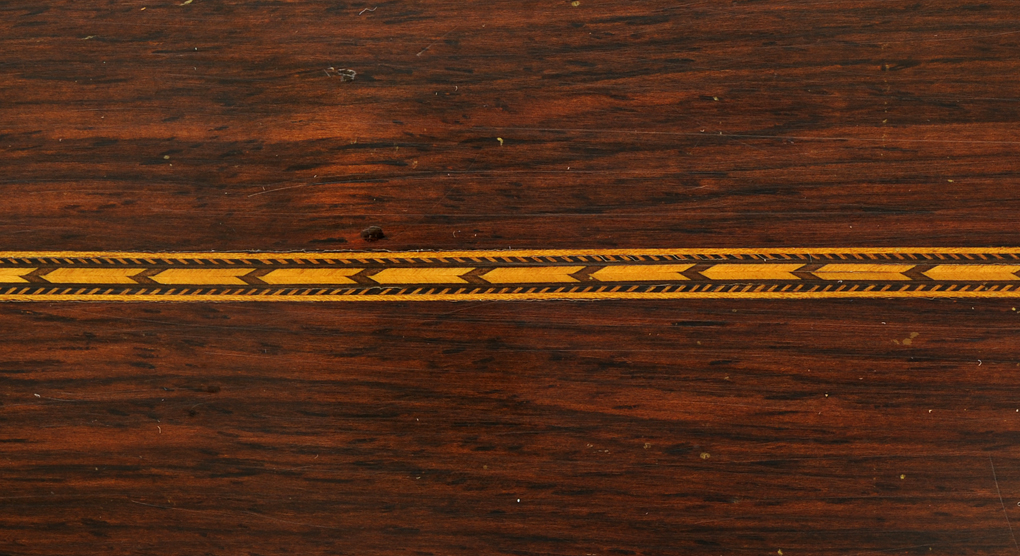
1917 Martin 0-30
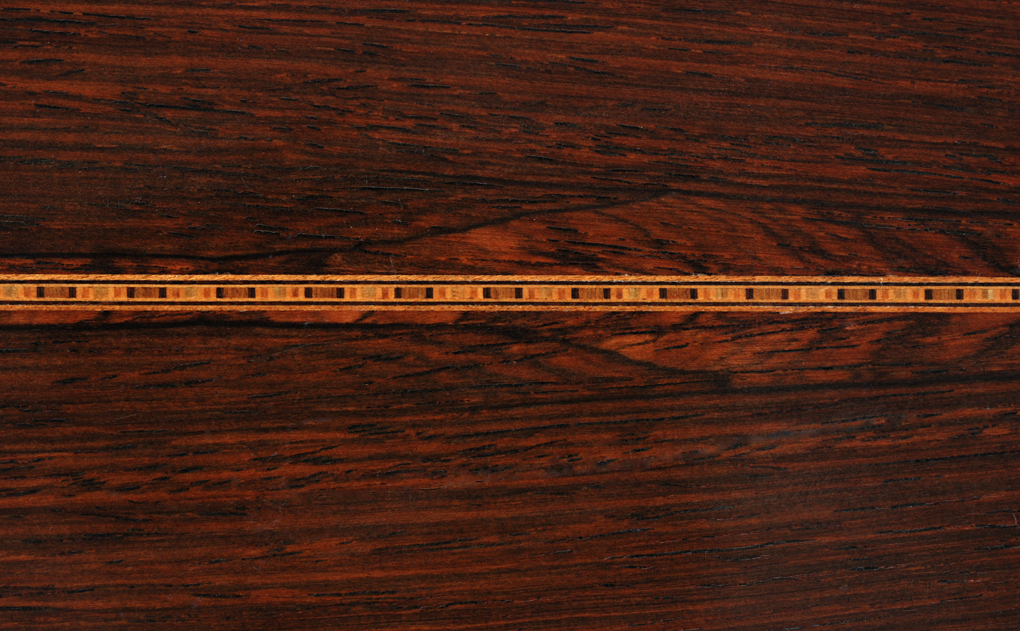
This fancy "arrowhead" back strip was typical for an early Style 34:
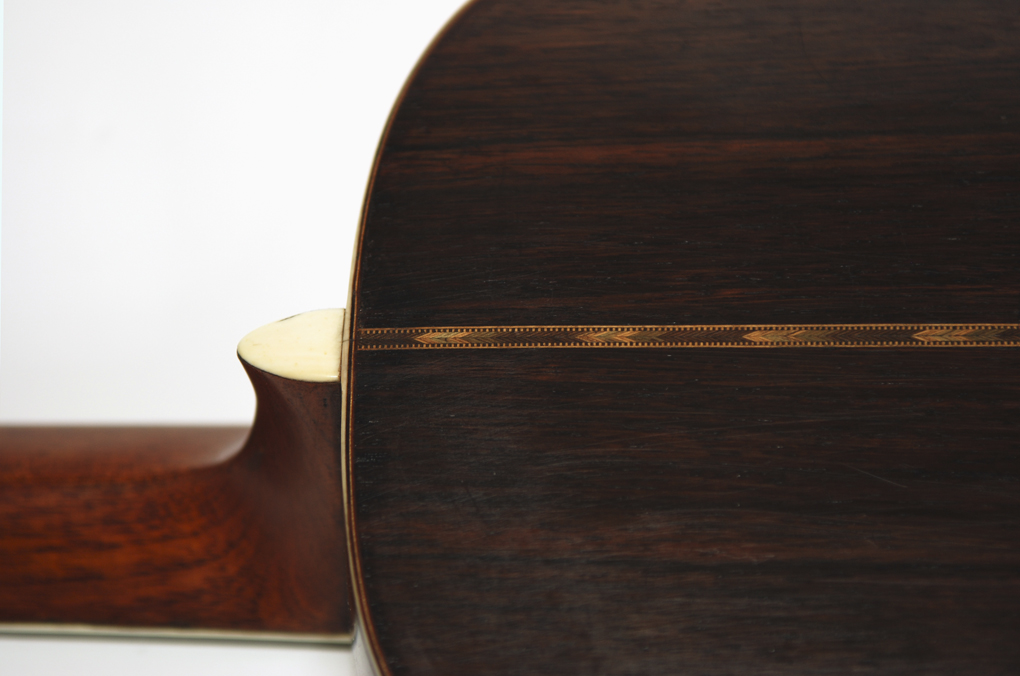
19th Century Martin 0-34
Style 27, 30, and 34 Fretboard Inlays
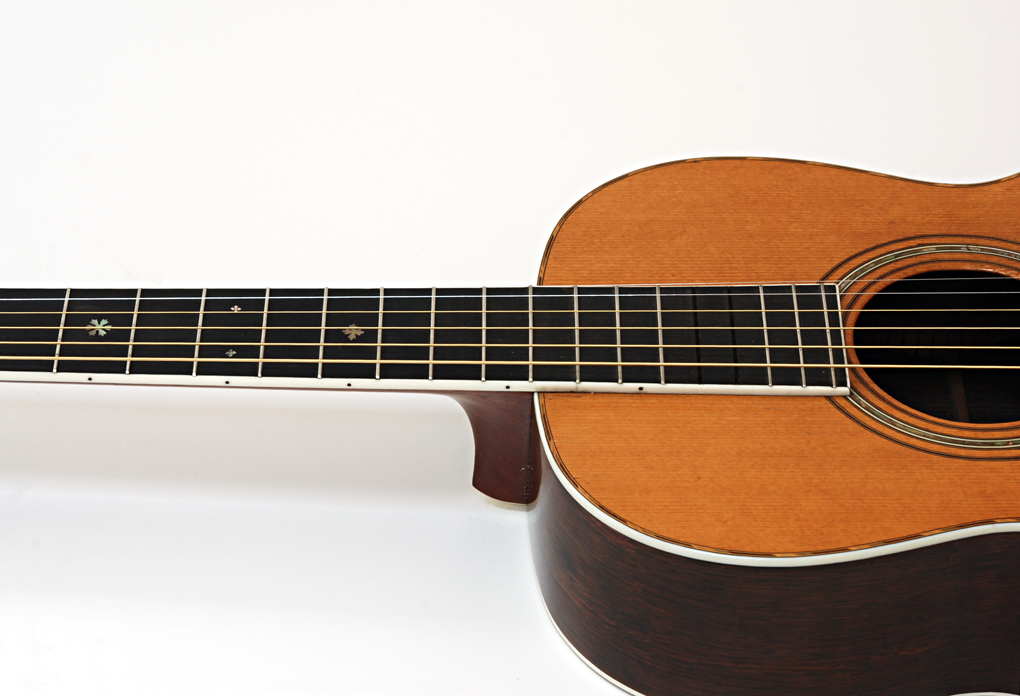
Martin Guitars built before 1898 had no inlays on the fretboard, so most Style 27, 30, and 34 Martins, which was discontinued by the turn of the century, had no fretboard inlays.
The Style 30, which was the most common of the three after the turn of the century, had the "snowflakes" typically seen on a Style 42 on the fifth, seventh, and twelth frets.
The Martin Style 27
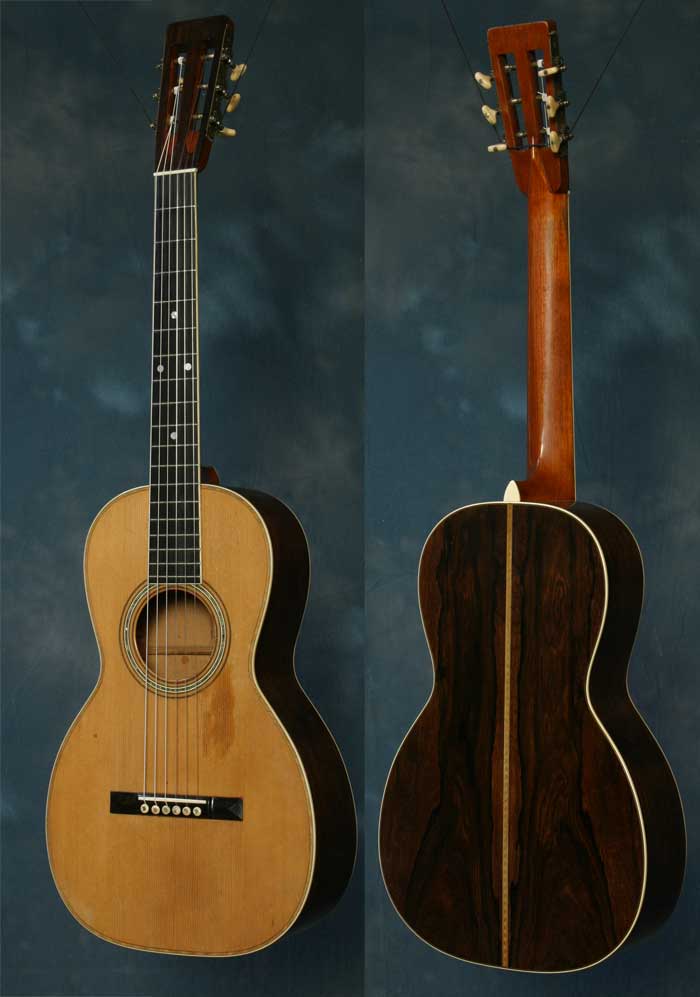
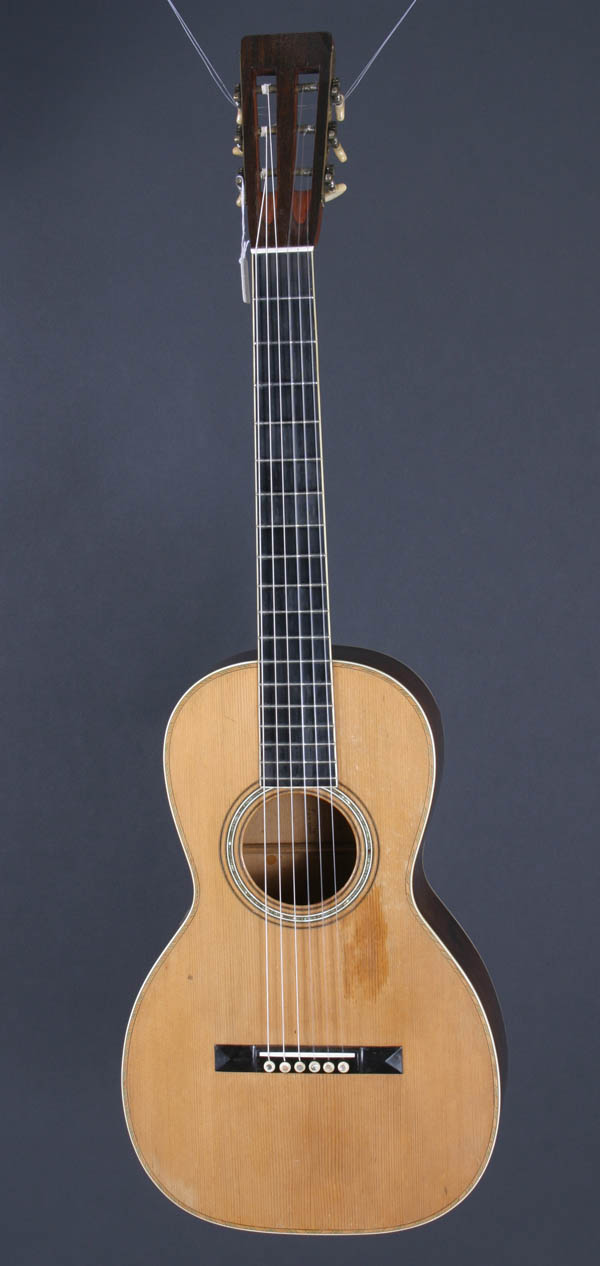
C.F. Martin 1850's 2-27
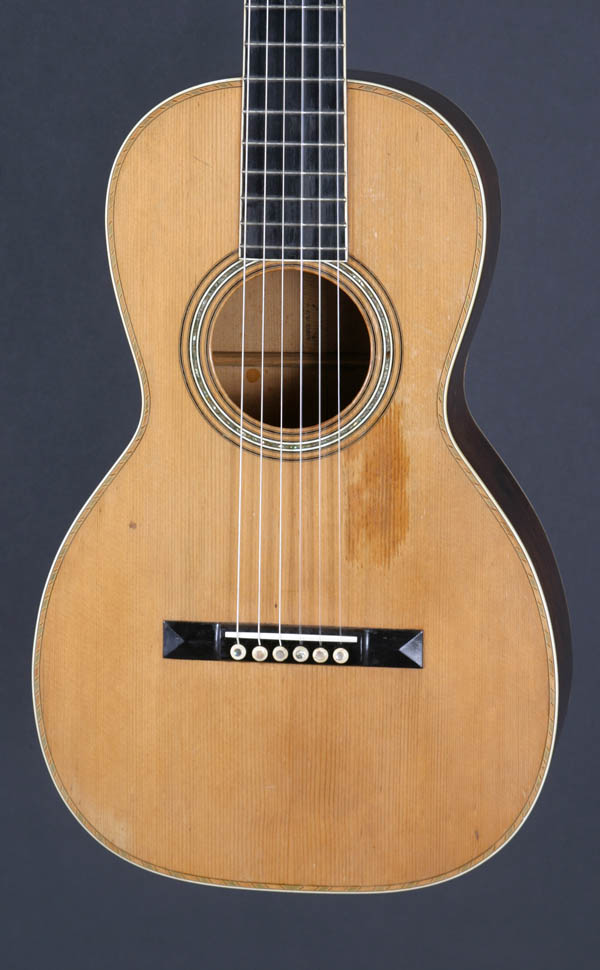
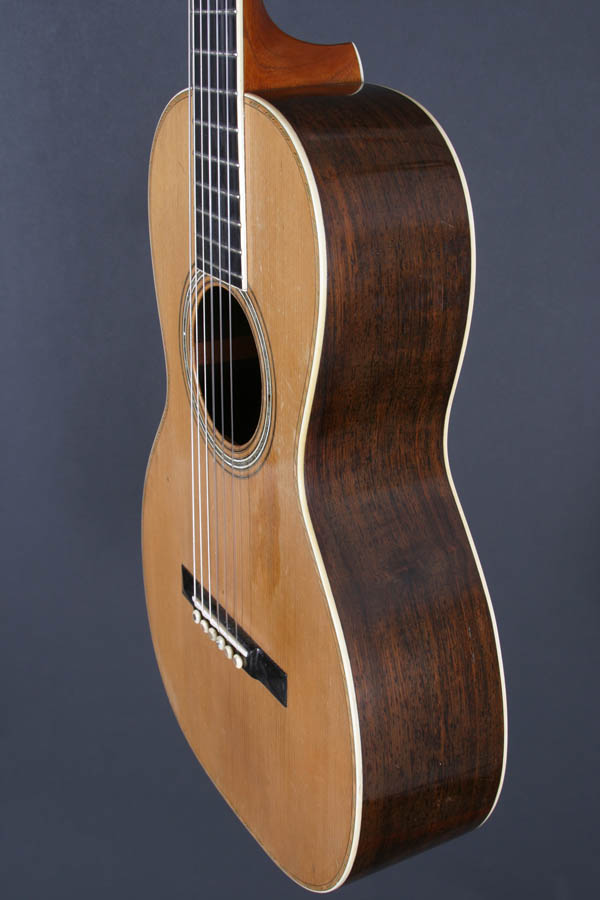
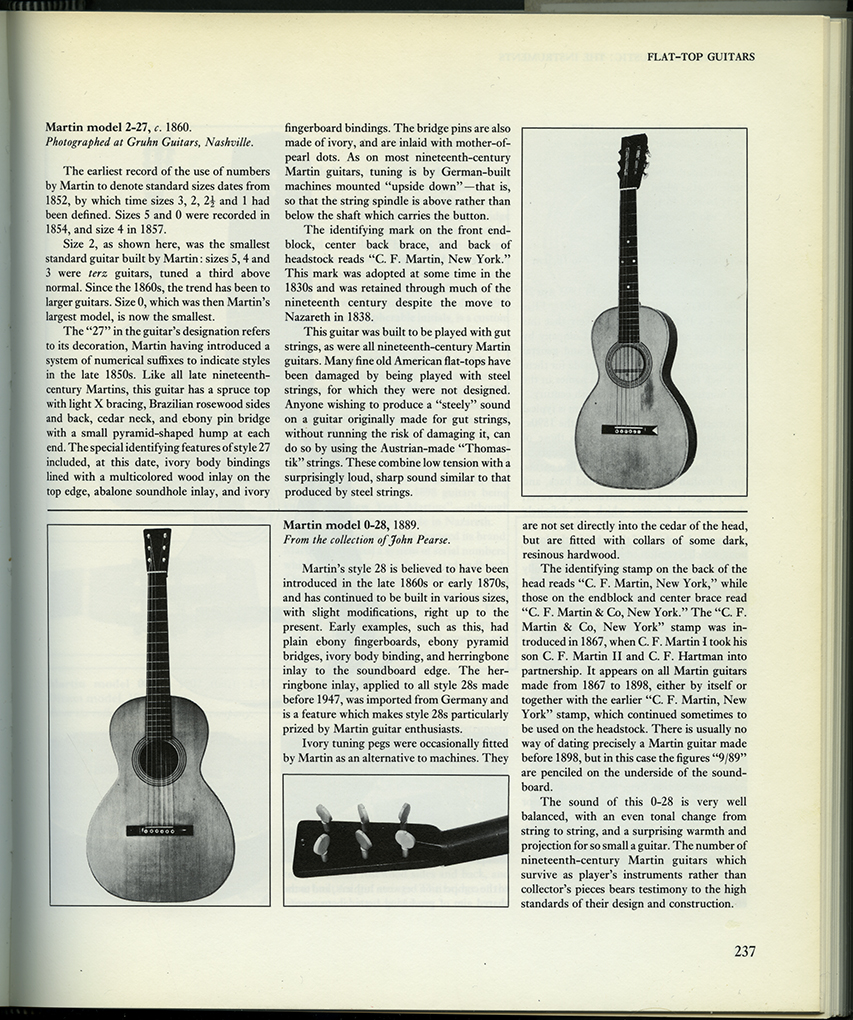
The Martin 2-27 was one of the earliest, consistent, and longest lasting models in the Martin line. This early example can be distinguished by the spruce lined back, covered with a fine Brazilian Roswood veneer, a poular feature of fine early Martin guitars. This early example also has Jerome tuners, as do many early Martins. This model always had a cedar neck and was X-braced.
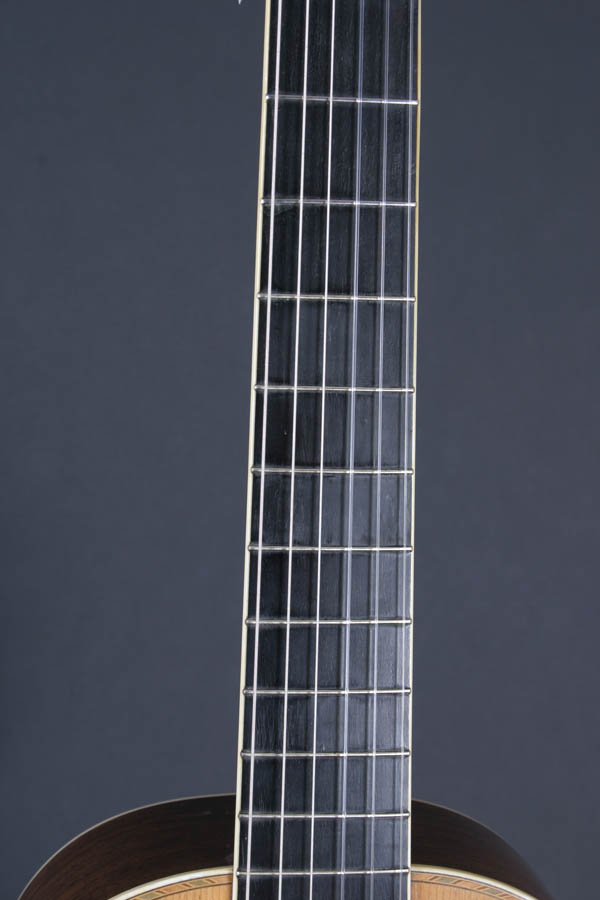
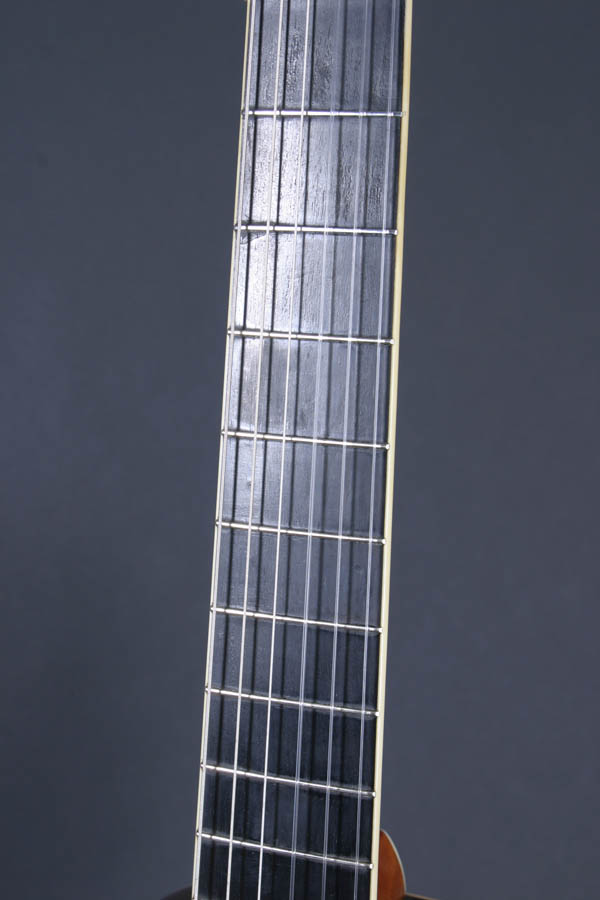
This example was built before Martin started appying inlays to the fingerboards. Dots can bee seen in the photograph of this guitar in Evans "From Renaissance to Rock", but were later removed, as they were not original to the guitar
.
Multicolored purfling on border of top. Abolone inlaid soundhole rosette. Spruce lined Brazilian rosewood back and solid rosewood sides with red spruce top, all bound in ivory. Spanish cedar neck, with ebony fretboard bound in ivory. Original finish.
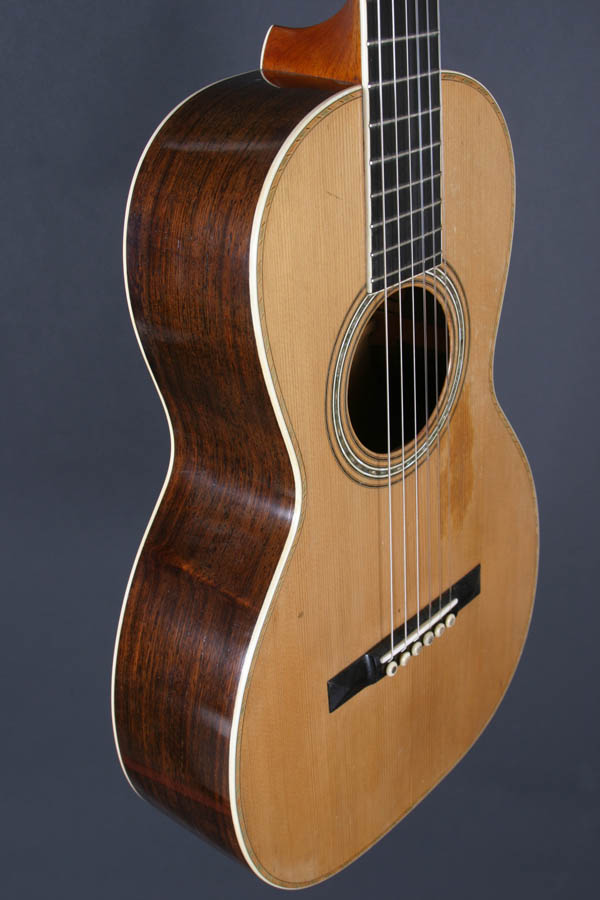
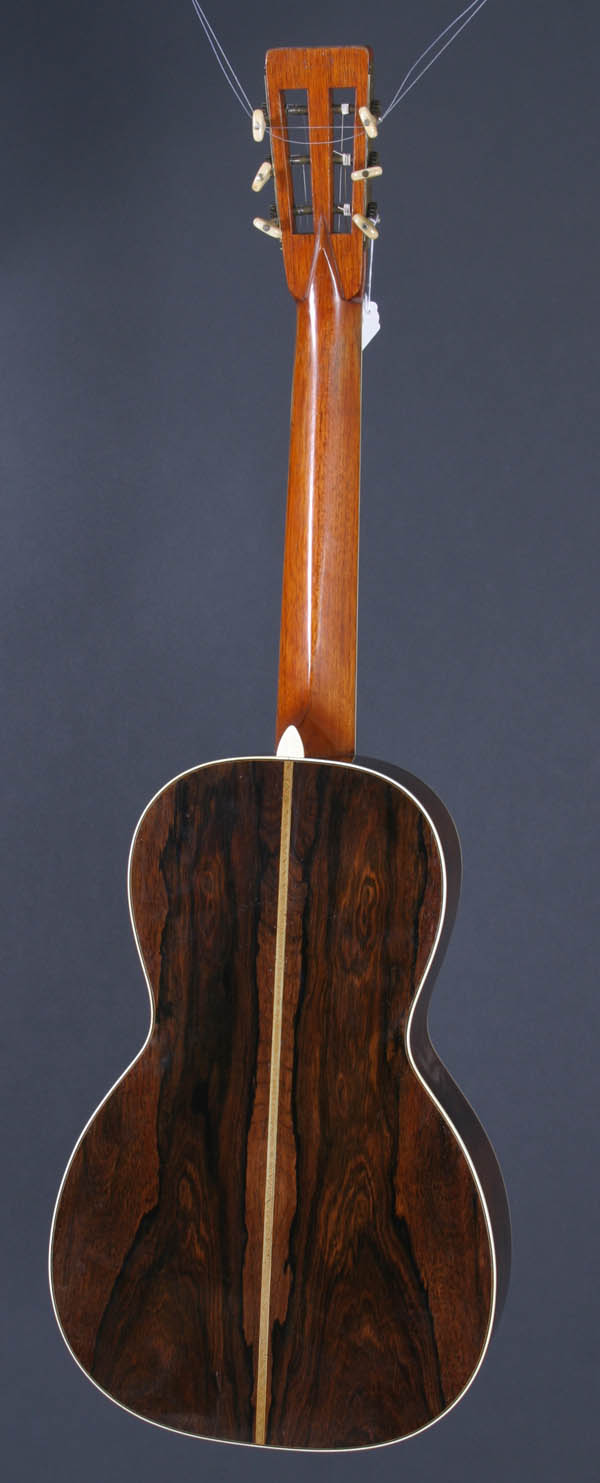
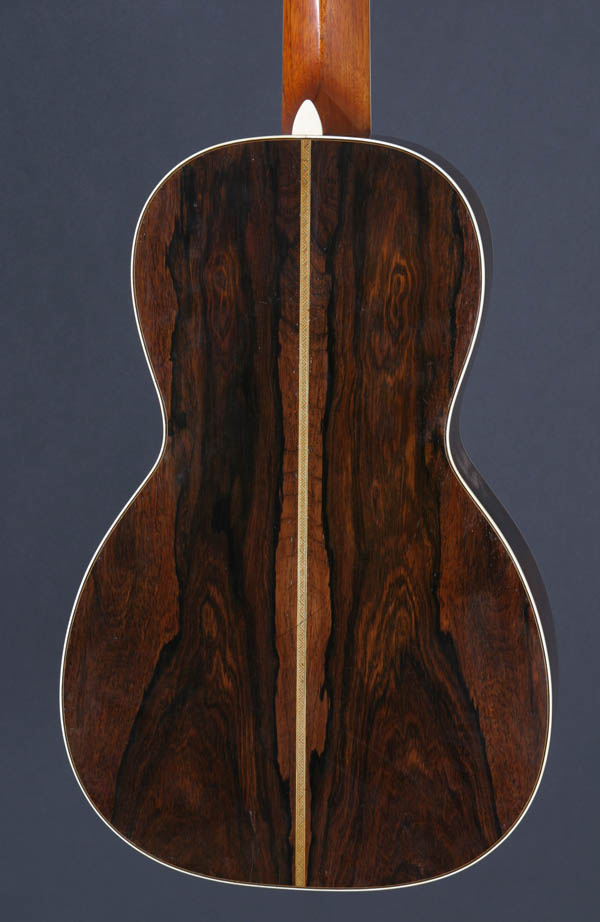
Illustrated on p. 65 of Johnston, Boak & Longworth "Martin Guitars: A Technical Reference"
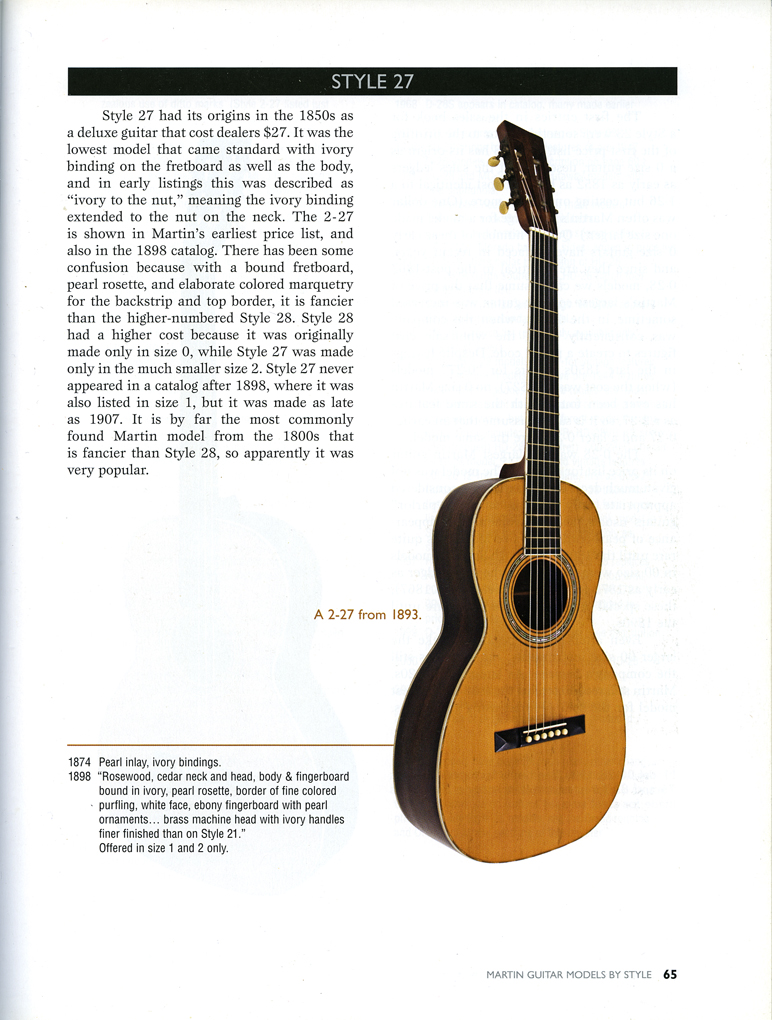
Illustrated on p. 55 of Evans, "Guitars: Music, History, Construction and the Players, from Renaissance to Rock"
The Martin Style 30
The Style 30 was typically made in size 0.
C.F. Martin 1917 0-30
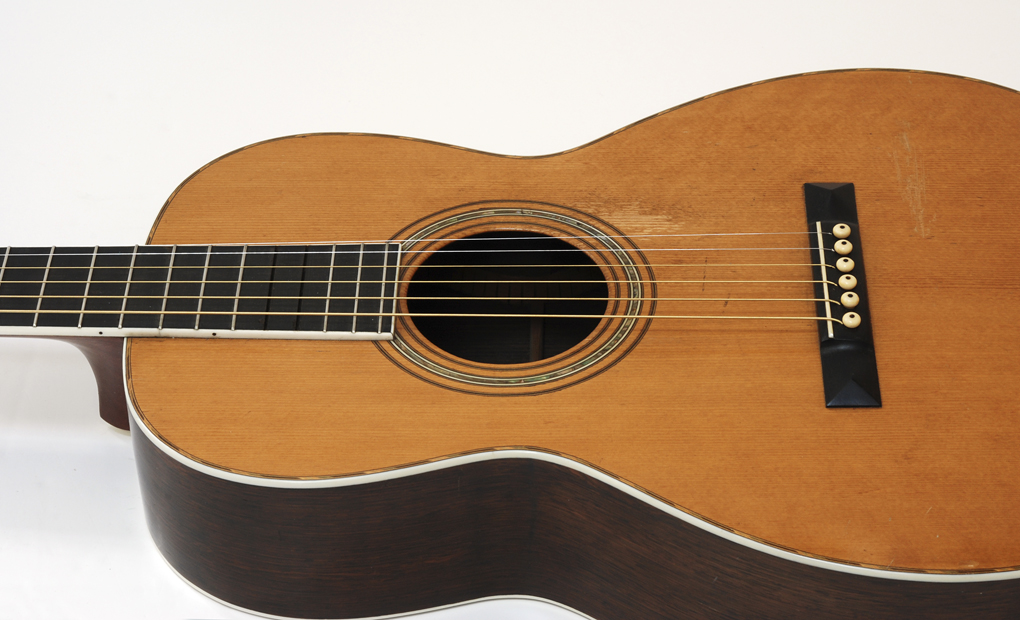
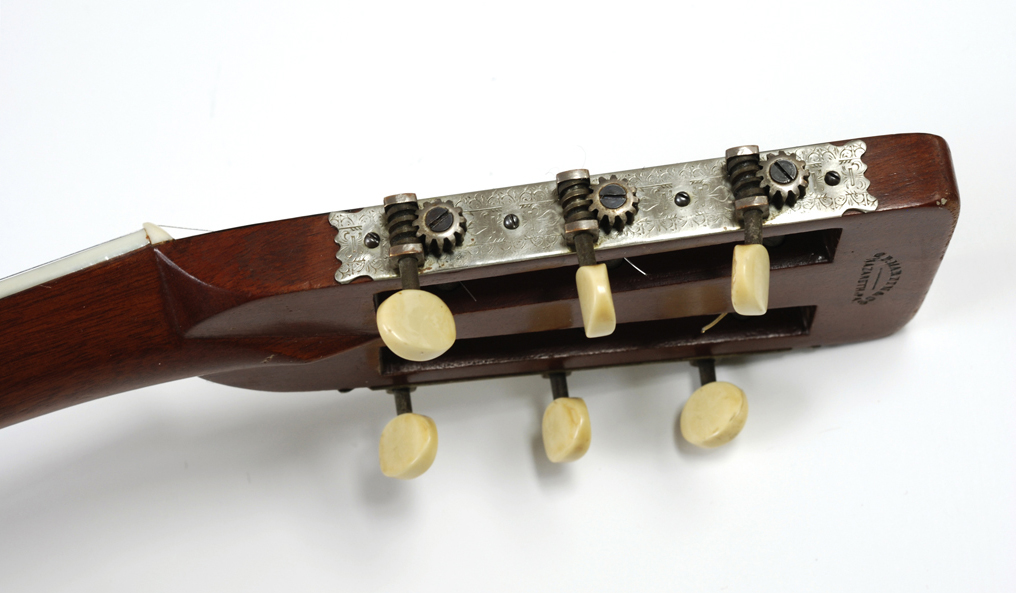
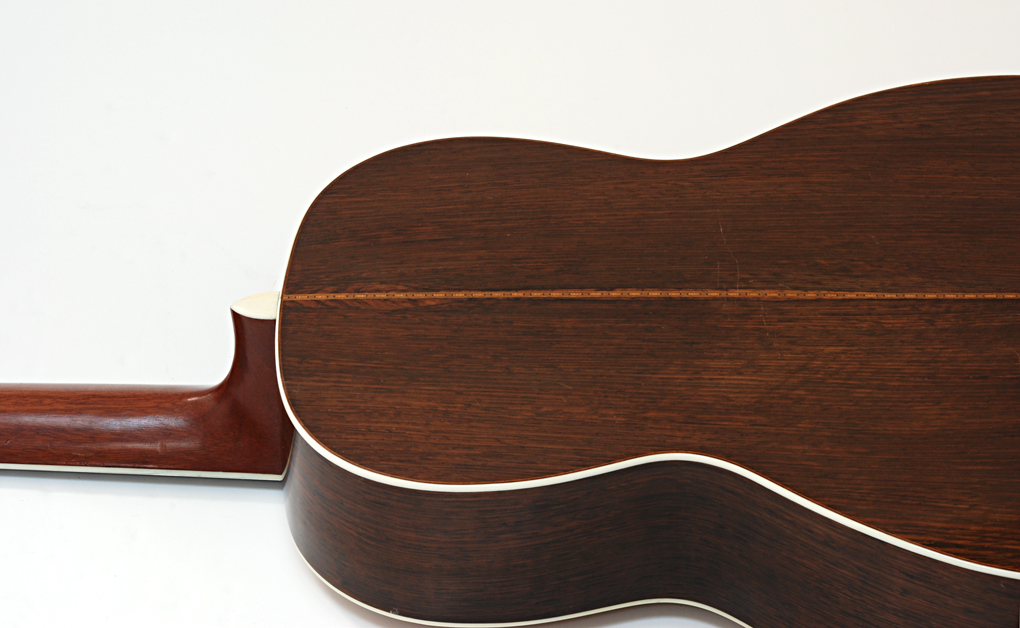
Abalone inlay around soundhole. Colored marquetry border. The back and sides are French Polished Brazilian Rosewood, the top is red spruce, and the fingerboard is ebony, with snowflake inlays on three frets. Dove tail joined headstock and mahogany neck with volute. Scalloped X style braces. Nut, saddle, top, back body binding, and tuner buttons all made of ivory.
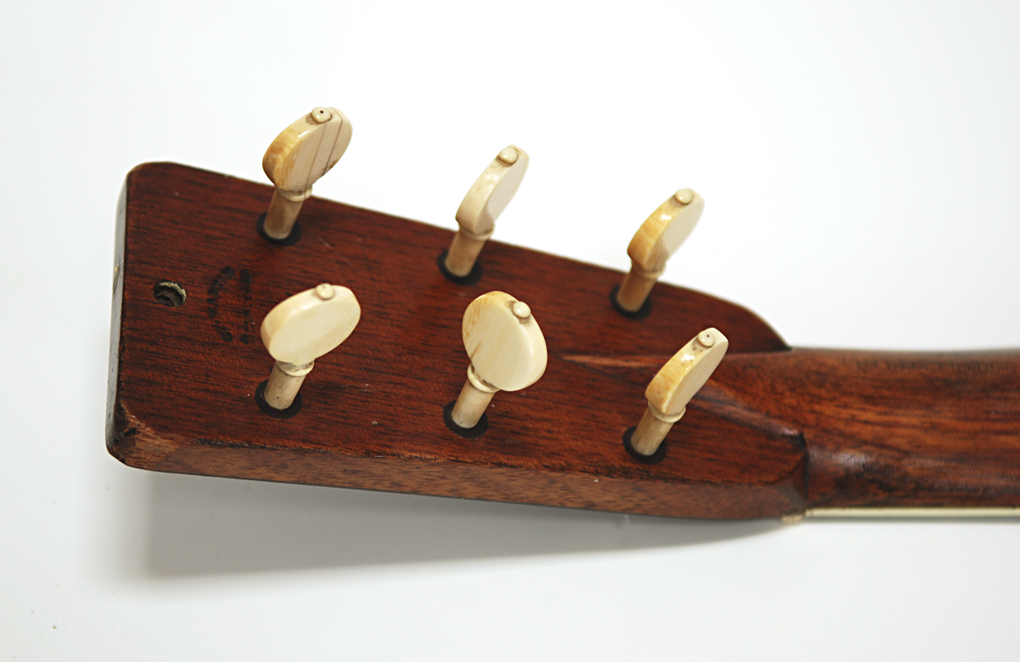
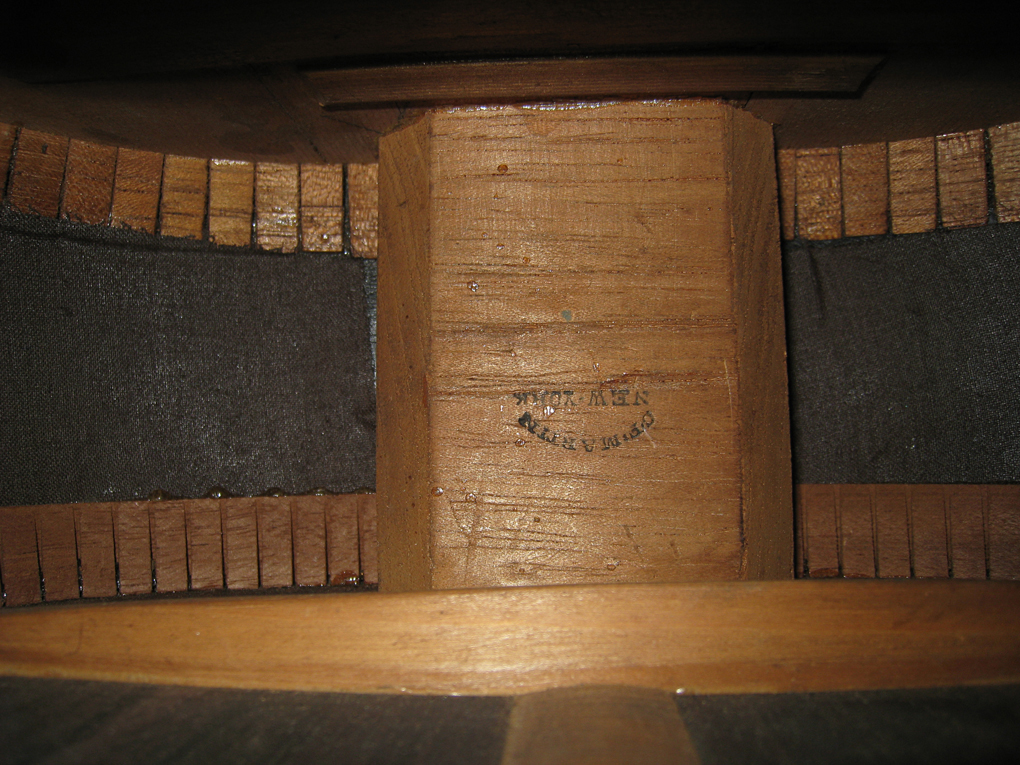
"C. F. Martin & Co. New York" is stamped inside the guitar on the neck block and on the center strip inside the back. "CF Martin, New York" stamped on the back of the headstock.
Serial number 129xx.
The Martin Style 34
The Style 34, with the added ivory bridge, was commonly seen in both size 2 and in size 0.
C.F. Martin 1889 2-34
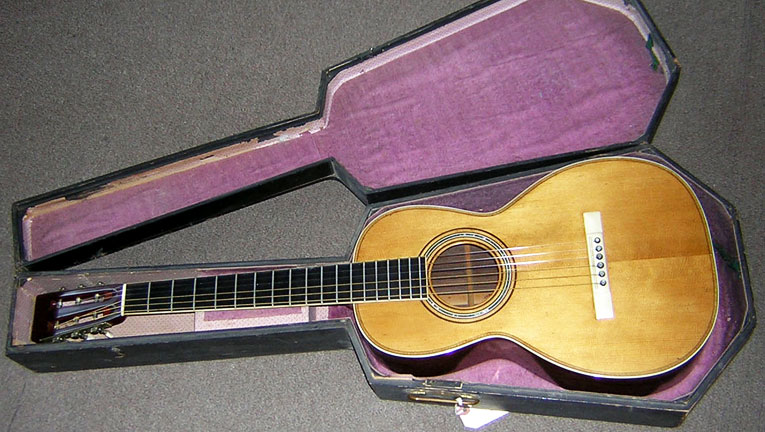
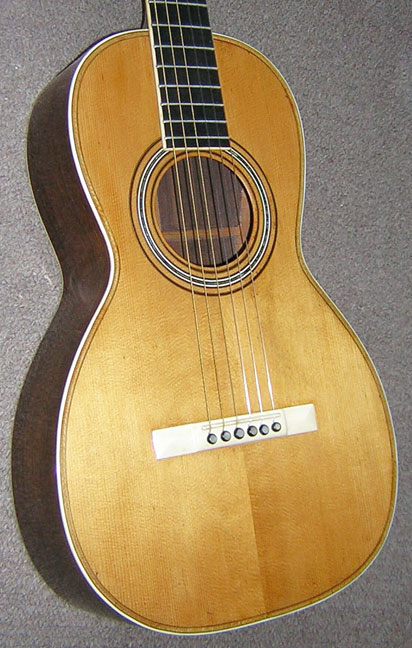
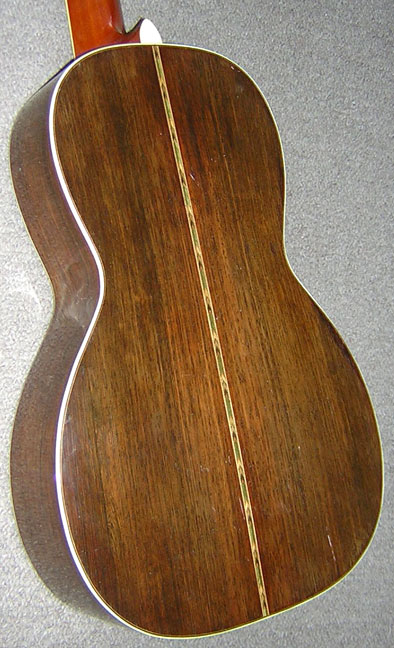
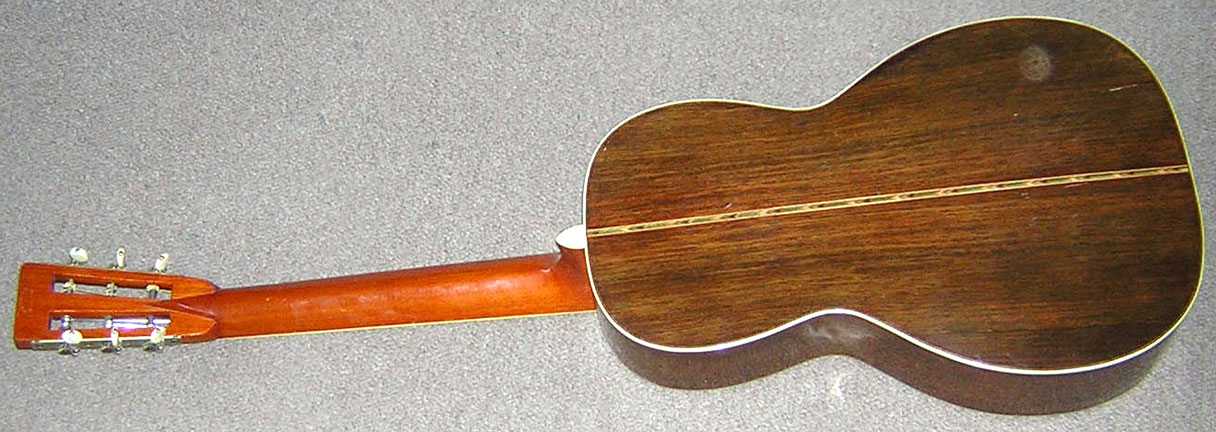
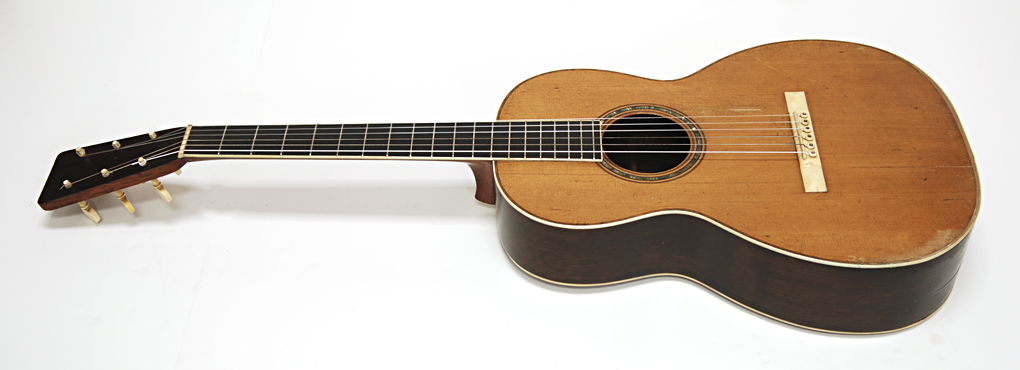
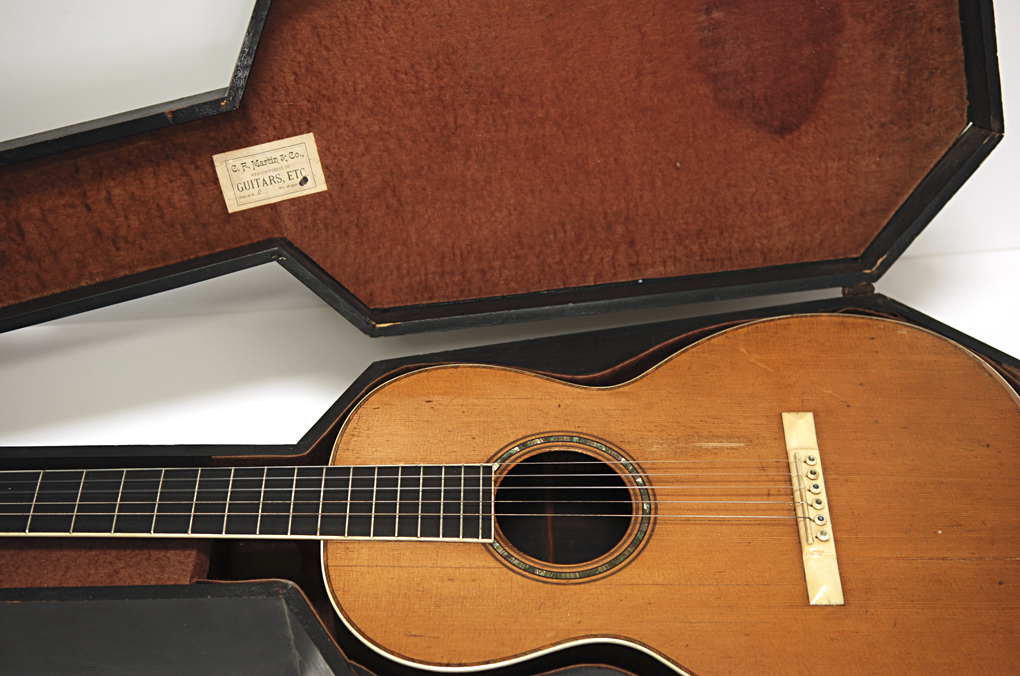
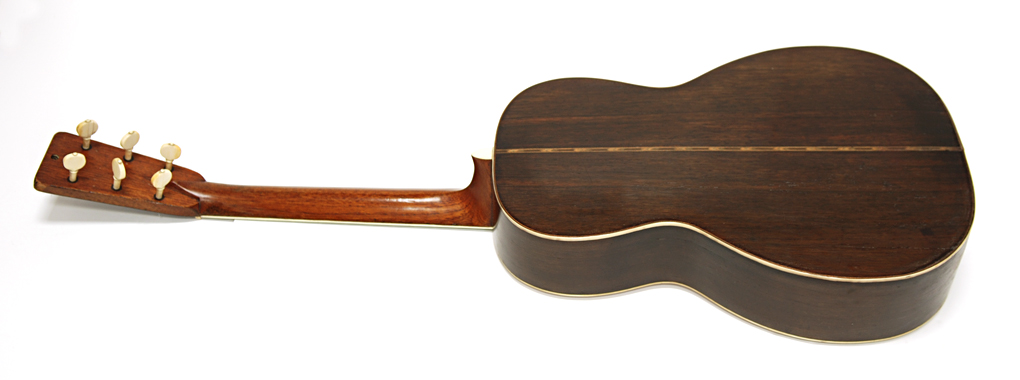
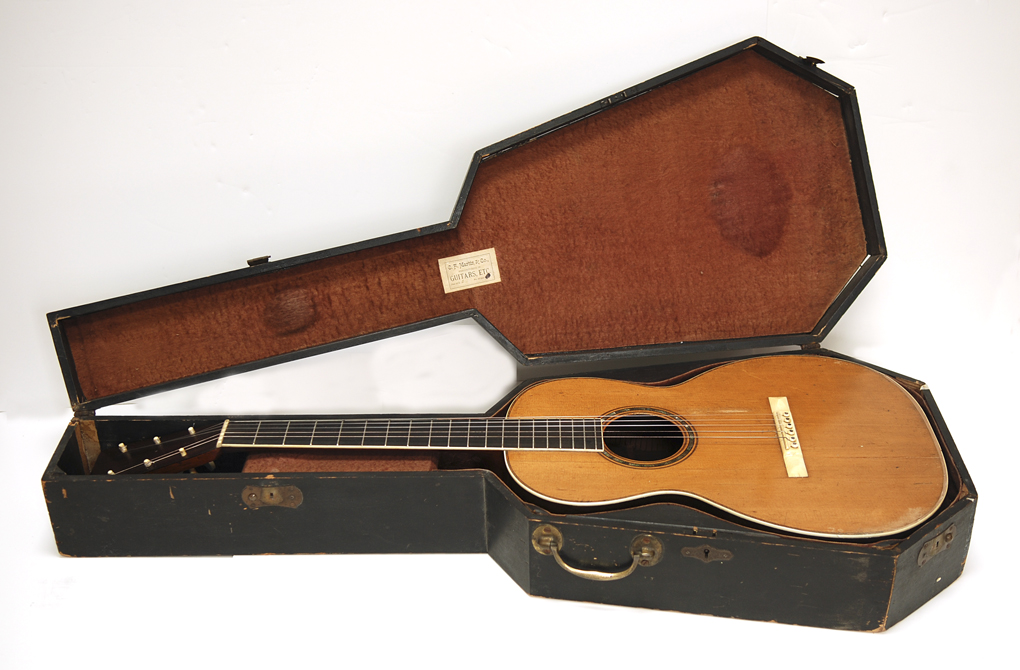
C. F. Martin 1867 0-34 Guitar
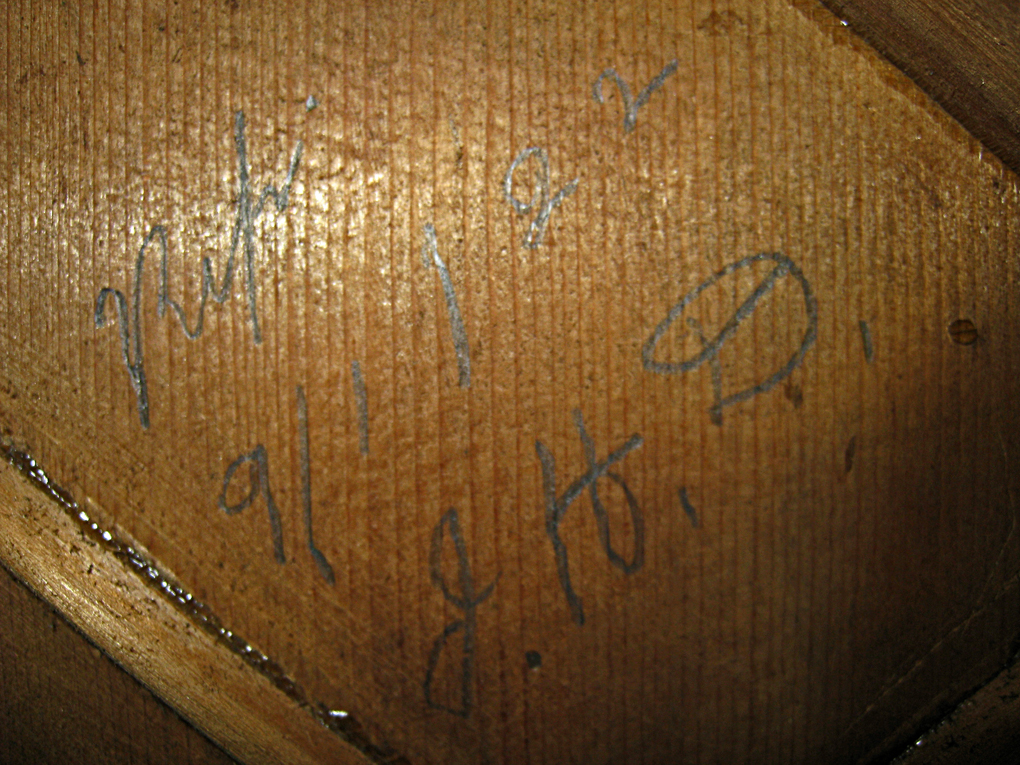
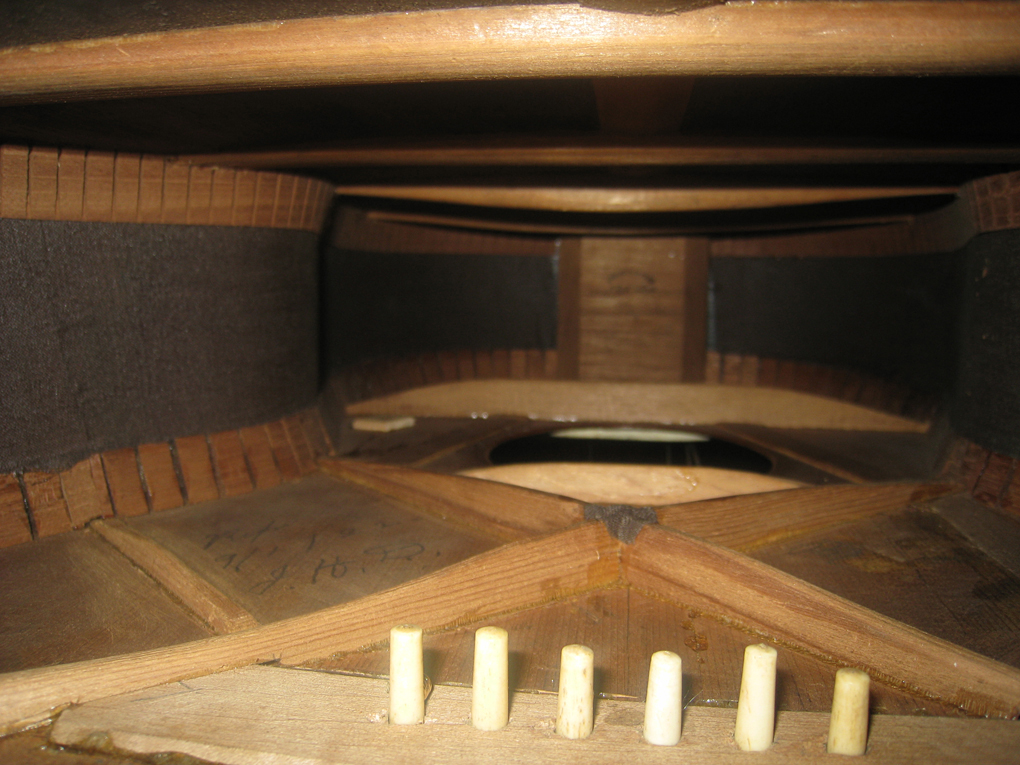
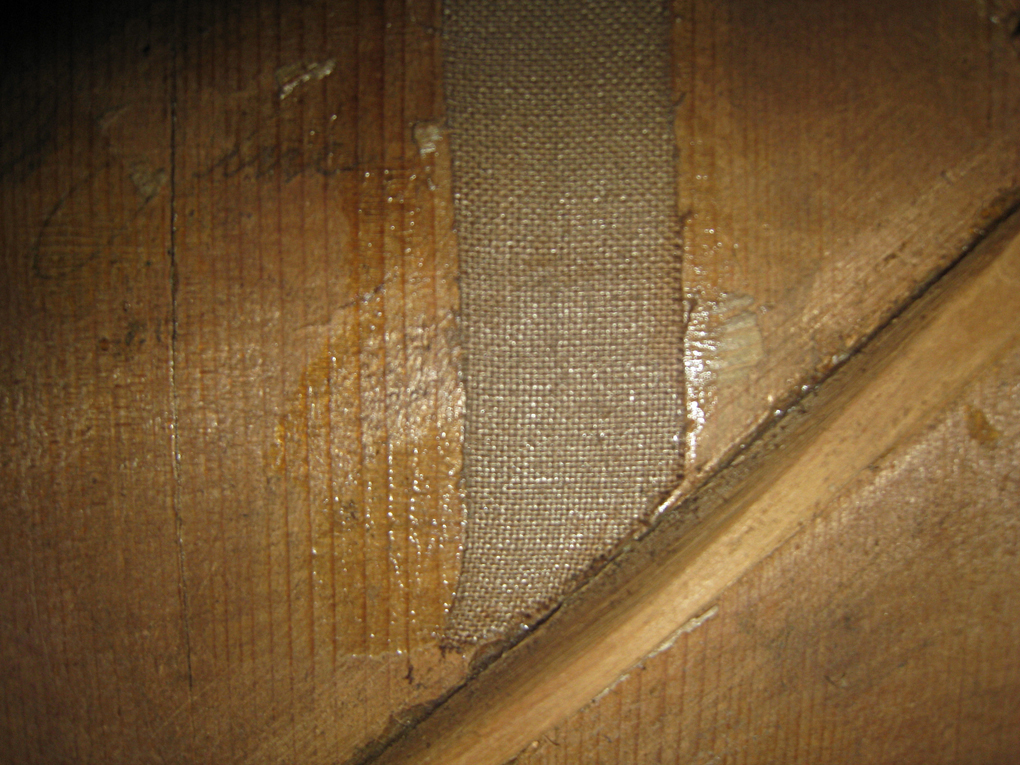
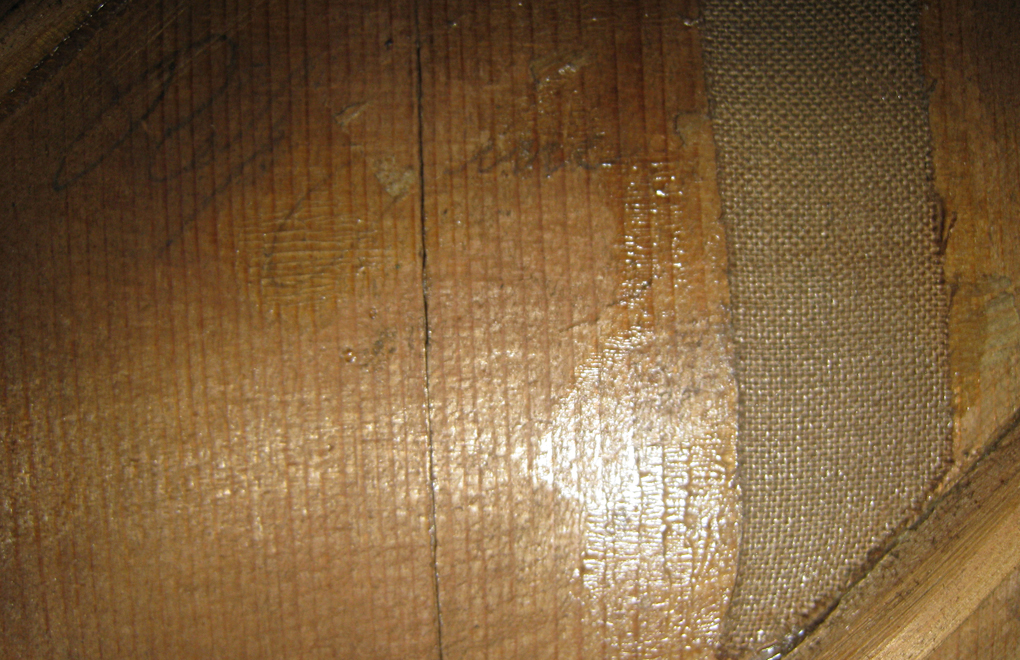
This unusual Martin 0-34 has a wide pearl ring in the rosette which we cannot remember seeing in another example of a Martin of this style or any other. It is also unusual in having a repair noted inside the guitar with the signature of John Deichmann, and the date 1885. Deichmann was the noted foreman of Martin who was largely responsible for some of Martin's greatest achivements, including the OM and the Dreadnaught.
George Gruhn, being told of the date inside the guitar, erroneously thought the guitar to be made in that year.
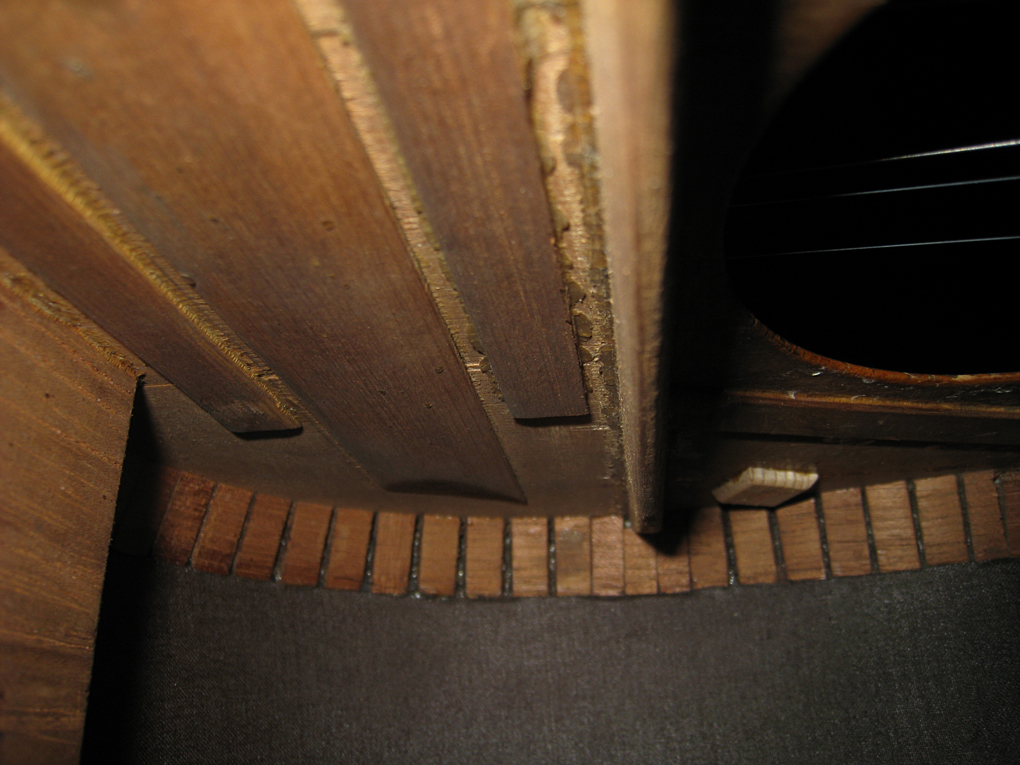
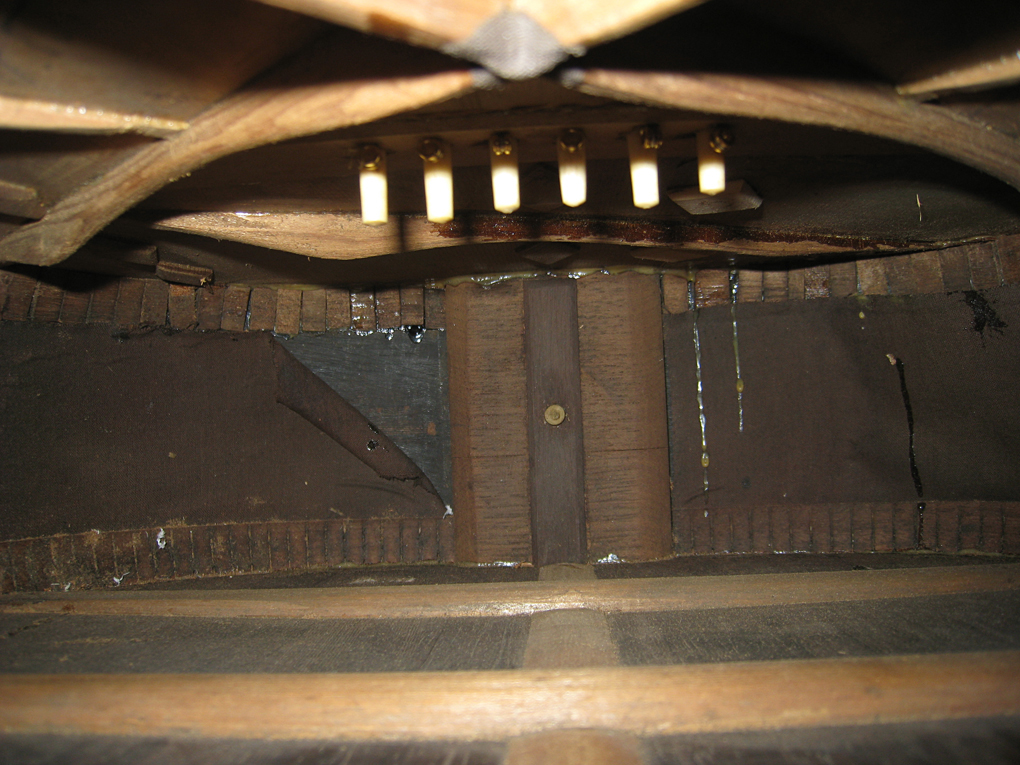
"C. F. Martin & Co. New York" is stamped inside the guitar on the center strip inside the back, while "C. F. Martin, New York" is stamped inside the guitar on the neck block. "CF Martin, New York" stamped on the back of the headstock. Dated January 6, 1895 in pencil on underside of top.
The combination of the pre-corporation "C. F. Martin, New York" stamp on the neck block and post-corporation "C. F. Martin & Co. New York" stamp on the center strip is indicative of a transitional guitar made in 1867 near the time the stamps were changed.
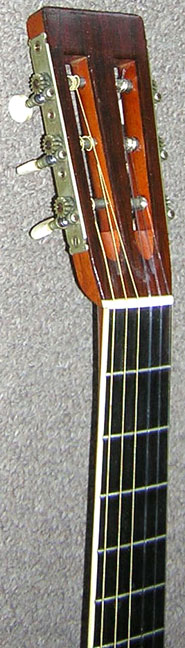
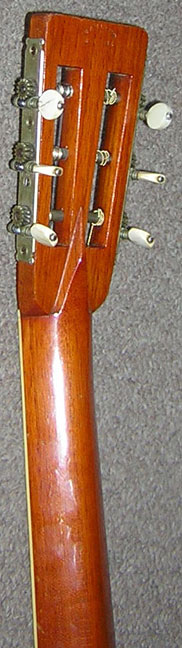
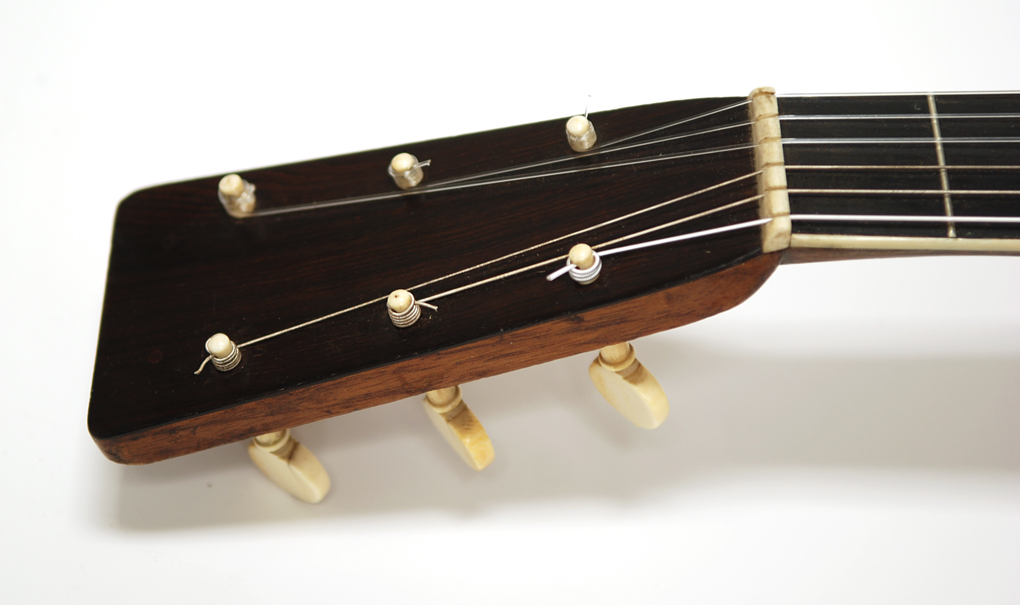
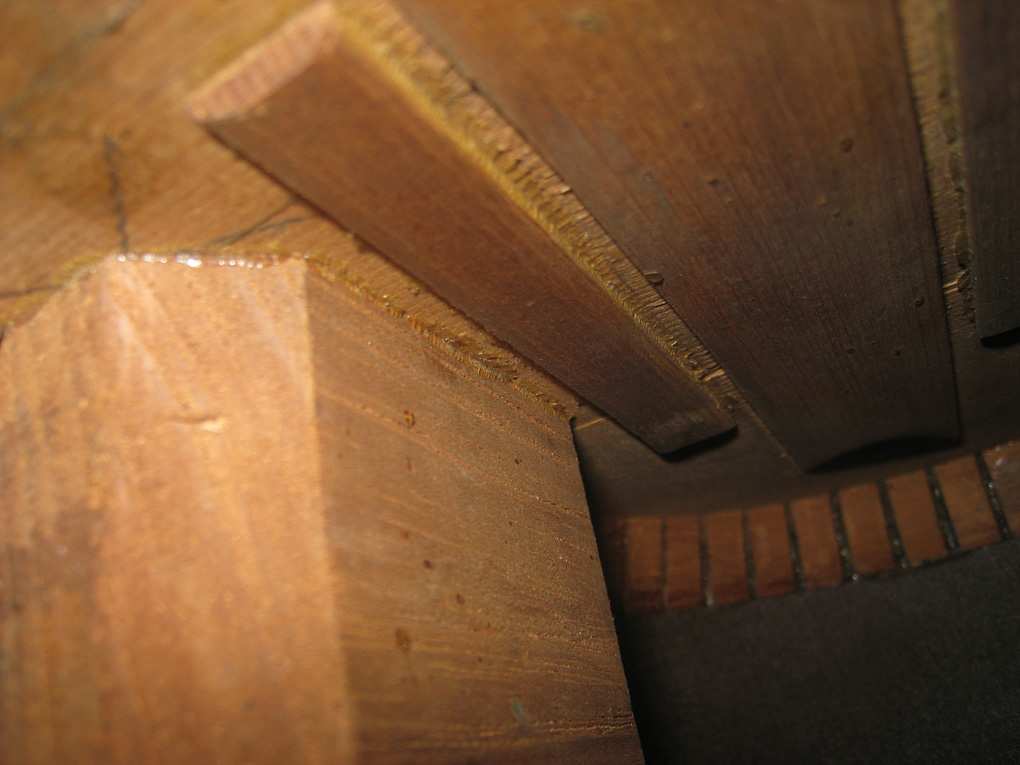
The back and sides are French Polished Brazilian Rosewood, the top is red spruce, and the fingerboard is simple ebony, without diamond inlays. Dove tail joined headstock and cedar neck with volute. Scalloped X style braces. Unusual broad band of abalone inlay around soundhole. Colored marquetry border. Ivory bridge. Flat style headstock with ivory tuners. Nut, saddle, top and back body binding, all made of ivory.
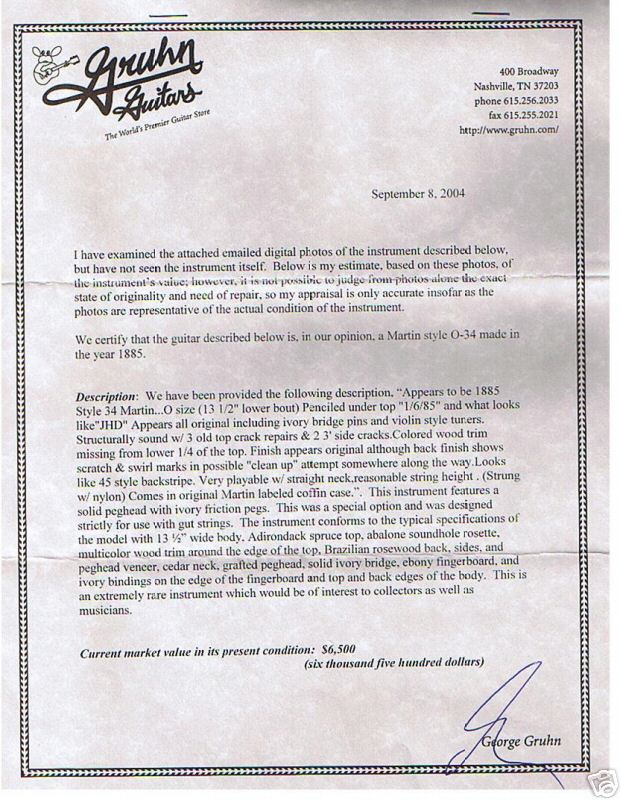
Appraised as follows by George Gruhn in 2004:
"I have examined the attached emailed digital photos of the instrument described below, but have not seen the instrument itself. Below is my estimate, based on those photos, of the instrument's value, however, it is not possible to judge from photos alone the exact state of originality and need of repair, so my appraisal is only accurate insofar as the photos are representative of the actual condition of the instrument.
We certify that the guitar below is, in our opinion, a Martin style O-34 made in the year 1885.
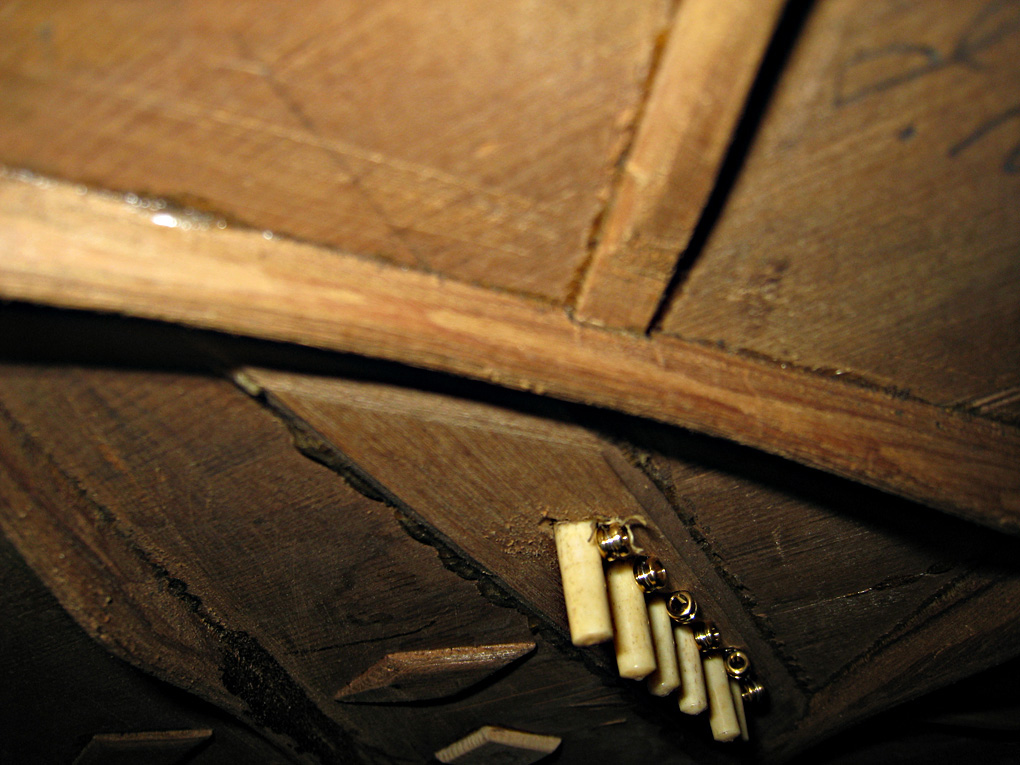
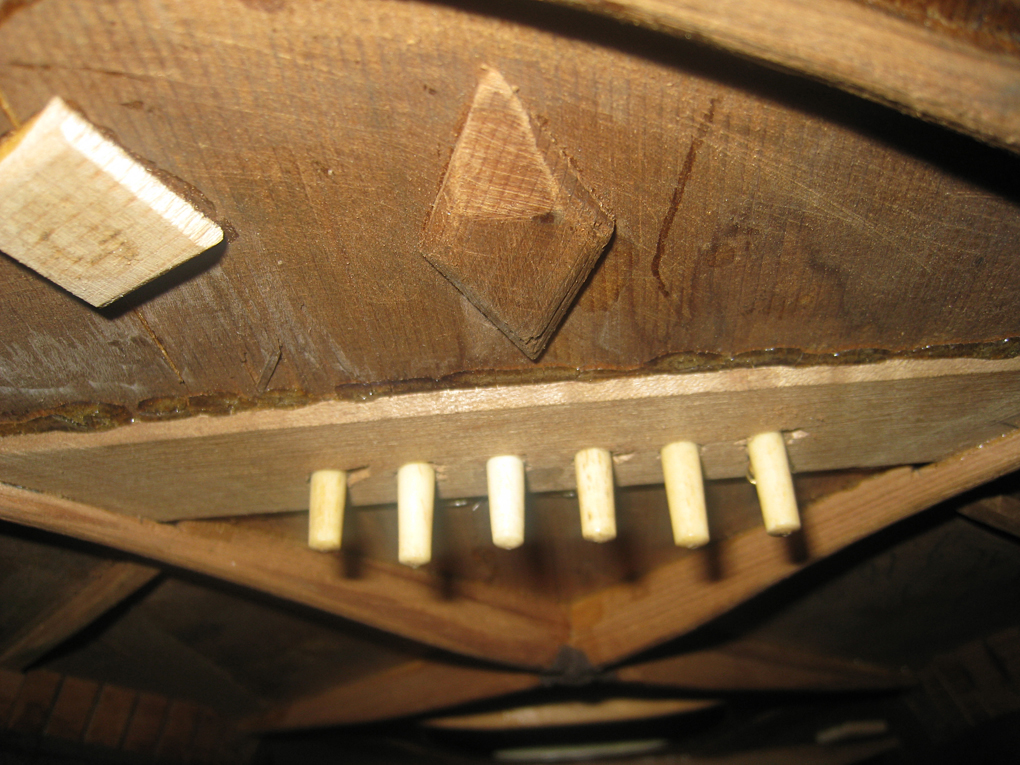
Description: We have been provided the following description "Appears to be a 1885 Style 34 Martin...O size (13 1/2" lower bout) Penciled under top "1/6/85" and what looks like "JHD". Appears all original including ivory bridge pins and violin style tuners. Structurally sound w/ 3 old top crack repairs & 2 3' side cracks. Colored wood trim missing from lower 1/4 of the top. Finnish appears original although back finish shows scratch and swirl marks in possible "clean up" attempt somewhere along the way. Looks like 45 style backstripe. Very playable w/ straight neck, resonable string height. (Strung w/ nylon) Comes in original Martin labled Coffin case" This instrument features a solid peghead with ivory friction pegs. This was a special option and was designed strictly for use with gut strings. The instrument conforms to the typical specifications of the model with a 13 1/2" wide body, Adirondack spruce top, abalone soundhole rosette, multicolor wood trim around the edge of the top, Brazilian rosewood back, sides and peghead veneer, cedar neck, grafted peghead, solid ivory bridge, ebony fingerboard, and ivory bindings on the edge of the fingerboard and top and back edges of the body. This is an extremely rare instrument which would be of interest to collectors as well as musicians.
vintagemartin.com
To See Robert Corwin's Classic Photography of Folk and Roots Musicians, visit:
For Information on Photography for
Exhibition, Publication, CD's, Promotion, Web Pages, Tour Books,
to Purchase Photographic Prints, or
If You Have Questions or Suggestions About This Web Site or Vintage Martin Guitars:
e-mail: Robert Corwinentire site copyright ©1998 through 2011 Robert Corwin/Photo-Arts. All rights reserved.