Tuners for 14 Fret Martin Guitars
Over the years Martin has installed tuners made by Grover, Kluson and Waverly on their 14 fret guitars.
Grover "planetary" banjo style tuners were the first tuners used on a 14 fret Martin, before suitable tuners were specifically designed for a modern, solid headstock.
Early 1930 Martin OM-28
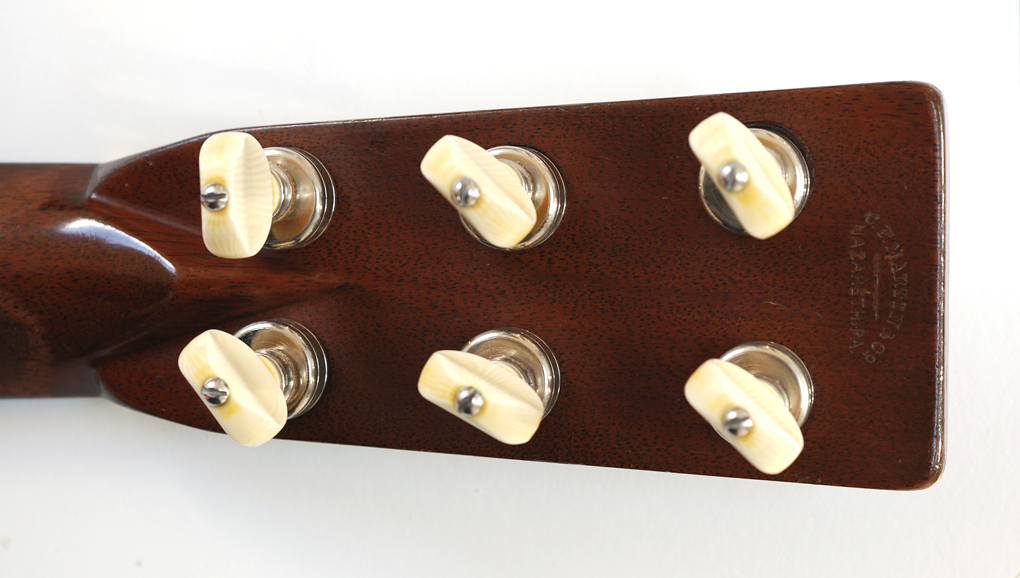
This OM-28 has a mix of two slightly different versions of the planetary banjo style tuners. While it might seem logical that one of these was a later repacement, it's not at all unusual to find slightly mismatched original tuners on Martin guitars from any period in time.
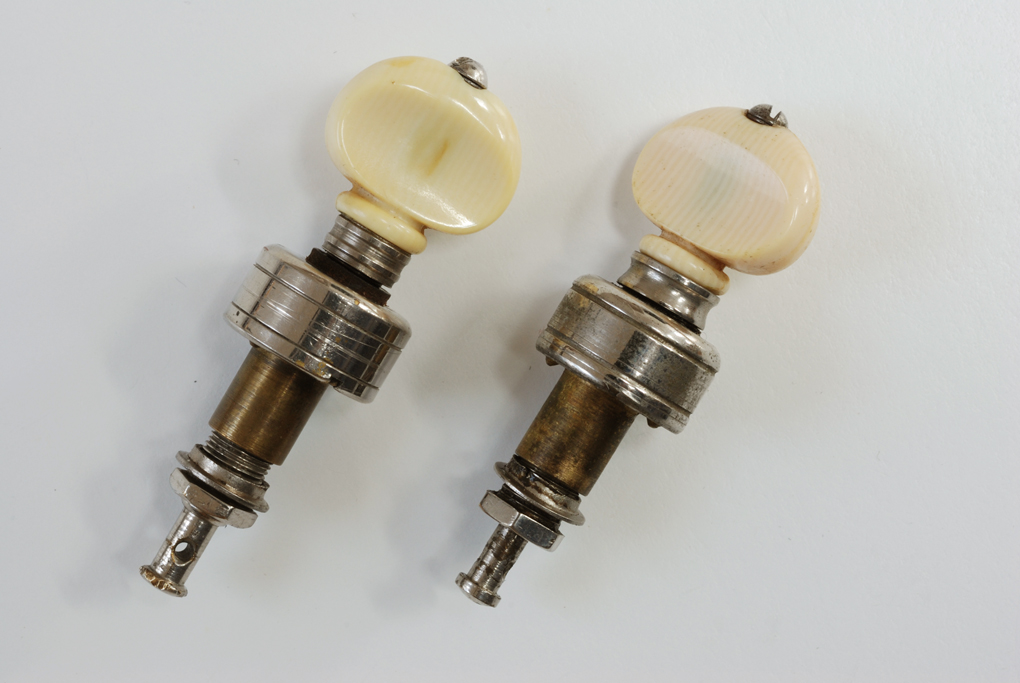
A smaller, less expensive version was used on the OM-18 and on the early fourteen fret neck tenor guitars.
1931 Martin 0-18T
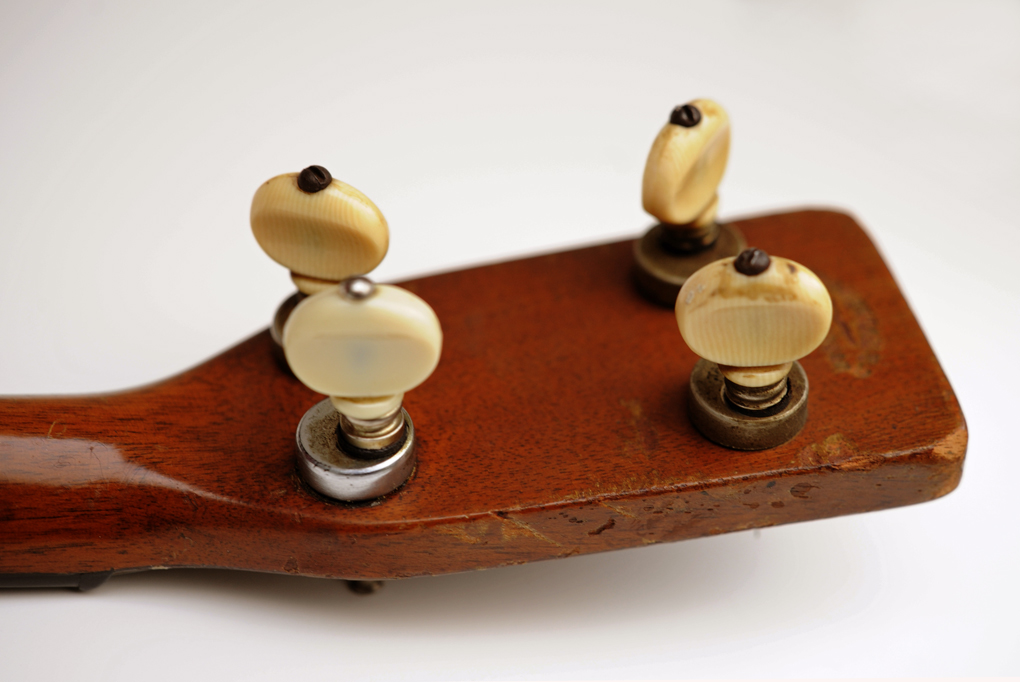
These "clipped end" 6:1 ratio, beveled edge Grovers with seamed, scalloped buttons were the first tuners specifically designed for the new 14 fret guitars with a solid headstock.
1933 Martin OM-18

A similar loooking, but cheaper "clipped end" 6:1 ratio tuner with a non-beveled edge, most likely produced by Waverly, but without a name on the front or back of the tuner plate, appears on some of the less expensive Martins.
Marin 1933 0-17

These round button G-93 Grovers with a 6:1 ratio were the first of a pointed plate, beveled edge design that was used in the 1930's, were also common in the 1950's, 1960's, and have been revived in recent years. Later pointed plate Grovers had scalloped edged buttons. Also notice the gears with a wide, flat top surface, while 1950's and 1960's pointed plate Grovers have a bevel to the top edge of the gear.
1936 Martin 0-17

These wonderful enclosed Grover G-111 tuners were used on the D-28 from 1939 to 1942. A gold plated version are seen on D-45's, including the one in the Martin Museum.
1939 Martin D-28
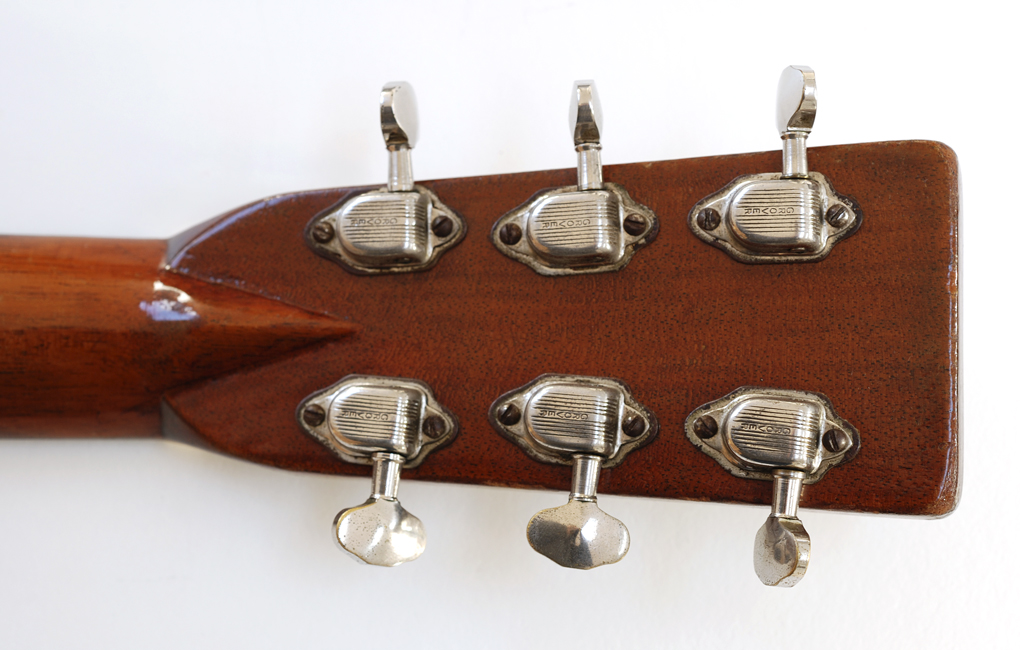
By the 1940s, most tuners had adopted a 12:1 gear ratio. These Waverly 12:1 ratio tuners are seen on Martins from 1940 through 1946.
1940 Martin 000-18

These 12:1 ratio Kluson tuners are a grey non-plated version of a thin geared, flat plate tuner that was used due to wartime metal restrictions in 1943 and early 1944.
1943 Martin 00-18
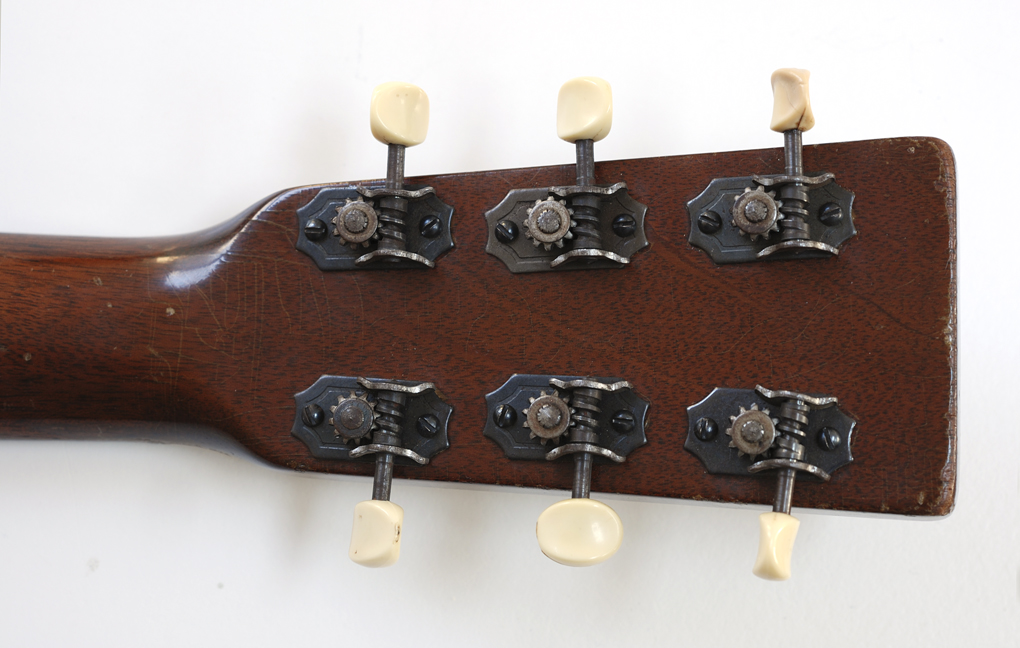
The wartime Style 17 used a less expensive three on a strip version of the Kluson rivited, flat plate tuners.
1943-00-17
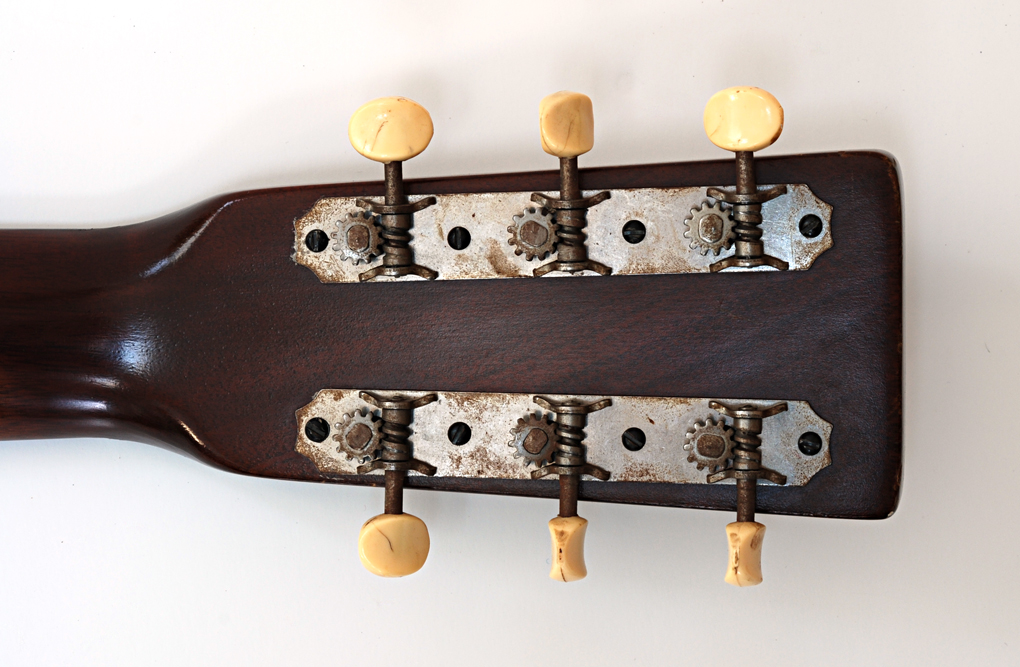
From 1944 to 1946, the 12:1 ratio Kluson flat plate tuners once again had thicker gears, which can be identified by the bevel on the top edge of the gear.
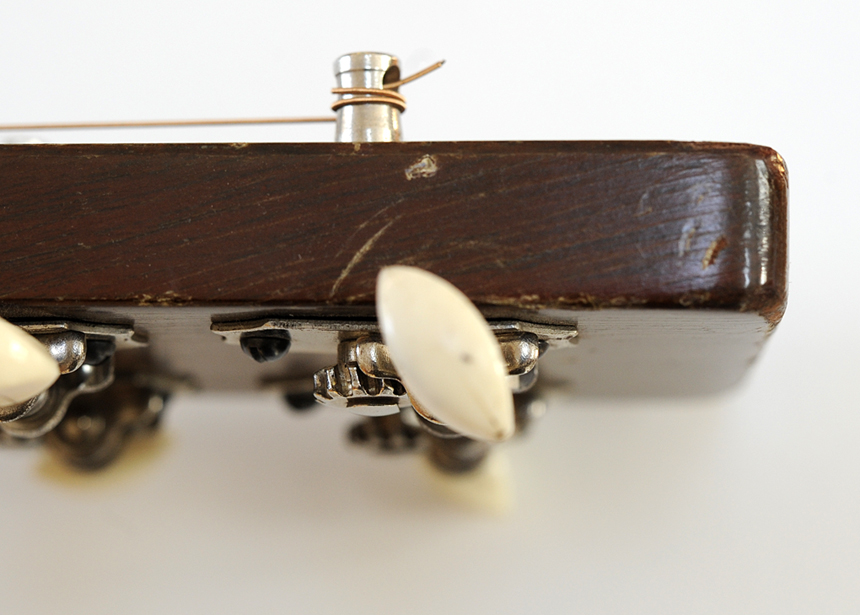
Here you can see the thin gears used in 1943, which may be referred to as "pancake" gears...
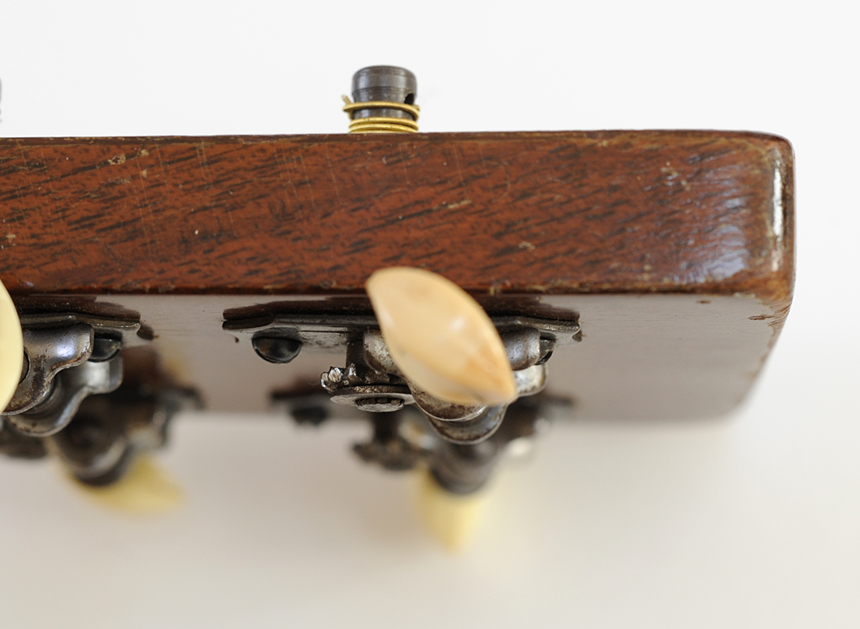
...as compared to the thicker gears used in 1944:
Even the expensive D-28 Martins used tuners with plastic buttons during the war years.
1944 D-18
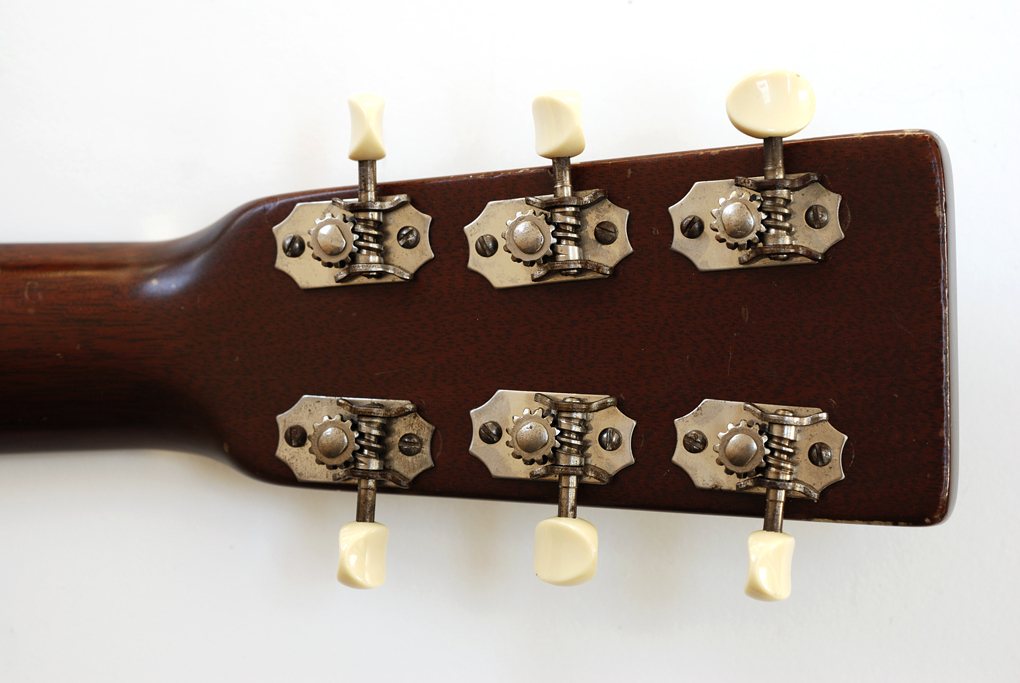
Wartime tuners through most if not all of 1945 also had no bushings around the string post to save metal.
This 1939 D-28 is an example of a pre-war Martin with hex bushings.
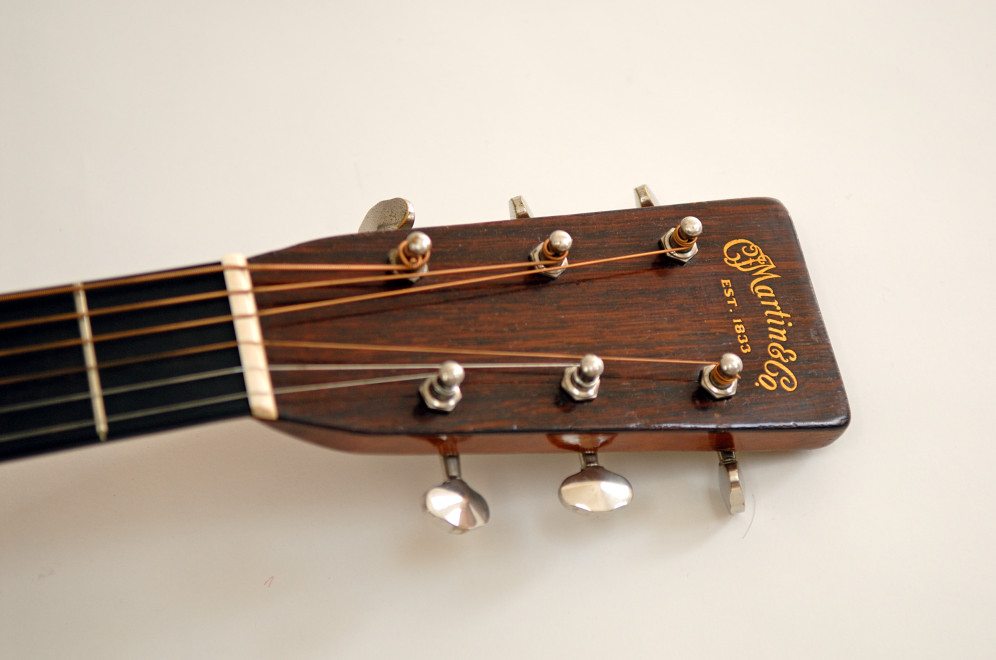
This 1944 D-18 is an example of a wartime Martin with no bushings.
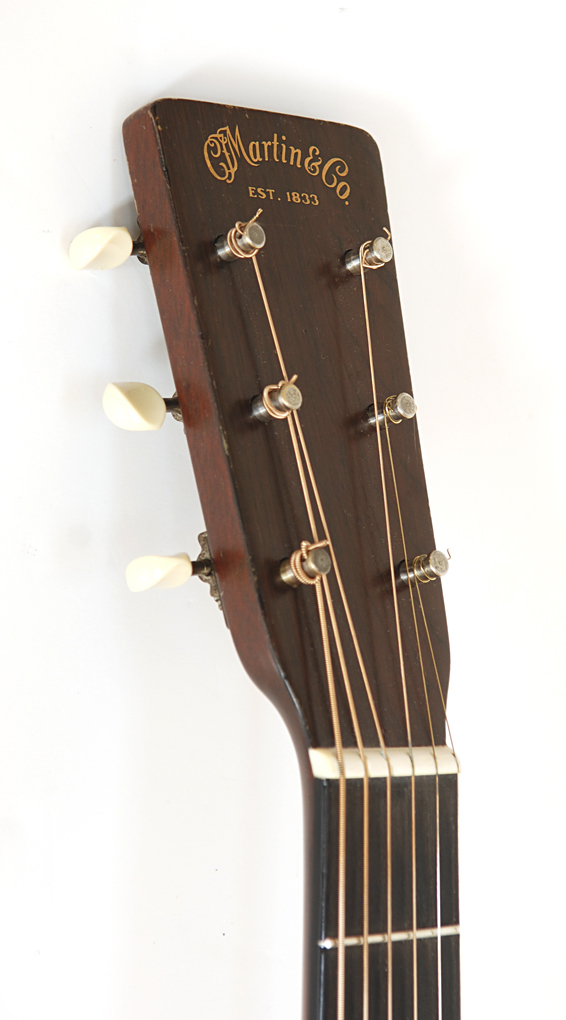
This 1946 000-18 is an example of an early post-war Martin with round bushings.
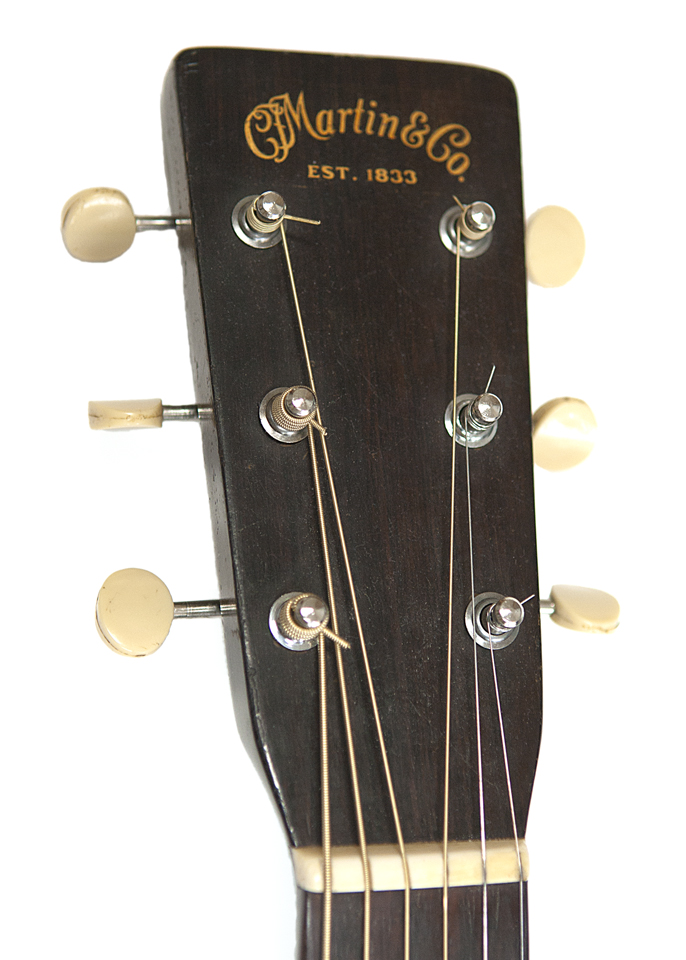
These Waverly 12:1 tuners were also used during the war years, from 1942 until 1947.
While they appear to be cheaply made, they do have thicker gears than the "pancake" gear wartime Klusons.
1946 Martin 000-18
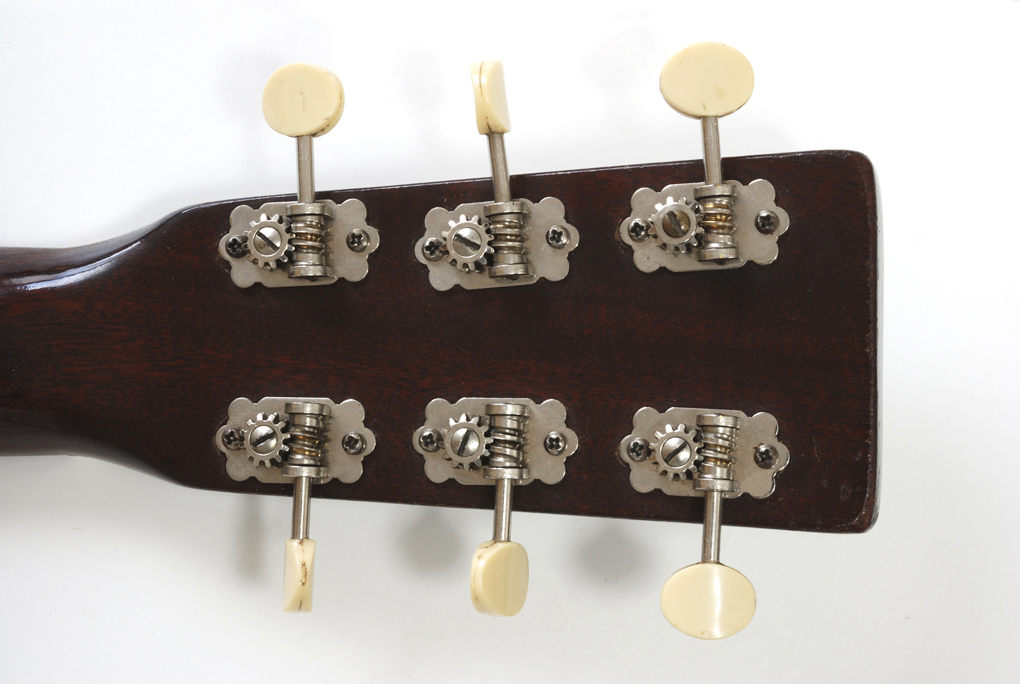
These 12:1 Klusons with rolled edges on wider plates were widely used by Martin in the early 1950's.
1952 000-18

These Waverly 12:1 ratio tuners were common on Martins, and also seen on many Gretsch guitars throughout the 1950's.
Martin 1953 0-18
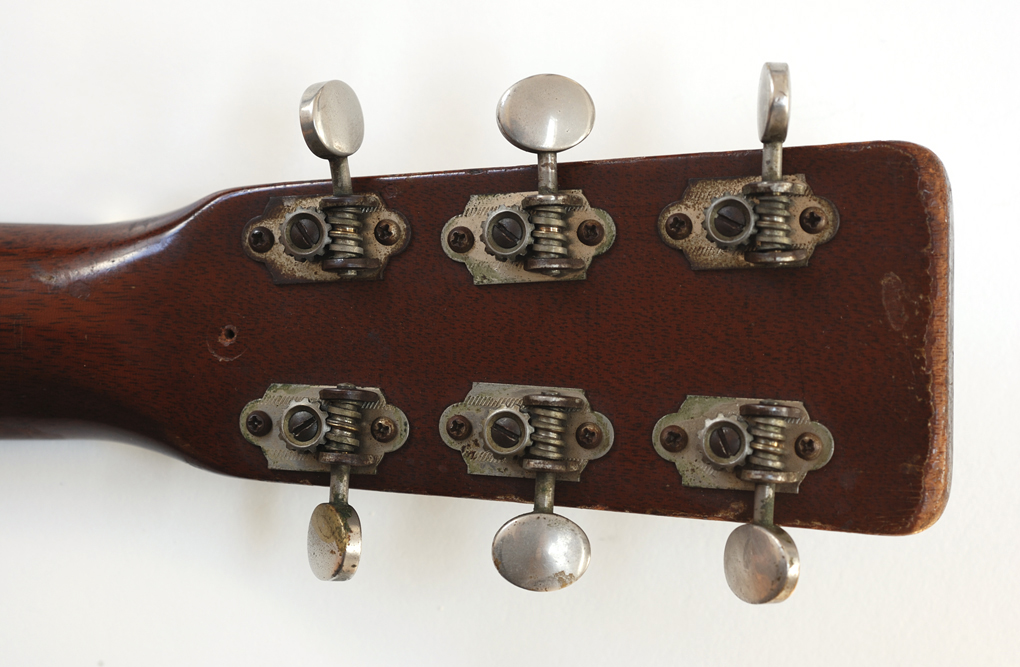
This version of Grover G-98 pointed plate, beveled edge Sta-tite tuners can be identified as "post-war" by their thin, seamed, scalloped buttons and tapered gears with screws inset into another taper on the top of the gear.
Pre-war versions have thicker scalloped buttons, or thin scalloped buttons combined with clipped end plates.
These 12:1 ratio tuners were later copied by Waverly, Grover and others.
1962 Martin 000-18
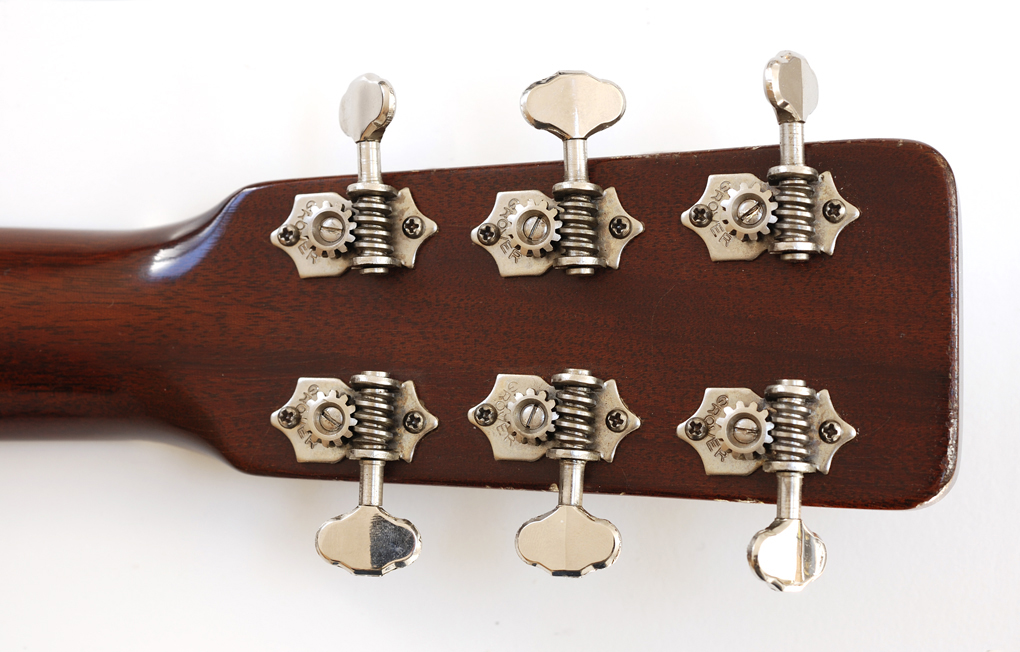
The Grover Rotomatic "Pat. Pend. USA"stamped tuners were common on D-28's and D-35's in the 1960's.
1965 Martin D-35
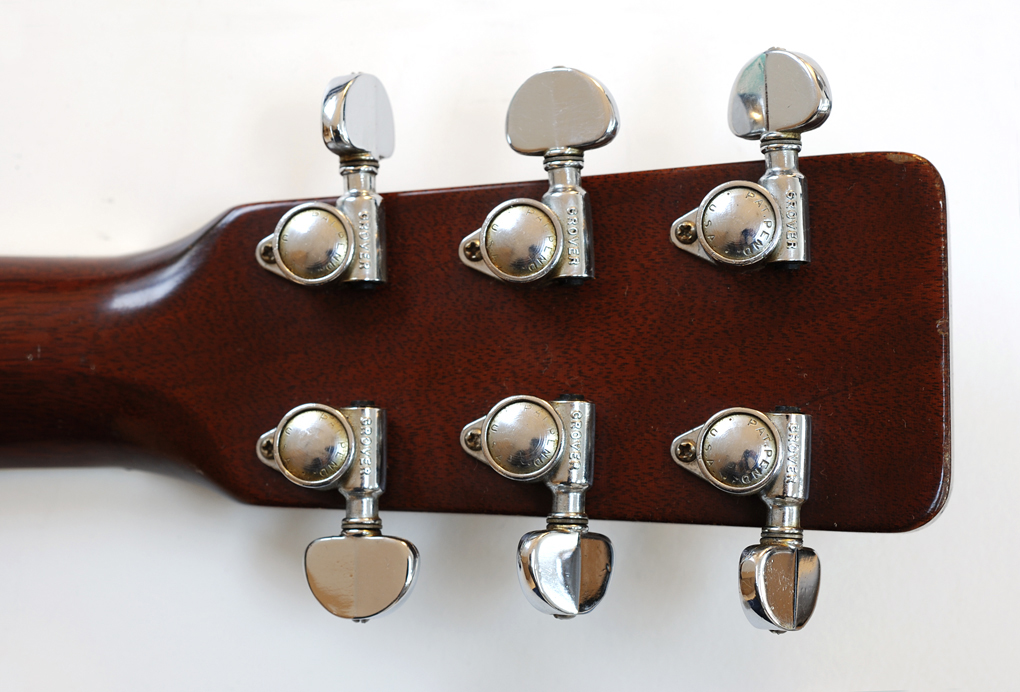
This 1966 D-35 shows hex bushings with washers.
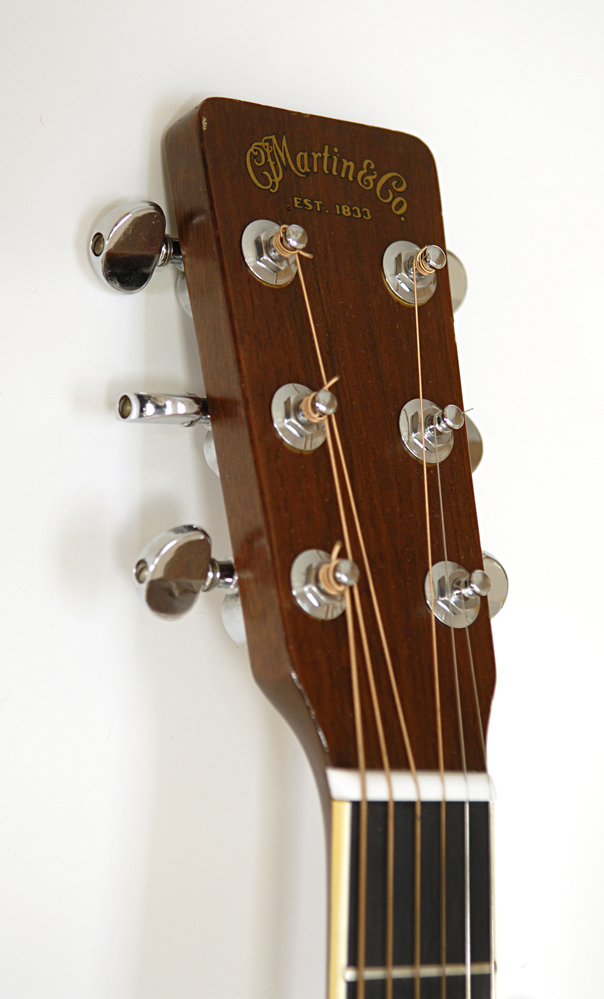
Many of the old plastic tuner buttons hold up quite well over the years, but some crack and shrink. My friend Willi Henkes in Germany makes perfect and inexpensive replacement plastic tuner buttons in cream and white under the name Antique Acoustics, which are available from Elderly Instruments by mail.
Antique Acoustics CREAM tuner buttons from Elderly
Antique Acoustics BLACK tuner buttons from Elderly
Here's a short tutorial Willi made to show how to replace the cracked and shrunken buttons easily.
Willi's Tuner replacement tutorial.
vintagemartin.com
To See Robert Corwin's Classic Photography of Folk and Roots Musicians, visit:
For Information on Photography for
Exhibition, Publication, CD's, Promotion, Web Pages, Tour Books,
to Purchase Photographic Prints, or
If You Have Questions or Suggestions About This Web Site or Vintage Martin Guitars:
e-mail: Robert Corwinentire site copyright ©1998 through 2009 Robert Corwin/Photo-Arts. All rights reserved.